A Hand-drawn Birth Record

trumbo-ahab-christopher-birth-record

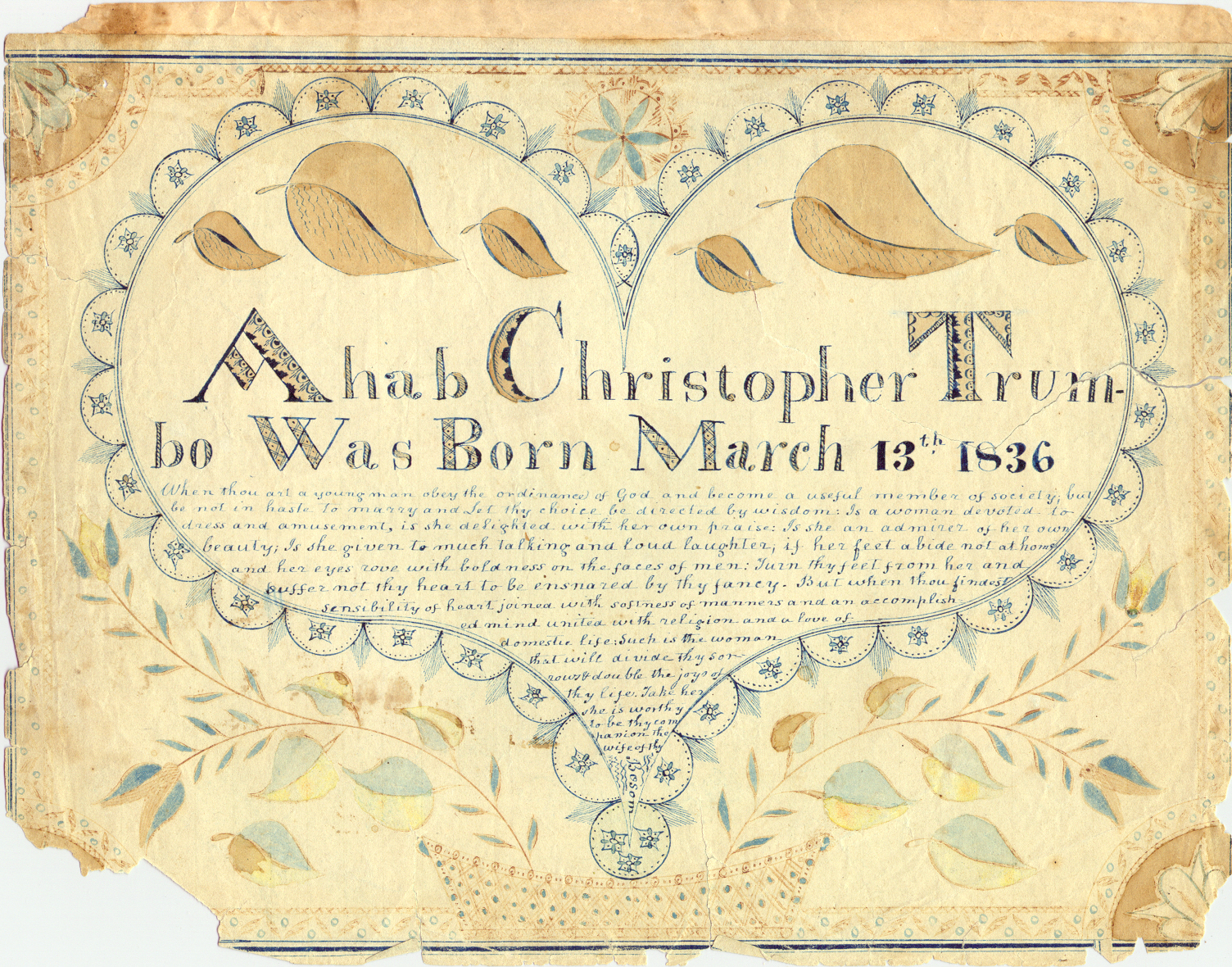
This hand-drawn birth record is an example of fraktur,1 a Pensylvania German folk art tradition. In addition to recording that Ahab Christopher Trumbo was born March 13th, 1836, it adds words of advice to a young man in selecting a wife.

Ahab Christopher was the son of Jacob Trumbo III and his wife, Elizabeth Snyder. He was born in Brock’s Gap, Rockingham county, Virginia, and came to Illinois with his family in 1853. The family settled in Dayton township, on Buck Creek. Christopher married Fidelia Kagy January 28, 1869 in Ottawa. They had one child, who died in infancy. Christopher died of consumption in October, 1869, at the age of 33, and is buried in the Ottawa Avenue cemetery in Ottawa, Illinois. Note that his obituary says that he died on October 22nd. However, his mother’s family Bible gives the date of his death as October 10
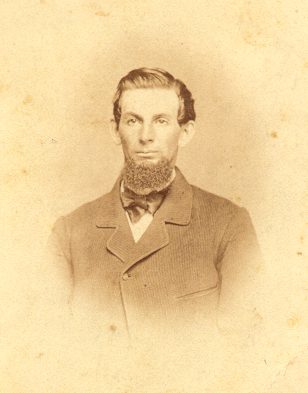
trumbo-christopher

Christopher Trumbo

DIED
In the village of Dayton, October 22d, 1869, A. C. TRUMBO, age 33 years.

The subject of this notice was a native of Rockingham county, Virginia, but for several years a resident of the town of Dayton. He was one of our most exemplary young men, and his loss will long be felt by a large circle of relatives and friends. Behind his modest bearing he concealed sterling qualities of mind and heart, – accurate judgment, inflexible devotion to principle, warm, affectionate, exceeding purity of heart and character. He was at an early age marked by the fell destroyer consumption. He leaves a young wife and an aged mother, who but a few days since was notified of the death of her son W. B. T., who had recently returned to Virginia to recruit his failing health. The funeral services of both of her sons will take place at her house on Sunday, the 24th inst, at 10 o’clock a. m., by the Rev. Mr. Thompson, of Putnam county. Thus, in the short space of five weeks, has this aged mother been bereft of two noble, high minded young men, just in the prime of life. She has a hope both sure and steadfast, that what is her apparent loss is their gain.2


  1. For more information on fraktur, see http://frakturweb.org/
  2. Ottawa Free Trader, October 23, 1869, p. 5, col. 3.

Thanksgiving Day 1900 in Dayton

Thanksgiving dinner

A report of one Thanksgiving feast:

A Thanksgiving dinner given by Mr. and Mrs. O. W. Trumbo was largely attended. Among those present were Mr. and Mrs. W. Van Etten and three children, Batavia, Mr. Eugene Appleton, Miss Ella Green, Aurora, Wm. Miller, wife and three children, Rutland, Mr. and Mrs. Isaac Green, Miss Carrie Green and Lyle A. Green, Dayton.1

The hosts were Oliver W. Trumbo and his wife, Rebecca Green. Their daughter Jessie was the wife of Wilmot Van Etten and the mother of Clare Trumbo Van Etten, Walcott Gumaer Van Etten, and Frank Campbell Van Etten.

Ella Green, whose name appears coupled with Eugene Appleton was the daughter of David and Mary (Stadden) Green. Eugene appears to have been an unsuccessful wooer, as Ella later married Dr. George H. Riley.

William Miller’s wife was Alta Barbara Gibson, daughter of George W. and Rachael (Green) Gibson. Their children were Gertrude Rae Miller, Howard Miller, and Glenn Gibson Miller.

Isaac Green and wife Mary Jane Trumbo attended with their son Lyle. They had no daughter named Carrie, but they did have one daughter at home in 1900. Possibly daughter Maud was misidentified as Carrie.


  1. Ottawa Republican-Times, December 6, 1900, p. 4, col. 4

The Dayton Dam

The Dayton dam

This picture of the dam at Dayton was taken from the hayloft of the old barn on the Green farm, probably about 1955. This is the dam that was built by the state of Illinois in 1924 to replace the dam that was washed out in 1904. The picture below was taken during the construction of the dam and powerhouse. The barn from which the 1955 picture was taken is just out of sight to the left of the new barn in the 1924 picture.

dam-under-construction

William Stadden, State Senator and Convention Delegate

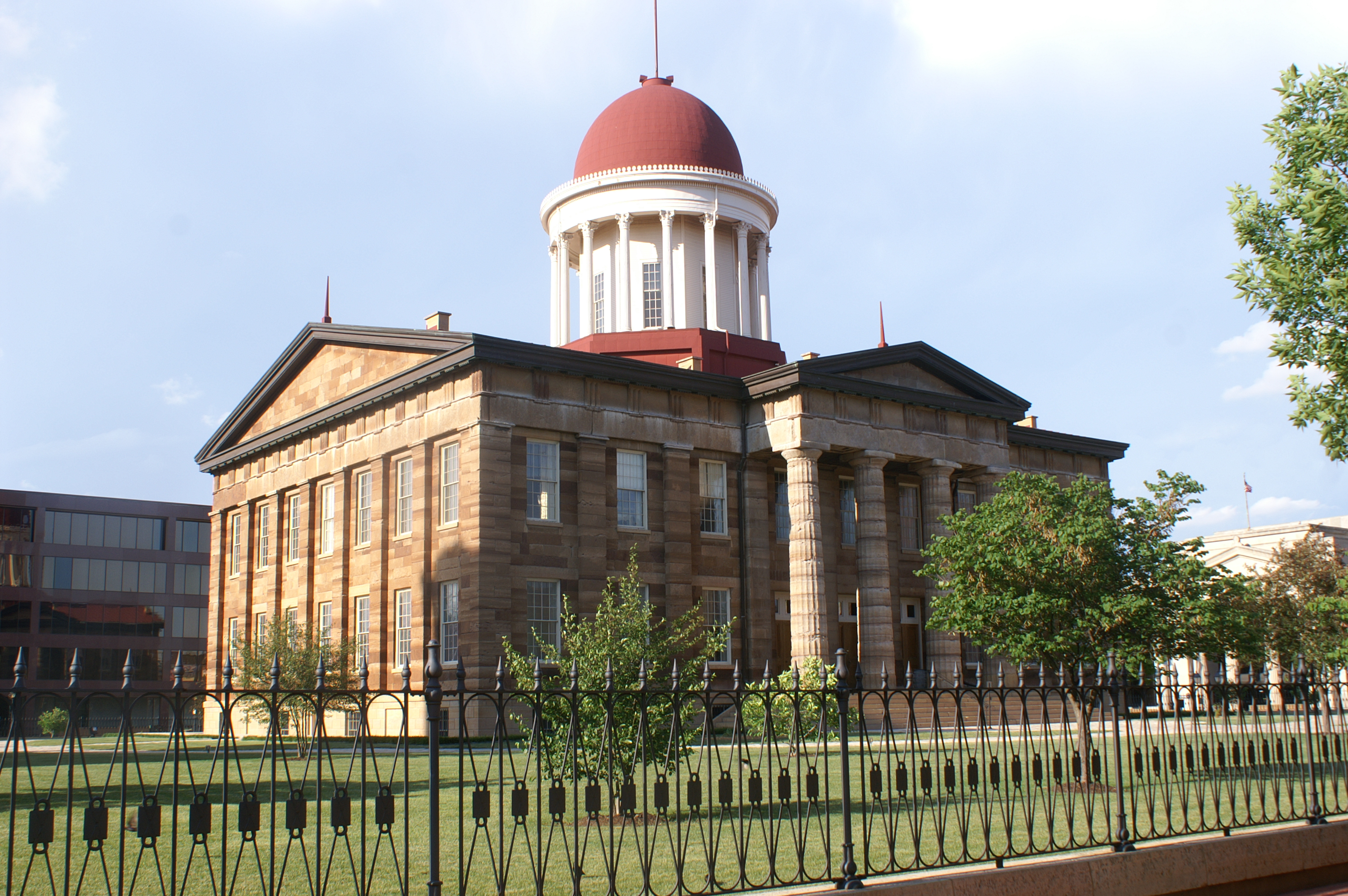
Springfield, Illinois, Old State Capitol

Springfield, Illinois, Old State Capitol

Dayton resident William Stadden was elected to the Illinois State Senate in 1836 and served for four years, representing La Salle, Iroquois, and Kane counties. He served at the same time that Abraham Lincoln was serving in the Illinois House of Representatives. In the Senate, Stadden was on the committee on canal and canal lands, where his familiarity with the Illinois & Michigan canal, and the feeder from Dayton to Ottawa, might be useful.

In 1847, Illinois needed to revise its first constitution to meet the needs of a growing population and a constitutional convention was convened. William Stadden was one of two delegates from La Salle County to the convention, where he served on the revenue committee. The convention met in June, 1847, and spent nearly three months devising a new instrument; the following March its work was ratified by a large majority of the voters; and on April 1, 1848, it became operative. William Stadden was able to see the new constitution become law before he died the following November.

Additional biographical information on William Stadden may be found here.

Great care has been taken in the burning . . .

tile-works-letterhead

            Green Bros. have just finished burning their third kiln of tile, and are now ready to furnish customers with a good quality of tile at the lowest market price. Great care has been taken in the burning, and the tile taken from the kilns are found to be of the same degree of hardness none too soft, but all alike. Some parties have been misrepresenting the tile by saying they are too soft, but to those who would know the truth, we must say, “visit the kilns and see.” Tile will be drawn to the top of the hill by the proprietors for those who will notify them of their desire. In fact, the firm will do everything to please customers, not only in market prices but in a good quality of tile.1

            Drain Tile. – We have been shown specimens of Drain Tile manufactured by the Green Brothers at the Dayton Tile Works, and if all are like these, and we are assured they are, there are no better tile made in the country. They are made in all sizes from 2 to 8 inches. Sold at Ottawa prices, with 10 per cent. off for cash. For sale at the works in Dayton or at Freeman Wheeler’s on the Chicago road, east of Dayton.2


  1. Ottawa Free Trader, September 13, 1879, p.8, cols. 1-2
  2.  Ottawa Free trader, September 20, 1879, p. 1, col. 2

Millstones

millstone-shabbona-parkOne of the original Dayton millstones

The reason the Green party settled at what became Dayton was the presence of the rapids of the Fox river. They were looking for a mill site and liked the look of this spot. They had brought the mill irons and the millwright with them from Ohio, but the mill stones were a local product, created from boulders found along the river bank. The mill was the first order of business upon arriving, and Jesse Green remembered its first day of operation:

On the morning of the 4th day of July 1830 the first wheat was ground by water power in the northern portion of Illinois. We did not at this time have a bolt for separating the flour from the bran but we thought that graham flour was good enough to celebrate that Natal day with a double purpose that will never be forgotten by the latest survivor of the memorable event. It marked the first and greatest step in the alleviation of the hardships and suffering of the early settlers, and they soon all had plenty of graham flour and corn dodgers. Up to this time we were obliged to grind our grain in a coffee mill, or pound it in a mortar improvised by burning out a hole in the top of a stump, and attaching an iron wedge to a handle to use as a pestle which was operated in a manner similar to the old fashioned well sweep.

In one of the many upgrades and improvements to the mill, the original millstones were removed, but not discarded. They are today to be found in Shabbona park, near Earlville.

The Drunken Dancing Master

drunken-dancing-master

FROM DAYTON, Jan. 8, 1877

Being a constant reader of your paper, I see no one has taken note of our little village for some time. Permit me, therefore, to give you some items of interest.

Our improvements are plain. The paper mill of Williams & Co. is running in full and is in a flourishing condition, turning out about 24 tons of paper per week.

It is needless to say the Fox River Horse Collar Manufacturing Co. still carry on an extensive business. They are known far and wide. Nothing seems to daunt them, nor does their trade decrease. In spite of hard times they prosper.

The store formerly owned by John T. Makinson has been purchased by Jesse Green & Sons, who have enlarged the building and now have on hand a full line of groceries, woolen goods, &c.

Our inhabitants are a class of persevering, energetic people. Among them is a renowned ex-granger, to whom life on a farm becoming monotonous, he concluded to enter into something which would bring him more in contact with the people of the world. So he engaged in wholesale manufacturing pursuits, but becoming weary of the hum of machinery, retired from business and set himself down to think what he should do next. At length he exclaimed, “I have it!” I will do something for the people which will cause my name to be handed down to future generations with honor never to be forgotten.

‘Tis true, we have no churches, but we don’t need any – our people are good enough. They are noted for honesty, integrity, and warm genial disposition. Neither have we any saloons, nor do we need them – our people are temperate, and Ottawa is not far distant. But notwithstanding our people are good and temperate, they are deficient in good manners and gracefulness – cannot describe a proper circle in making a bow; in short, need a dancing master. Therefore he had one imported from the east, organized a dancing school – in fact, two dancing schools, one for juveniles at 4 P. M., another for adults at a later hour. Juvenile class assemble to meet their tutor dressed with all the care and taste their fond mothers could devise, their flashing eyes sparkling with anticipated pleasure, the bloom of health and innocence upon their cheeks. Their teacher arrives by the train, alights and walks up the railroad track describing a Virginia worm fence. Great consternation among his admirers. It was a stunner, a perfect surprise. Crowds could be seen on every corner with blanched cheeks and distended eyes, asking what shall we do? “Pickles!” shouts one. “Lemons!” cries another. “Yes, that’s business, give us lemons,” says a third. “Who cares for expenses. Here – you – somebody – hold him up on t’other side; feed him lemons; walk him two miles and a half!” A consultation was then held as to whether the school should continue, the gentlemen being in favor of a change of tutors, while the sentiments of the majority of the ladies seemed to be, “get drunk if you want to, boys, we’ll forgive you.” This is apparently a new style of crusaders.

Much more might be said upon the subject; but suffice it that the adult class proceeded to be instructed, and got through as well as could be expected under the trying circumstances, closing with an appointment for Thursday evening, Jan. 11.

A READER1


  1. The Ottawa [Illinois] Free Trader, January 13, 1877

Joseph Green, Adventurer

Joseph Green

Joseph Green, like his father and brothers was of an adventurous nature. He was only one year old when the family moved to Illinois and making a home out of the wilderness was surely an adventure. The expedition to the California gold mines in 1849, with his father and his older brother Jesse was a welcome change from his life in Dayton, which in twenty years had become much more civilized. Very much the little brother, he was eleven years younger than Jesse and although he would have considered himself, at 21, the equal of any man on the trip, he was still one of the younger ones. He was sorely missed in Dayton by his sisters, Rachael and Rebecca, who filled their letters with a wish that he would be home soon.

Most of the gold miners returned home in January of 1851, but Joseph and three others were left behind in Mexico, where they were to remain until spring, in charge of some Mexican horses which were bought in coming through that country.

Joseph had barely returned to Dayton when it became clear that his taste for adventure was still strong. His younger brother Isaac, who was deemed too young to go on the previous trip, wanted his chance and Joseph got up an expedition of his own to California, which left Dayton in April. As in the previous attempt, there were no great riches in the end, but the adventure may have been its own reward.

Joseph had expressed a desire to go to China, but this never came to pass, due to his untimely death, December 27, 1855, at the age of 27. He is buried in the Dayton cemetery


How to Make a Rainbow

rainbow

The Dayton woolen factory’s products came in a range of colors. In order to produce the various shades, a large number of vegetable dyes had to be kept on hand. From an inventory of the factory in 1873, they had a variety of dyes and other products used in making woolen cloth.

Before dyeing, the raw wool had to be washed and cleaned with something that would remove the oils that occur naturally. The oxalic acid listed in the inventory would have been used on the wool as a first step.

Alum, chrome, and soda ash were used as dye fixatives, or mordants.

Extract of logwood, a purplish-red natural dye obtained from the logwood tree, could produce black, grey, navy blue, purple, violet or lavender, depending on the mordant used.

Sicily sumac could produce dyes of red, yellow, black, or brown.

Cudbear was extracted from a lichen and produced dyes in the purple range.

Camwood produced a brilliant but non-permanent red dye.

Brazilwood extract produces bright reds, corals, and pinks.

Fustic , a bright yellow dye, is very colorfast. It is frequently combined with other dyes to produce a range of yellow and green colors.

Lard oil was used to prepare the dyed and dried wool for carding.

Large quantities of these were kept on hand. The inventory listed 533 pounds of logwood; 800 pounds of Sicily sumac; 1260 pounds of Camwood and more than a ton of soda ash.

It was certainly a colorful business!


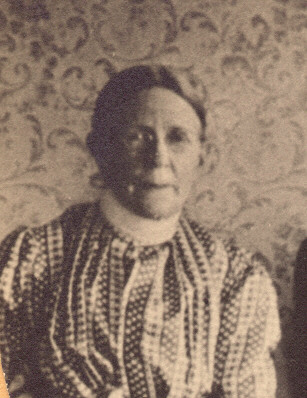
Rebecca Green Trumbo

Rebecca (Green) Trumbo

Rebecca Green Trumbo, or “Aunt Beck” as she was known to her niece, Maud, was the tenth child and sixth daughter of John and Barbara Green. She was born across the river from Dayton, in Rutland township, September 8th, 1830, the first of their children to be born in Illinois. She grew up with a number of Dunavan children near her own age, all of them her aunts and uncles, children of her older sisters, Eliza and Nancy. She was also very close to her brother Joseph, who was two years older. When Joseph went with the Dayton party to the gold fields in 1849, she wrote often, teasing him about some of the local girls who missed him very much.

In return, Joseph said
“(I want you to explain yourself about what letter you had reference to when you spoke of Miss E J B receiving that letter is entirely beyond my comprehension I am in the dark on the subject if it is anything relating to me I would like to understand it –  as to who gets Miss E. J. B. is the least of my concerns But as far as I know she is a very nice girl”

He also added some very sage advice:
“(Becks be carefull here after about whittling allways whittle from you and you will not be apt to cut your fingers — always take it moderate for a few days until you get your hands tuffend to it”

Rebecca and Rachel, her sister, filled their letters with wishes for the men to come home:
“O Joseph if you could only be here next saturday night we have first rate cotillion parties last saturday evening we had three musician’s and first rate music (and some pretty good dancing) but o how we miss you at them. do hurry and satisfy yourself and come back to gladden our hearts dont be too hard to satisfy either for it is to hard for near and dear friends to be seperated for gold or anything else aint it”

On October 15, 1854, Rebecca married Oliver W. Trumbo. As if the three Green-Dunavan marriages had not complicated relationships already, in 1865 her little brother Isaac would add another Green-Trumbo marriage when he married Oliver’s sister, Mary Jane.

Rebecca and Oliver lived on a farm in Dayton township. They had two daughters, Jessie, born  June 1, 1867, and Frankie Rae, born November 30, 1876.

Frankie died at the age of seven of a malarial fever. From her obituary:
“Frankie was the light and joy of her home, and by her death a place is left vacant that cannot be filled until that joyful meeting of families on the other shore. Having attended school but a little over a year she had reached a grade seldom attained by a child of her age, and won the warmest love from teachers and schoolmates.”

Jessie married Wilmot Van Etten June 13, 1888. They lived in Mendota. Rebecca lived with them after Oliver died, and she died there September 25 1916. She is buried in the Dayton Cemetery.

Goodbye to the Dinky

dinkys-never-die

On February 2, 1952, the Burlington passenger train that had linked Dayton with Ottawa and other towns from Streator to Aurora for 82 years carried its last passengers. The service had dwindled to two trains a day, one northbound and one south. Cars and trucks had taken much of the express traffic, as well as the passengers. C. C. Tisler, a local historian who wrote for the Ottawa Republican-Times, wrote two articles about the demise of the dinky, saying:

The puffing switch engine, with its steam and smoke and clank and bang and roar also are vanished and been replaced with the plebian Diesels. The Burlington has gone modern – but old time railroaders are a bit nostalgic about the whole affair.

You can read the complete articles, with photographs, here.

A Dayton School Report Card

maud-green-report-card

In April 1880, when Maud Green received this report card, she was 13 years old. She was an excellent student in all subjects except arithmetic and deportment. She was never absent nor tardy, so what then were her sins? Did she whisper during lessons? Did she daydream while the teacher was speaking? What behavior could have reduced the deportment grade to 70?

When she was older, Maud wrote some memories of her school days:

The desk tops were hinged and when the boys walked on them mischievously they sometimes dropped unexpectedly with disastrous results.  A bench ran around three sides of the room to accommodate more pupils.  The other furniture consisted of the teacher’s desk and a small organ. We all had slates instead of tablets and our slate pencils came covered with gold or silver paper.  Once we girls put boards over the corner of the fence to make a play-house at school & we all took rag-dolls to play with at recess.

The teacher, Ada Green, was a native of Dayton, having been born there in 1859. She was the daughter of David and Mary (Stadden) Green. She taught at the Dayton school only one more year, as she married William C. McMillan on March 10, 1881 and they left the area for Iowa.

The Young Settlers’ Association – Part 2

Two men and wagon

We give a few additional names that have been sent to C. J. Skinner of persons 30 years of age born in La Salle county. He now has between forty and fifty, but there are many others. If a Young Settlers’ Association is to be formed it is desirable that the names be handed in at an early day. Send them on a postal card to that gentleman, together with the date and place of birth. Following is the supplemental list:

Geo. W. Shaver, farmer, born in Rutland Jan. 12, 1842.
A. F. Dunavan, manufacturer, Rutland, Oct. 29, 1832.
Cyrus Debolt, farmer, Rutland, October 28, 1839.
Elizabeth Dunavan, wife of Cyrus Debolt, Aug. 11, 1838.
Geo. W. Lamb, stock dealer, Rutland, April 23, 1850.
O. D. Walbridge, farmer, Rutland, June 15, 1841.
George W. Parr, farmer, Manlius, March 24, 1847.
Jesse Grove, farmer, Rutland, January 29, 1841.
Lucien Grove, farmer, Rutland, January 29, 1842.
Samuel Grove, farmer, Rutland, March 21, 1836.
William Trumbo, farmer, Fall River, June 16, 1848.
Stephen Kleiber, farmer, Rutland, Nov. 12, 1841.
Matt Debolt, farmer, Rutland, November 4, 1841.
George D. Shaver, farmer, Rutland, Jan. 12, 1839.
George Hayward, stock dealer, Ottawa, April 19, 1843.
James Armour, farmer, Ottawa, September 21, 1841.
Louisa Pembrook, wife of Thos. Bartlett, Rutland, Sept. 2, 1832.
James Shaughnessy, farmer, Deer Park, May 1, 1837.1


  1. Ottawa Free Trader, April 21, 1883, p. 8, col. 1

The Young Settlers’ Association

Family and wagonYoung Settlers’ Association

    Some time since a suggestion was made through the Free Trader that a Young Settlers’ Association be formed, consisting of those who were natives of La Salle county and now over thirty years of age; and all such were requested to send a statement to Charles J. Skinner, of this city, containing name and date and place of birth. Up to the present time the following have been received by that gentleman:

George Galloway, born April 12, 1828, in Fall River; farmer.
(Mr. Galloway was the first white male born in the county.)
E. F. Dimmick, May 24, 1849, at Vermillionville; farmer.
James Collins, June 6, 1838, Ottawa; laborer.
Gilbert P. Brown, March 28, 1851, Dayton; painter.
Charles L. Eaton, Dec. 6, 1845, Deer Park; farmer.
Robert J. Wallace, May 28, 1852, Utica; laborer.
William Haynes, June 1, 1839, La Salle; merchant.
George Howland, August 10, 1848, South Ottawa; farmer.
Albert Maierhofer, May 27, 1851, Ottawa; plow manufacturer.
William H. Daggett, Dec. 13, 1843, Ottawa; boatman.
Samuel Richolson, March 25, 1841, Holderman’s Grove; attorney.
Benjamin Lewis, Sept. 26, 1833, Serena; farmer.
John S. Clayton, June 17, 1837, Deer Park; stock raiser.
William R. Clayton, May 8, 1835, Deer Park; farmer.
Charles J. Skinner, Feb. 10, 1841, Dayton; clerk.
W. W. Calkins, May 29, 1842, Farm Ridge; lumber merchant, Chicago.
Mary Jane Painter, Nov. 24, 1847, Bruce; now wife of T. L. Green, and postmistress at Reddick,                   Kankakee county, Ill.
John G. Armstrong, July 7, 1836, near Morris, then a part of this county; editor.
R. E. Skinner, May 10, 1843, Serena; clerk.
William Richards, Dec. 25, 1852, Farm Ridge; farmer.

The above list is scarcely a commencement of that which might be obtained were all who come within the thirty years’ limit to affix their names. A society once organized could not be otherwise than successful, and their annual meetings would be an appropriate complement to that of the present Old Settlers’ Picnics. Or, if it be deemed best, finally, not to complete the organization, still the possession of the list would be an advantage to the Old Settlers’ Association, and a matter of history for the county. We would therefore suggest that all others who were born in La Salle county and are now over thirty years of age forward on a postal card to Mr. C. J. Skinner, Ottawa, the desired information.1


  1. Ottawa, Free Trader, March 10, 1883, p. 5, col. 3

Coal mining in Dayton

coal miner

Did you know they used to mine coal in Dayton? All quotes from the Ottawa Free Trader.

February 2, 1867
Coal at Dayton, – Messrs. Grove, Stadden & Co. have opened a 2½ foot vein of splendid coal directly under the village of Dayton. The coal is obtained by drifting*, and lying many feet below the surface, is, like all deep coal found in this vicinity, much superior to coal obtained by stripping. Their drift is located a few rods below Green’s Mill, where they are prepared to sell to all customers that may apply, at prices as low as at any other bed in this region.

Dayton, May 8, 1879.
Messrs. Zearing & Row, and Basil Green will finish at the culvert this week or next. Two large coal beds have been opened on Mr. Green’s land, enough coal to supply the town for some time.

December 10, 1887
Considerable coal is being mined here this winter.

* A drift mine is an underground mine in which the entry is horizontal into the ore seam, usually on the slope of a hill.

Warner, Wolfe, Tanner, and Luce

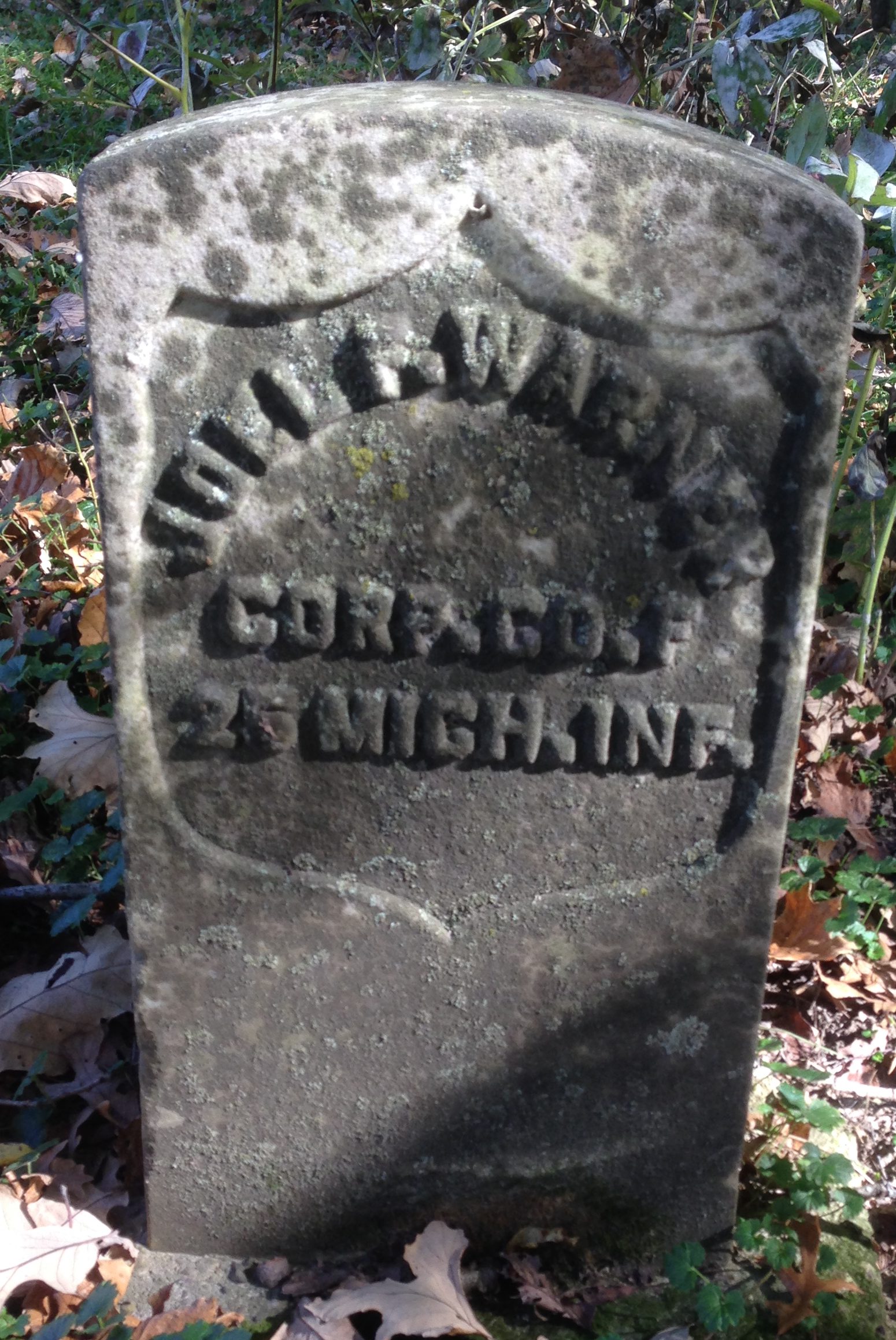
warner-joel-f - tombstone

With no surnames in common, it might be hard to realize that the Warner, Wolfe, Tanner, and Luce families in the Dayton cemetery are related, but they represent a couple and their three married daughters.

Joel Foster “Faut” Warner was born June 14, 1831, in Syracuse, New York. On July 3, 1856, he married Mary Ann Inman in New Buffalo, Michigan. She was born January 15, 1839, in Butler County, Pennsylvania. Joel served in the Civil War from Michigan in Company F, 25th Michigan Infantry. He was wounded at the battle of Pumpkin Vine Creek. After his discharge in 1865, he returned home and moved to Kendall County, Illinois, where he farmed. In 1877, he fell under a train and his left leg had to be amputated four inches below the knee. Following this accident, he gave up farming and supported himself with various jobs. In 1882 he moved to Dayton, where he was able to work as a fisherman. He died September 26, 1911 and was buried in the Dayton cemetery. Mary lived with her daughter Ada in Ottawa until her death on January 20, 1918. She too was buried at Dayton.

Ida and Ada, twin daughters, were born October 1, 1857, in Michigan. Ida married Alvin Tanner December 23, 1880, in Kane County, Illinois. They also moved to Dayton before 1900 and lived there for the rest of their lives. Alvin died on December 29, 1927 and Ida on June 18, 1930. Both are buried in the Dayton cemetery.

Twin sister Ada married George Wolfe June 19, 1883 in Kendall County, Illinois. They also moved to the Dayton area, settling across the river in Rutland township. George died January 5, 1909 in Ottawa and was buried at Dayton. No record has been found of Ada’s death but presumably she is buried with her husband.

Daughter Edith Warner was born May 22, 1860 in Three Oaks, Michigan. She married Edgar H. Luce, a farmer, on September 24, 1881 in Kendall County, Illinois. Edgar died November 23, 1899 and was buried at Dayton. After his death Edith moved to Ottawa, where she died on April 14, 1937 and was also buried in the Dayton cemetery.

Get the Latest Plough Here

disk coulter plow

PLOUGH FACTORY

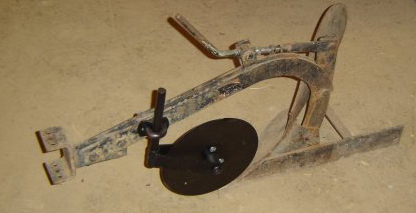
Jacobs & Co. would inform the Farming Public that they are manufacturing at Dayton several kinds of Ploughs, which have been heretofore approved, to which they invite the attention of those wishing to buy. These ploughshares – made of the best material, and warranted to be perfect in every respect – They are also manufacturing the improved revolving Colter, which is acknowledged to be far superior to the common straight ones. Call and examine for yourselves. Old ploughs will be repaired to order on reasonable terms.1


  1. The Ottawa [IL] Republican, April 29, 1854, p. 4, col. 4

Elizabeth Trumbo’s Will

The Elizabeth Trumbo house

Elizabeth Trumbo house

Will of Elizabeth Trumbo, Deceased

I, Elizabeth Trumbo of the Town of Dayton in the County of La Salle and State of Illinois, being of sound and disposing mind memory and understanding, do make publish and declare this to be my last will and Testament hereby revoking and making Void, all former Wills and testaments by me heretofore made.  It is my will, First that my funeral charges and debts shall be paid by my Executor Oliver W. Trumbo, my son whom I do nominate and appoint to be the sole Executor of this my Last Will and testament. In the Second place, what property remains after the payments of my just debts, and funeral charges and the Expenses attending the Execution of this my last Will, and the Administration of my Estate, I wish to dispose of in the following named manner, to wit; Third I give devise and bequeath to my daughter Mary Jane, wife of Isaac Green of La Salle County in the State of Illinois the sum of Two Thousand dollars, Also all that tract or parcel of land designated as Block one in Green’s Addition to the Village of Dayton, in La Salle County Illinois together with the house, and other improvements, and the household furniture, Beds bedding, and all the hereditaments and appurtenances thereunto belonging, or in anywise appertaining, to have and to hold the premises above described to the said Mary Jane Green of La Salle County Illinois, and to her heirs and assigns forever, Fourth, I give and bequeath unto my Grand son Walter Trumbo, Son of John Trumbo decd the sum of Eight Hundred dollars, when he shall arrive at the age of Twenty-one years But if he shall not live to become twenty-one years of age, then at his death, the said sum of Eight Hundred dollars Shall come back to my children, Fifth I give to my daughter-in-law Delia wife of Ahab Christopher Trumbo decd the sum of one dollar.

Sixth I give and bequeath unto my daughter-in-law Rebecca G. Trumbo, wife of Oliver W. Trumbo, of Dayton La Salle County Illinois the sum of Eight hundred dollars, also one Horse, One Spring Wagon together with any surplus in money or personal property that may be left after satisfying the above and foregoing Will. Seventh, All of my other heirs not mentioned in this will have heretofore been provided for.

In witness whereof I the said Elizabeth Trumbo have hereunto Subscribed my name and affixed my seal this Eighth day of April A. D. one thousand eight hundred and Seventy three1

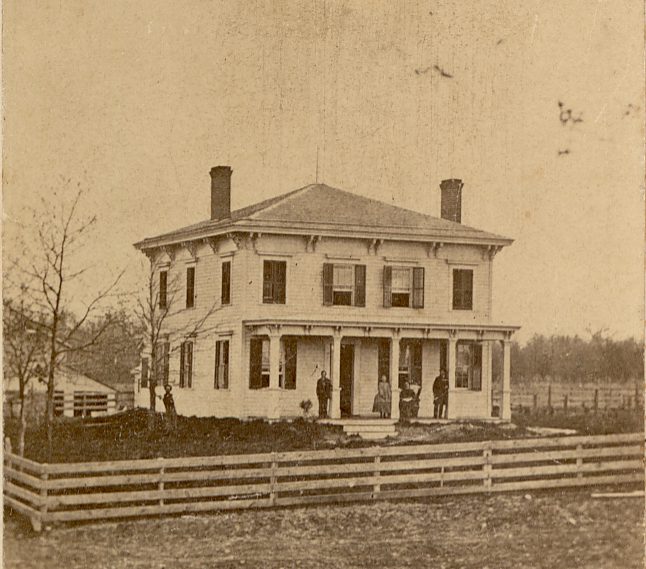
The house shown above , the one referenced in the third clause in the will, is also the place where Mary Jane Trumbo and Isaac Green were married. It is located at the top of the hill, on the south side of the road which leads down to the new bridge across the Fox river. The house is still relatively unchanged.


  1. Elizabeth Trumbo probate file, 1873, file T48, La Salle County Genealogy Guild, 115 W. Glover, Ottawa, IL.

Dayton Homemakers

Dayton Homemakers 1912

In 1911, a group of farm women in Dayton township got together and organized a club, shown above, with the object of social gatherings where they could get to know their neighbors and exchange ideas on home management. They began with twenty-three members who met monthly. They always had a speaker, discussion, and, of course, refreshments and visiting. They are still meeting in 2016, and are not so different from the meeting described below, which took place in 1922. Wouldn’t you have liked to hear the responses to their roll call? and not just for the recipes!

DAYTON HOMEMAKERS AT BELLROSE ABODE

The members of the Dayton Homemakers’ club held a meeting yesterday at the home of Mrs. Louis Bellrose in Dayton township. Practically all members of the club and a large number of guests were in attendance.

An interesting program was given. Mrs. Hans Vogel sang two solos, Mrs. Charles Long of the Rutland club told of the work her organization is doing, and Miss Houston of St. Joseph, Mo., who is visiting her aunt, Mrs. Charles Bellrose, told of her recent travels through Mexico.

A clever feature of the program was a roll call, when every member responded, giving her most embarrassing moment and her favorite recipe. Late in the afternoon refreshments were served by the hostess.

The September meeting will be held at the home of Mrs. John Eustis. This session was postponed one week on account of the county fair and will be held on Sept. 21.1

More information on the Dayton Homemakers can be found here.


  1. Ottawa Free Trader-Journal, August 11, 1922

Miss Fraine Retires

Retiring After 50 Years, Teacher Will Be Honored     Miss Fraine

Miss Emma C. Fraine of Dayton, a teacher for 50 continuous years in the rural schools of La Salle County, will terminate her teaching career at the end of the current school year.

To commemorate the occasion, residents of Dayton and the surrounding communities, her numerous friends and former students will honor her at a tea to be held Sunday from 2 to 5 in the Dayton Clubhouse. Miss Fraine is now a teacher at the Dayton school.

This well known teacher has spent her entire lifetime in the Dayton community and was born in the house in which she is residing. Her parents were early settlers, coming here from the village of Alsace, France, about the year 1875. She attended the elementary schools and the high school which was then taught in Dayton.

In 1902 Miss Fraine embarked on her teaching career which was to carry her over the span of a half century and many changes in the educational field. She first taught in a rural school north of Earlville, later going to Waltham Township to teach. She then taught in the Kleiber School northeast of Ottawa and in Grand Ridge. During the years she was busy furthering her own education and taking summer courses at DeKalb.

In the year 1907 she was assigned to teach the primary grades in the two-room Dayton school and has continued in that capacity ever since – a total of 45 years.

During those 45 years there have been nine teachers in the other room of the school. Miss Fraine’s co-workers included Ethel Wright, her sister, Jennie Fraine (now deceased), Francis Stangeland, Clark Raber, Verne Thompson, Mildred Masters Summins, Mrs. Geneva Beard, Delores Gretencord and the present teacher, Mrs. Naomi Trent.

Sunday’s tea is being planned by a large committee headed by Mrs. R. P. Schmidt and including all persons of the community which Miss Fraine has served so long. Her hundreds of friends, acquaintances, former pupils and their families will attend.

The chief entertainment of the afternoon for the one-time pupils of the Dayton School will be trying to identify themselves in the scores of pictures Miss Fraine has taken through the years and which will be on display in the clubhouse. The school house, too, will be open for those who wish to show their children or grandchildren where they were taught to read and learned the Golden Rule.1


  1. from an unidentified newspaper clipping, probably the Ottawa Republican-Times, in the spring of 1952