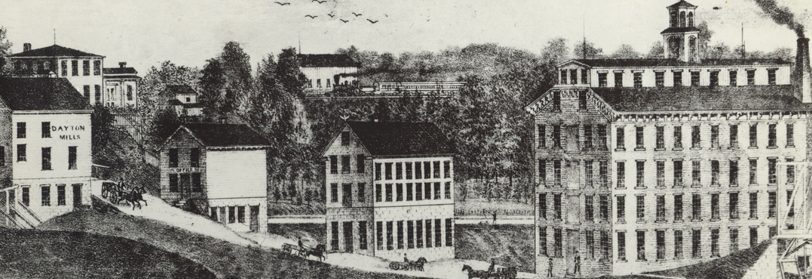
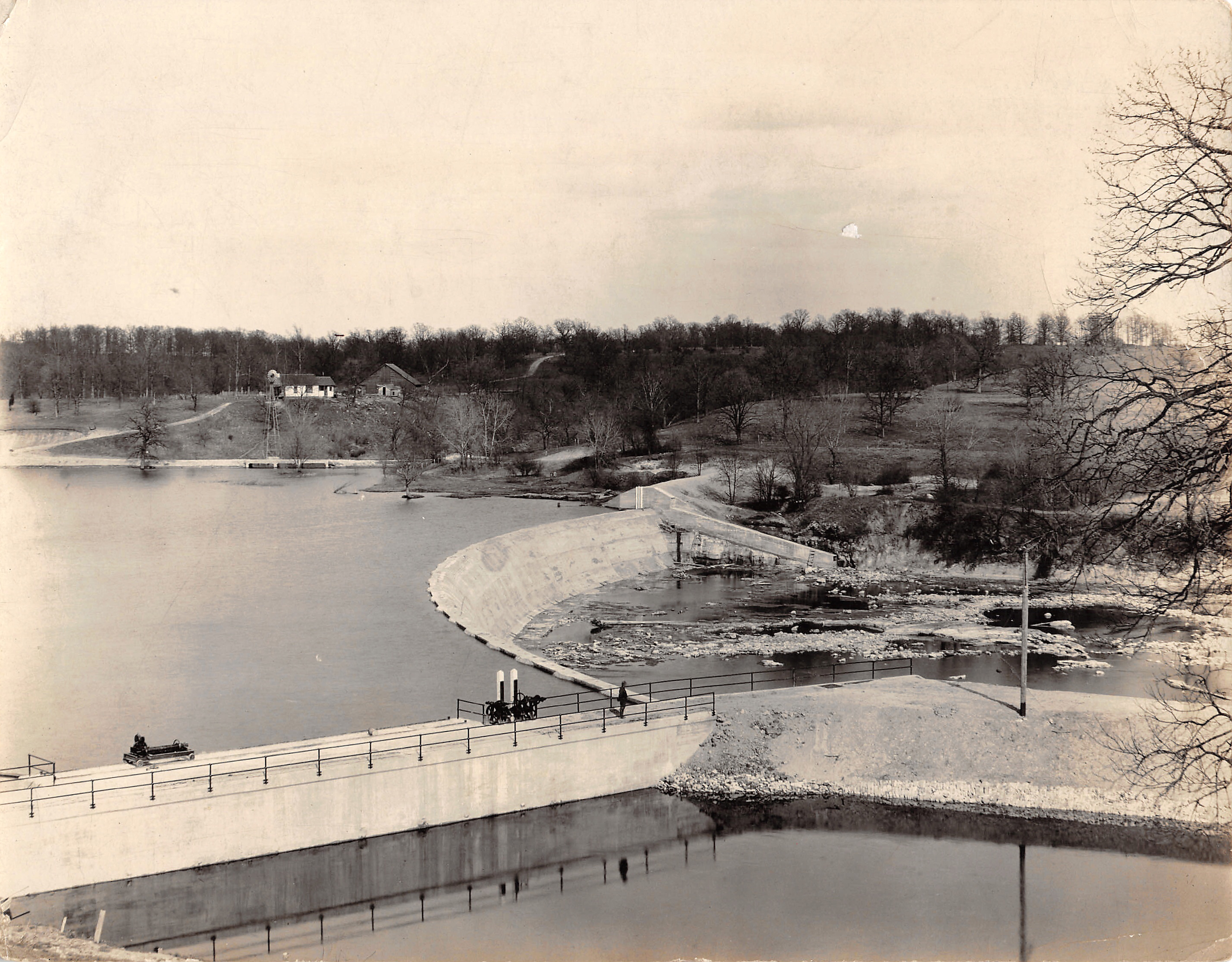
The new dam at Dayton, four miles north of Ottawa, and the big hydro electric plant with its turbines literally grinding out electric power represent the culmination of a dream of Ralph Green and Tom Bellrose of Ottawa, who in their minds pictured just such a scene a dozen or more years ago.
The new dam also represents the materialization of a dream of Fred Breit of Chicago, the man who organized the North Counties Hydro Electric Company, the operators of the power property. Work on the big dam was started last summer. The first power was carried over wires to Ottawa one day last week.
Away back in 1830 John Green, grandfather of Ralph Green, came to Illinois from Ohio seeking a suitable place to use water power, and he decided Dayton was an ideal spot. He started the first dam there. About ten years later the state took over the project from Mr. Green and built the old state dam, used to feed water to the I and M Canal, delivering water until 1904, at which time the dam washed out.
During the early days of the old dam, a woolen mill was operated at Dayton, deriving its power from the water there. This woolen mill was discontinued about 1855,1 and from that time until the old state dam washed out the power was used to operate brick and tile works.
About 1909 Tom Bellrose and Ralph Green and Robert Rowe of Sheridan began making plans for securing riparian rights along the Fox river from Dayton to Sheridan, believing that this part of the river was ideal for the development of water power which might be used in the making of electricity. It so happened that Fred Breit of Chicago came to Dayton to fish, and he, too, was impressed with the possibilities of water power there. The result was that he got together with the other men and today the new Dayton dam of the North Counties Hydro Electric company is an established fact. Fred Breit is one of the principal owners of the North Counties Hydro Electric company.
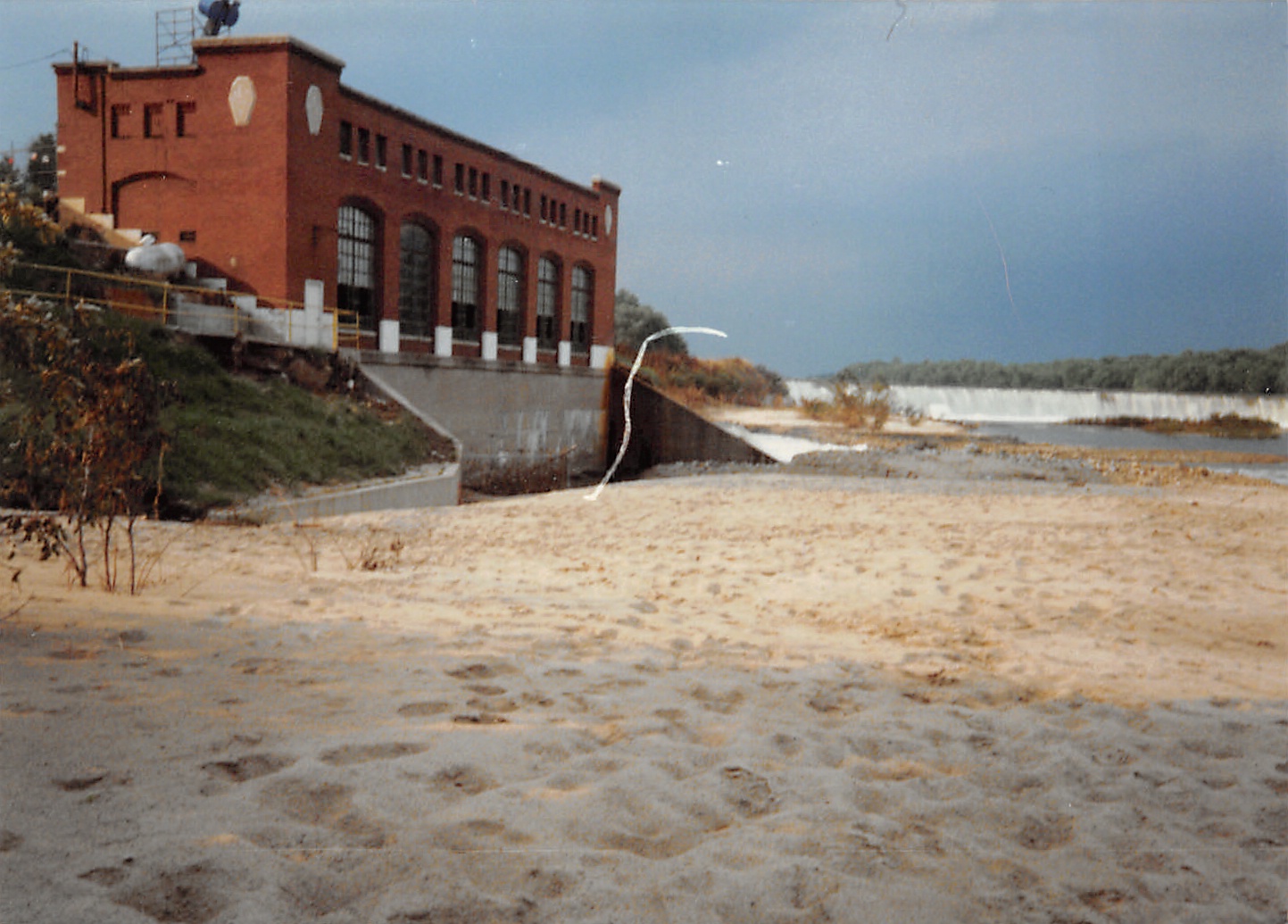
power plant and dam at Dayton
A 30-foot dam has been built across the river, developing a 29 foot head of water, which backs up the river a distance of about three and one half miles. A mill race has been put in and an electric power plant built. This plant has machinery of 5,500 horse power, there being two turbines developing 1,259 kilowatt each, and one developing 2,100 kilowatt.
The Illinois Light and Power corporation has contracted for the power, and high power lines have been strung from Dayton to that company’s Ottawa plant, the lines being 33,000 voltage. Power developed at the new Dayton plant is already coming to Ottawa.
The plant at Dayton is equipped with the latest machinery and when running at full capacity will develop about 5,000 kilowatts of electricity. About 1000 kilowatts are now being sent to Ottawa. Additional machinery has been put up at the Ottawa plant to handle the current coming in from Dayton, and Charles Hahn, superintendent of light and power, says that with this additional current and the manner of handling it, any protracted interference or interruption of power from his plant should now be eliminated.2
- Actually, it wasn’t until 1873, but I’ll make allowances.
- Daily Republican Times, March 24, 1925, p. 10.

