The Cannon Incident

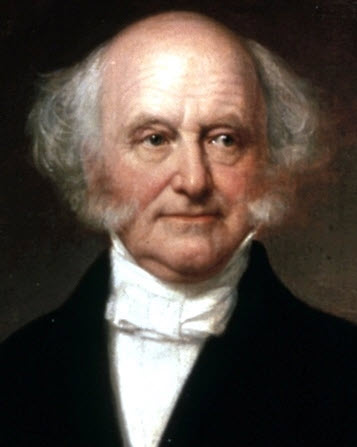
If you ever think politics today is dramatic, let me take you back to 1841, when a defeated President of the United States came to Dayton — for a fishing trip.

Martin Van Buren had just lost the election to William Henry Harrison, and apparently the cure for political heartbreak was ten days of rest in Ottawa with his nephew, the very dignified Judge John V. A. Hoes. (Yes, the same Hoes who later bought up half the Dayton lots without ever living here. Dayton has always attracted interesting people.)

Anyway, after a few days in Ottawa, someone had the bright idea to take the former President down to Dayton for a little fishing and fresh air. And because this was frontier Illinois, the “escort” was not a carriage or a quiet ride.

It was a procession of 150 men on horseback.

Picture it: a long line of riders, dust rising, horses snorting, the whole countryside turning out to watch. And at the head of the Dayton welcoming committee stood John Green, founder of the town, prominent Democrat, and the sort of man who would absolutely organize a crowd for a visiting President.

And then — because Dayton never missed a chance for a little spectacle — someone decided to fire a cannon.

Not a big cannon. Not a military cannon. A little cannon. A sort of “frontier noisemaker” cannon.

It was perched on a hill, ready to give the President a rousing salute.

What happened next is the reason this story has survived for 180 years.

The cannon went off. The horses panicked. And the Secretary of the Navy — James K. Paulding, a blunt, plain‑spoken man — nearly lost his mind.

His horse bolted. He started shouting. And according to the newspaper account, he threatened that if someone didn’t stop that “infernal idiot” firing the gun, he would “get down and lick him himself.”

This is, without question, the only time in American history that a Secretary of the Navy threatened to fistfight a man with a toy cannon in a town of a few hundred people.

The fishing trip, by the way, was a complete failure. Not a single fish. The locals blamed the Secretary’s swearing for scaring them off.

Dayton Homemakers’ Programs Over the Years

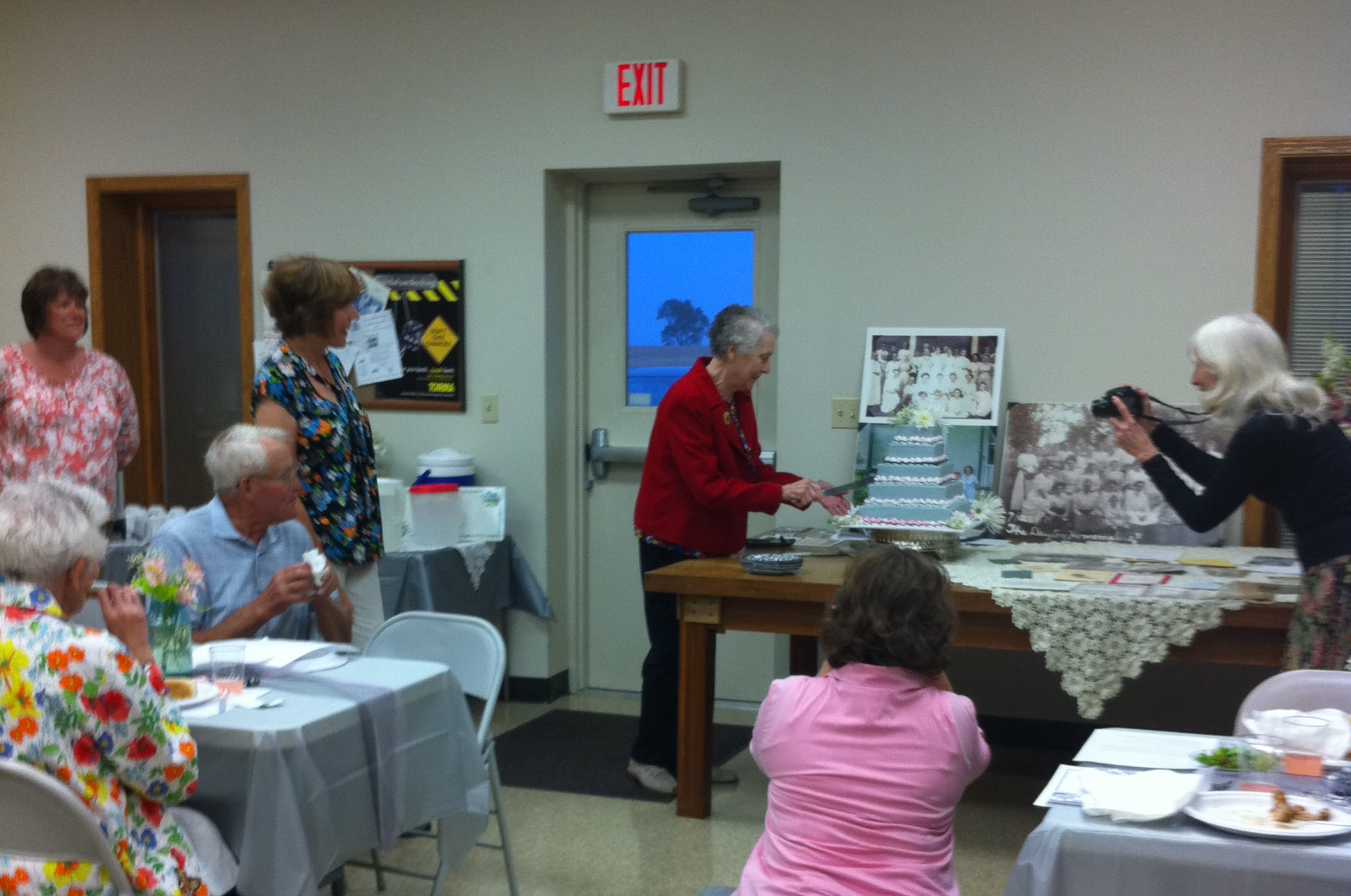
Rita Poole cutting the cake at the 100th anniversary of the Dayton Homemakers

The Dayton Homemakers’ 100th anniversary celebration marked a full century of meetings, programs, and community events. Looking back through the old programs, you can see the range of activities that kept the club going year after year.

Practical Talks & Demonstration

These were the backbone of the meetings — the Homemakers prided themselves on being both cultured and useful.

  • “Poultry Raising and House Cleaning” — discussion at Mrs. Frank Trumbo’s
  • Question Box sessions — open‑floor problem solving
  • Corn Varieties & Seed Selection — talk by Frank Beach, president of the La Salle County Farmers’ Institute
  • “Country Community Life in Illinois” — lecture by Miss Mabel Carney of Normal
  • California Travelogue — Miss Molly Strait’s winter trips out west
  • Sewing Bee — practical work session at Mrs. John McGrath’s, featuring “fancy things”

These programs were half education, half community support.

Musical Programs

The Homemakers loved music — and they had a deep bench of local talent.

Instrumental

  • Piano solos by Miss Dwyer, Miss Barrett, Irene Barrett, Lucile Bultman, Gertrude Beach
  • Violin selections by Miss Charity Sage
  • Mandolin & piano duets by Mr. and Mrs. Louis Belrose

Vocal

  • Solos by Mrs. Frank Beach
  • Solos by Mr. Louis Chally
  • Solos by Miss Josephine Trumbo

Music was the social glue — and the newspapers always noted who performed.

Literary & Dramatic Features

Dayton loved a good reading.

  • Readings by Mrs. Frank Funk
  • Readings by Mrs. Fannie Tucker
  • Dramatic dialogue by the Misses Erickson
  • “Corn Conundrums” by Frank Beach (a comic highlight at the Corn Party)

These were the moments when the Homemakers showed off their flair.

Social Events & Special Programs

These were the showpieces — the events that made the Ottawa papers perk up.

The Corn Party

Held at the home of Mr. and Mrs. Frank Beach

  • Corn‑themed decorations
  • Corned beef, corn bread, popcorn
  • Corn games, corn riddles, corn everything
  • Open to both ladies and gentlemen

Fourth of July Picnic

At Henry Schmidt’s farm

  • Formal program
  • Sports
  • A massive dinner
  • A crowd large enough to impress even Ottawa

Fundraising Programs

  • Raffle of a sofa pillow made by members, proceeds to the school treasury

Red Cross Work (1940s)

  • Sewing
  • Knitting
  • War‑effort support

This was the Homemakers at their most civic‑minded.

Conclusion

The Dayton Homemakers were practical, musical, literary, dramatic, social, and charitable.  They accomplished a lot in their first hundred years.

Cows, Cows, Cows

Green farm - barns

Green farm – old barn on left

The Greens were Dayton’s cattle people. If there was a cow to be bought, a bull to be shown, or a dairy improvement to be tried, a Green was probably involved.

John Green is where the whole thing starts on paper, but the newspapers only tell part of it. When he died in 1874, the executor’s sale listed more cattle than some townships had: thoroughbred short‑horns, high‑grade cows, bulls with pedigrees. He was building something substantial.

But the person who kept that operation running was his son Isaac. Isaac had been doing the work on the home farm since he was old enough to hold a pitchfork. By the time John died, Isaac was already the one managing the herd, the breeding, the daily grind. John built the foundation; Isaac kept the whole thing moving.

Then came Isaac’s son, Lyle, who took the farm into the modern era. Lyle imported cattle from the Channel Islands, bought expensive bulls from Buffalo, and eventually won Grand Champion at the La Salle County Fair. He was serious about dairying — not just keeping cows alive, but improving them. If Isaac kept the herd going, Lyle made it shine.

After Lyle, the farm went to the care of his brother Ralph — my grandfather. Ralph kept things steady. Not flashy, not experimental, just dependable. Every farm needs someone like that, the one who holds the line between the ambitious generation and whatever comes next.

And then “whatever comes next” turned out to be Charles, who married Ralph’s daughter and inherited the cows along with the farm. He worked with them for fourteen years, which was long enough to be polite about it, but the truth is he didn’t like dairy farming. At all. So the first real chance he got, he sold the cows. That was the end of the Green cattle era.

It didn’t end in disaster or drama. It just ended because the person who had to get up at 4 am didn’t want to do that anymore. And that’s as much a part of the story as the prize bulls and the imported heifers ever were.