How Dayton Residents Made Their Living
From Mills and Craftsmen to Factories and Industry
The 1850 census portrays a community whose economy was still rooted in local production. Grain mills and wool processing were important employers, while craftsmen such as blacksmiths, wagon makers, shoemakers, coopers, carpenters, and gunsmiths supplied the everyday needs of nearby farms and villages. Coal mining was present, but only as one occupation among many.
By 1860, wool manufacturing had become more organized and specialized. Instead of simply listing wool manufacturers and spinners, the census identifies workers by distinct stages of production, including sorters, carders, finishers, and weavers. This suggests that textile production was expanding beyond small workshops into a more complex industrial process. Traditional trades such as blacksmithing, carpentry, and wagon making remained important, but manufacturing was becoming more specialized.
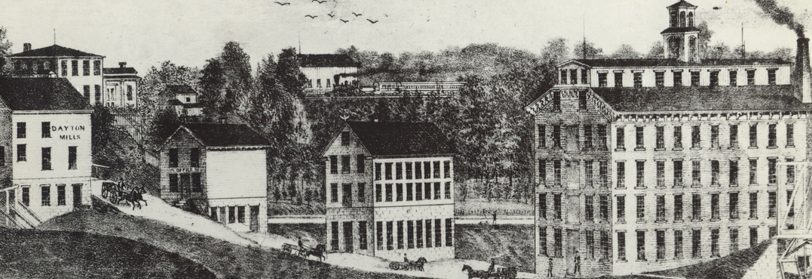
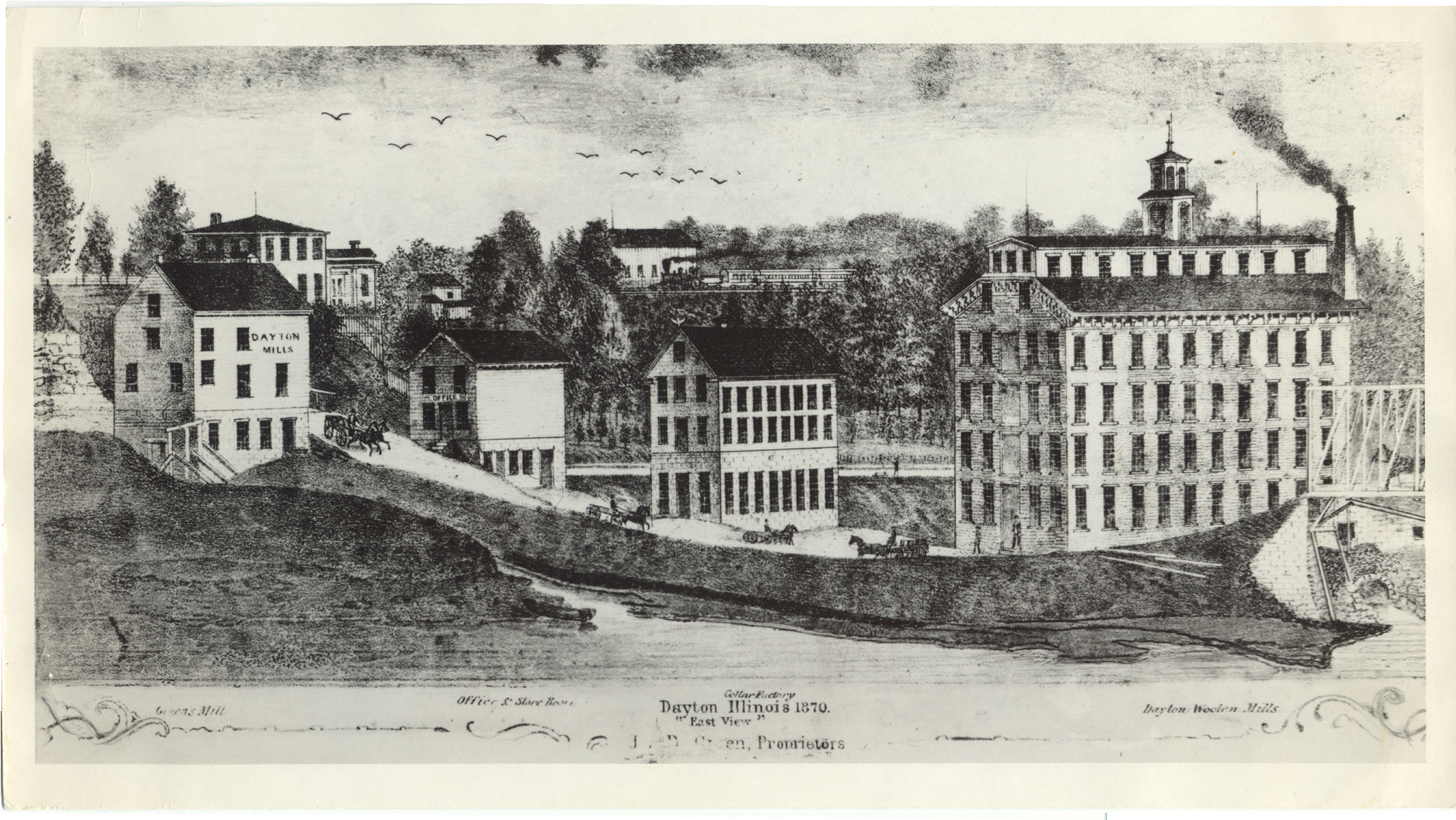
The trend accelerated after the Civil War. The 1870 census shows an increasingly diverse textile workforce that included fullers, dyers, spinners, cloth finishers, and weavers. At the same time, new occupations such as horse-collar makers, railroad watchmen, bookkeepers, and hotel keepers point to a growing local economy serving both industry and transportation.
The Rise of Transportation and Manufacturing
By 1880, the community was clearly entering its industrial era. Factory employment expanded into paper mills, horse-collar shops, woolen mills, and tile works. Occupations connected to transportation also became more prominent. Railroad section bosses, station agents, canal watchmen, draymen, and teamsters reflect the increasing importance of moving raw materials and finished goods.
The census also reveals a broader service economy. Brokers, postmasters, hotel keepers, and dressmakers appear alongside industrial workers, indicating a larger and more economically diverse population than existed thirty years earlier.
Heavy Industry Takes the Lead
The most dramatic shift appears in the 1900 census. The dominant occupations are no longer tied to wool production or small-scale manufacturing. Instead, sand works, brick yards, tile mills, and kilns occupy center stage. These heavy industries required large numbers of laborers, supervisors, and skilled workers and suggest that the area’s economy had become focused on extracting and processing raw materials.
Railroad occupations remained important, demonstrating how critical transportation had become to industrial success. At the same time, skilled trades evolved to support a more industrial society. Machinists, iron molders, stone masons, and commercial workers joined older occupations such as blacksmiths and painters. The appearance of salesmen, merchants, hotel managers, and commercial fishermen further illustrates a community whose economy had become far more varied and interconnected.
Long-Term Trends
Several broad trends emerge from the census records:
- Increasing specialization. Occupations become more specific over time, especially in the textile industry, where workers were identified by particular stages of production rather than by a single general trade.
- Growth of factory work. Small-scale artisan production gradually gave way to factory-based employment in wool, paper, horse-collar, tile, brick, and sand industries.
- Expansion of transportation jobs. Railroad and canal occupations became increasingly common as industrial production required better transportation networks.
- Decline in the dominance of traditional craftsmen. Blacksmiths, wagon makers, shoemakers, and similar trades remained present but became a smaller part of a much larger and more diverse economy.
- Emergence of commercial and service occupations. Bookkeepers, brokers, hotel keepers, salesmen, teachers, and other service workers appeared in growing numbers as the community expanded.
Taken together, the census records trace the story of a nineteenth-century community evolving from a local agricultural and craft-based economy into an industrial center supported by transportation networks, specialized manufacturing, and commercial enterprise. That transformation is visible not just in the businesses that operated there, but in the occupations residents reported from one census to the next.
Full disclosure: Once I assembled the census occupations, I enlisted the help of AI tools to do some of the heavy lifting in organizing and summarizing the information. They helped reveal trends across fifty years of records that would have been much harder to spot by simply staring at lists of occupations.

