A Shorthorn Matriarch
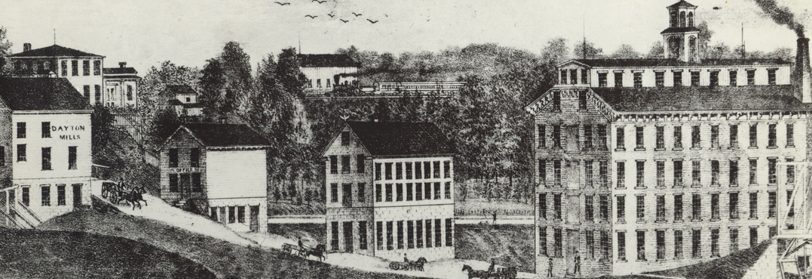
If you stand in the old barn long enough, you can almost hear them: the soft shifting of hooves, the creak of stanchions, the low, steady breath of cows who lived a century apart yet shared the same worn floorboards. The Green farm in Dayton held cattle for nearly a hundred years, and in that time the herd changed as surely as the world around it.
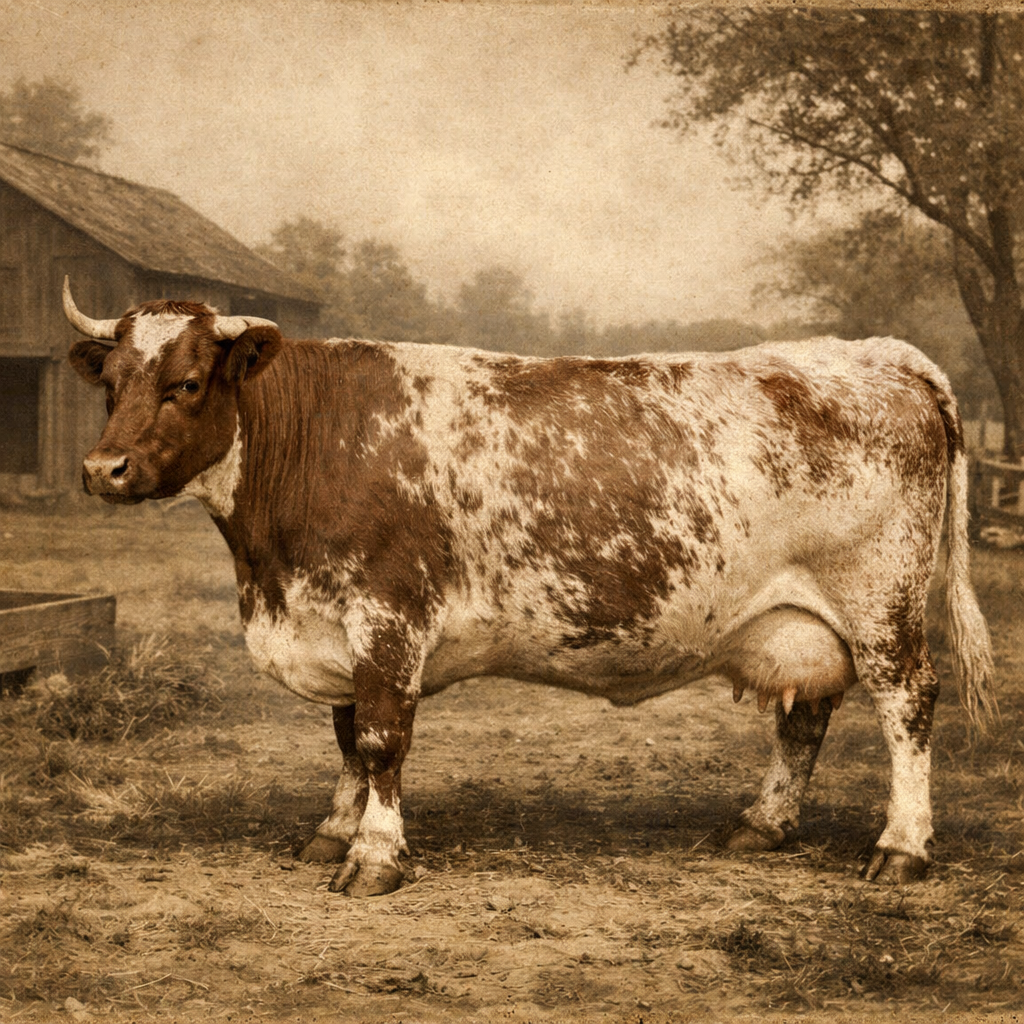
It began with Isaac Green in the 1850s, a man with an eye for Shorthorns and the patience to build a herd one careful breeding at a time. His cows had names like Bright Eyes, Lilac, and Jenny Lind — Victorian names for Victorian cattle — and their daughters and granddaughters shaped the farm for decades. Isaac’s herd was a breeder’s herd, full of ambition and pedigree, the kind of cattle meant to improve a breed, not just fill a milk pail.
When Isaac died in 1904, the Shorthorn era slowly faded. The cows aged out, the bulls were sold, and the farm shifted into a quieter rhythm as a new chapter began. By 1916, Isaac’s son, Lyle, was buying registered Jersey bulls; by 1918 he appeared in the Jersey Herd Register with more than seventy animals. The farm had changed breeds, changed purpose, and even gained a name — Greenacres — though the land beneath it was the same.
By the 1930s, Lyle’s Jerseys were a full, accredited dairy herd: sleek, golden cows tested and certified tuberculosis‑free by the USDA. Their birth certificates were ornate, their pedigrees carefully kept, and their milk rich with the butterfat Jerseys are famous for. This was the farm at its modern peak.
And then, in time, the herd shrank again. By the years I remember, there were maybe twelve or fifteen cows left. My father would walk across the bridge to the far pasture to bring them home in the evening, the river sliding by quietly as the cows came up the road in that unhurried way cattle have. They were the last generation — the final echo of a story that began with Isaac’s Bright Eyes almost a century before.


Beautifully written, Candace.
Patricia Poole Farren
LikeLike