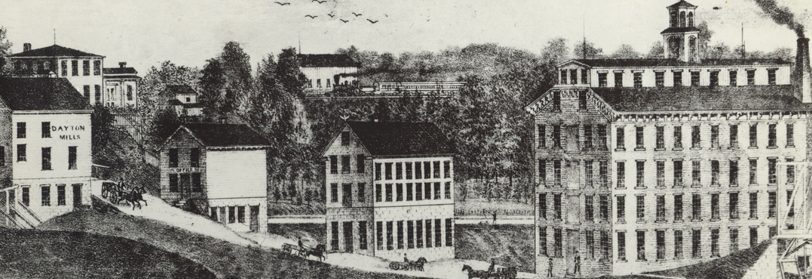
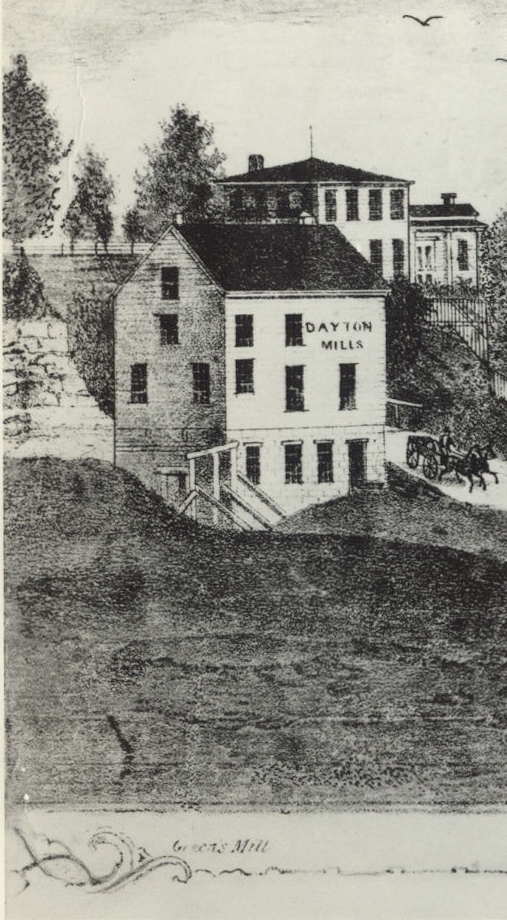
In the late nineteenth century, Dayton saw its share of opportunists, and one of them soon crossed paths with the Green family – specifically David Green’s widow, Mary, who now owned the Dayton mill.
In 1890 Levi K. Purky arrived from Newport, Indiana, expressing interest in buying the mill. Purky represented himself to John Green, Mary’s son who conducted all her business, as the owner of 500 acres of timber land in West Virginia. He described the land as near a railroad station and said that a natural flow of oil had lately been discovered near it. He further stated that the land was worth from $20 to $60 per acre and offered to trade the same for the mill and assume the mortgage of $2,500 on the mills. He furnished an alleged abstract of the land in West Virginia and the exchange was agreed upon
The mill was occupied at the time by one John Smeeth, and for the immediate possession of the mill Purky offered Smeeth 125 acres of the land. The exchange was made and Mrs. Green was given a deed for 375 acres of timber land in West Virginia.
It was then discovered that neither Purky nor the grantors of his deed had any interest in the property. Mary then sued to cancel the deed she had given Purky and that her property be returned to her. The Grand Jury indicted Purky for conspiracy and aiding in a fraudulent land sale. He was arrested and then released by giving a bond for $2000, with Basil Green on the bond.
Upon his arrest Purky employed lawyers to look into the matter. The investigation brought to light the fact that Purky himself was swindled in purchasing the land by the man who sold it to him. The latter gentleman, now residing in St. Louis, was visited by Mr. Purky’s attorney, When first questioned regarding the title of the land he pretended to know nothing about it. He was placed under arrest, made a clear confession of the whole transaction, and stated that he would willingly do anything to effect a compromise in this matter.
The man would undoubtedly be brought to Ottawa and the litigations commenced against Purky would undoubtedly be settled without ever coming to trial. The fact that no further items appeared in the Ottawa newspapers lends credence to this conclusion.

