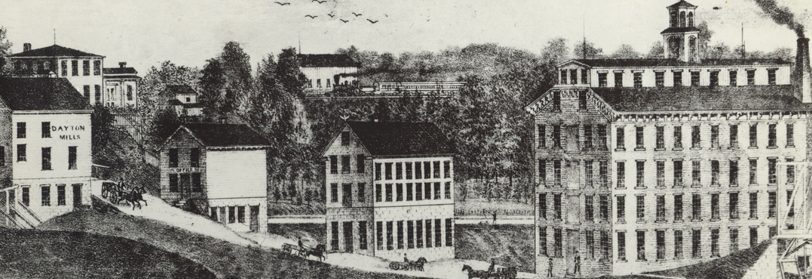

Green farm – old barn on left
The Greens were Dayton’s cattle people. If there was a cow to be bought, a bull to be shown, or a dairy improvement to be tried, a Green was probably involved.
John Green is where the whole thing starts on paper, but the newspapers only tell part of it. When he died in 1874, the executor’s sale listed more cattle than some townships had: thoroughbred short‑horns, high‑grade cows, bulls with pedigrees. He was building something substantial.
But the person who kept that operation running was his son Isaac. Isaac had been doing the work on the home farm since he was old enough to hold a pitchfork. By the time John died, Isaac was already the one managing the herd, the breeding, the daily grind. John built the foundation; Isaac kept the whole thing moving.
Then came Isaac’s son, Lyle, who took the farm into the modern era. Lyle imported cattle from the Channel Islands, bought expensive bulls from Buffalo, and eventually won Grand Champion at the La Salle County Fair. He was serious about dairying — not just keeping cows alive, but improving them. If Isaac kept the herd going, Lyle made it shine.
After Lyle, the farm went to the care of his brother Ralph — my grandfather. Ralph kept things steady. Not flashy, not experimental, just dependable. Every farm needs someone like that, the one who holds the line between the ambitious generation and whatever comes next.
And then “whatever comes next” turned out to be Charles, who married Ralph’s daughter and inherited the cows along with the farm. He worked with them for fourteen years, which was long enough to be polite about it, but the truth is he didn’t like dairy farming. At all. So the first real chance he got, he sold the cows. That was the end of the Green cattle era.
It didn’t end in disaster or drama. It just ended because the person who had to get up at 4 am didn’t want to do that anymore. And that’s as much a part of the story as the prize bulls and the imported heifers ever were.

