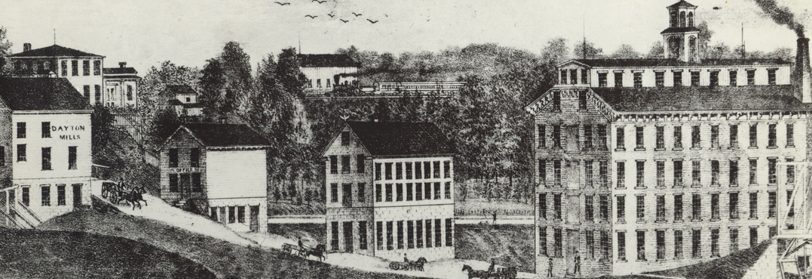

The Dayton woolen mill, shown here in its formal portrait
The 1850 census of Dayton provides a detailed snapshot of the town’s early industrial life, and it reveals a pattern that does not appear in the later county histories. Every skilled worker employed in the woolen mill that year—spinners, carders, finishers, and clothiers—came from regions with established textile traditions. None were born in Illinois, and none were drawn from the surrounding farming community.
Several workers were English, part of the long‑standing movement of textile specialists who carried technical knowledge from Yorkshire and Lancashire to American mills. Others came from New England, especially Connecticut and Massachusetts, where woolen manufacturing had been well developed for decades. Additional workers arrived from Pennsylvania, New York, and Ohio, all states with earlier industrial centers than Illinois.
This pattern indicates that the Dayton mill did not grow out of local labor or local experience. It was a transplanted enterprise, staffed by people who had already worked in textile settings elsewhere. Even the mill owners, the Green family, had migrated from Licking County, Ohio in the 1830s, bringing with them the capital, skills, and connections needed to establish the business.
The county histories written later in the nineteenth century focus on the mill’s proprietors and on the township’s pioneer farmers, but they rarely mention the mill hands themselves. The census, however, preserves a different picture: in 1850, Dayton’s woolen mill operated entirely through the labor of migrants from older industrial regions. The mill was an industrial island on the prairie, shaped by people whose experience had been formed far from Illinois.

