
Big Fire at Dayton in 1890

burning building

BIG FIRE AT DAYTON

The City Hotel, Owned by James Timmons, Goes Up in Smoke

W. B. Soule, Vice President of the Brick Works, Narrowly Escapes Death – The Loss Estimated at $2,000 – Insurance, $1,000.

Shortly after 12 a. m. Friday morn the people of the little town of Dayton were aroused from their slumbers by the cry of fire, and in a few moments the demon presented itself in its greatest form. The city hotel, the largest building in the town, was the scene of the conflagration, and the flames had gained such headway before being notices that it was utterly impossible to subdue them in any way, and in a few moments the building was a mass of ruins. There is no fire department in the town, but the people turned out en masse, and with buckets and tin pans fought the flames as best they could while the furniture was being removed.

Their battle against the flames and smoke was for a few minutes only, and they were compelled to give up and stand by while the building, furniture and all sunk before their gaze. The fire was first noticed by the engineer at the mill, and it was his cries that awakened the inmates of the house. The fire originated in the kitchen, located in the east end of the house and only a few feet from the C., B. & Q. R. R. track. The origin of the fire is unknown, but it is generally supposed that it caught from the sparks of a passing engine. This is merely a supposition. There was no fire in either of the cook stoves in the kitchen, but it might be that the fire was the work of an incendiary, although Mr. Timmons, who was the landlord of the house, says that he does not think that he has an enemy in the town.

There were ten boarders at the house, and of this number all escaped without any injuries except W. B. Soule, the vice president of the Fox River Brick Company. He is a man about 75 years of age, and did not know of the fire until the flames entered the room that he occupied. When he awoke his room was filled with smoke, and had it not been for the assistance of two of the other boarders he would have been burned to death. As it was he narrowly escaped suffocation and is now lying in a very critical condition.

The house was a two story brick building and was well furnished. In the cellar were stowed away sufficient supplies to run the house for the winter. These, together with nearly all the furniture, were destroyed. In fact there was only very little saved, and the damage is estimated at $3,500. The building was insured for $1,000 by MacKinlay & Warner, of this city, leaving a loss of about $2,000.

The hotel was an old landmark in the town, and was a pleasant resort to the hundreds of fishermen, from this and other cities, who visited Dayton during the summer months. Mr. Timmons was interviewed by a representative of this paper, this morning, and as yet he is undetermined whether to re-build.1


  1. Ottawa [Illinois] Republican-Times, November 28, 1890, p. 2, col. 3


Almost a Tornado

TwisterRural Happenings

Dayton, June 19, 1879. – Our town and the surrounding country was visited last Saturday by a terrible strong wind and rain storm, almost a tornado. Old residents say it was the hardest storm that has visited our place for many years. Trees by the score were blown down, fences demolished, and a general confusion ensued, The new residence of Mr. Welke, almost completed, was moved six or eight feet off the foundation. Mr. W. happened to be on top of the building at the beginning of the storm, and judging his position to be too perilous, got inside when without a word of warning his building commenced sailing off. It is needless to state that our teutonic friend was somewhat frightened. About one half of our centennial flag pole was broken off and blown down into the street. Three or four large cherry trees and as many apple trees, on the Stadden property, were broken down. But the most destructive feat of the storm was the almost entire destruction of a crab apple grove on Mr. Jos. Barnes’ place southwest of town on the lane leading to Ottawa. Here large trees were broken and hurled with great force across the pasture, over the fence to the other side of the road. Mr. Barnes had a great deal of fence blown down and eight or ten nice large trees on his place broken off. Mr. Eisenhuth’s barn south of town was completely demolished, not a stick left standing. Nearly all of the roof of Mr. Stadden’s barn east of town was blown off. In fact from all accounts our place seems to have been in the centre of the tornado.1


  1. Free Trader, June 21, 1879, p. 8, cols. 1-2

Graphic By:Cartoon tornado from 365PSD.com

Who is This Man and Why is He Here?

Gerret Harms tombstone before restoration

There is a tombstone in the Dayton cemetery for Gerret J. Harms. There are no other Harms burials. He does not appear to be related to anyone else buried in the cemetery. There is no obituary for him in the Ottawa paper. Where did he come from, and how did he come to be buried in Dayton?

There were no Harms families in La Salle county, but Gerret did have family here – his wife’s family. Gerret was born in Hanover about 1839/40. He came to the United States around 1861, and went to Boston, where he met and married Marina Barends on August 22, 1863. Marina came from a Dutch family, many of whom anglicized their name to Barnes. They had two children, Hannah, born in 1865, and Gerret, born in 1868.

Whether Gerret was a farmer in Germany or not, he appears to have wanted to go into farming. Marina had four brothers who had gone west and settled in La Salle county, Illinois, in Dayton and Rutland townships. Apparently their reports were favorable, because in 1870 Gerret and Marina were living west of the city of Ottawa where Gerret did not own land, but was employed in farming.

They had another child, Frederick, born in 1873 in Ottawa, but then, on July 14, 1873, Gerret died. Although he lived some distance from Dayton, two of Marina’s brothers lived in Dayton township and they must have arranged for Gerret to be buried in the village cemetery. By 1880, Marina and the children had returned to Boston, where much of her family had settled. She never remarried but lived in Boston until her death, November 2, 1893.

While they were living in Illinois, apparently daughter Hannah made a deep, if youthful, impression on her cousin Peter Barnes, son of Marina’s brother Nicholas, as Peter came to Boston and married Hannah on March 2, 1893.

Gerret Harms, tombstone

The pieces of his tombstone have now been reassembled and stand upright. Some of the pieces of his story have now been reassembled as well.

There’s WHAT? in Them Thar Hills


moonshiners

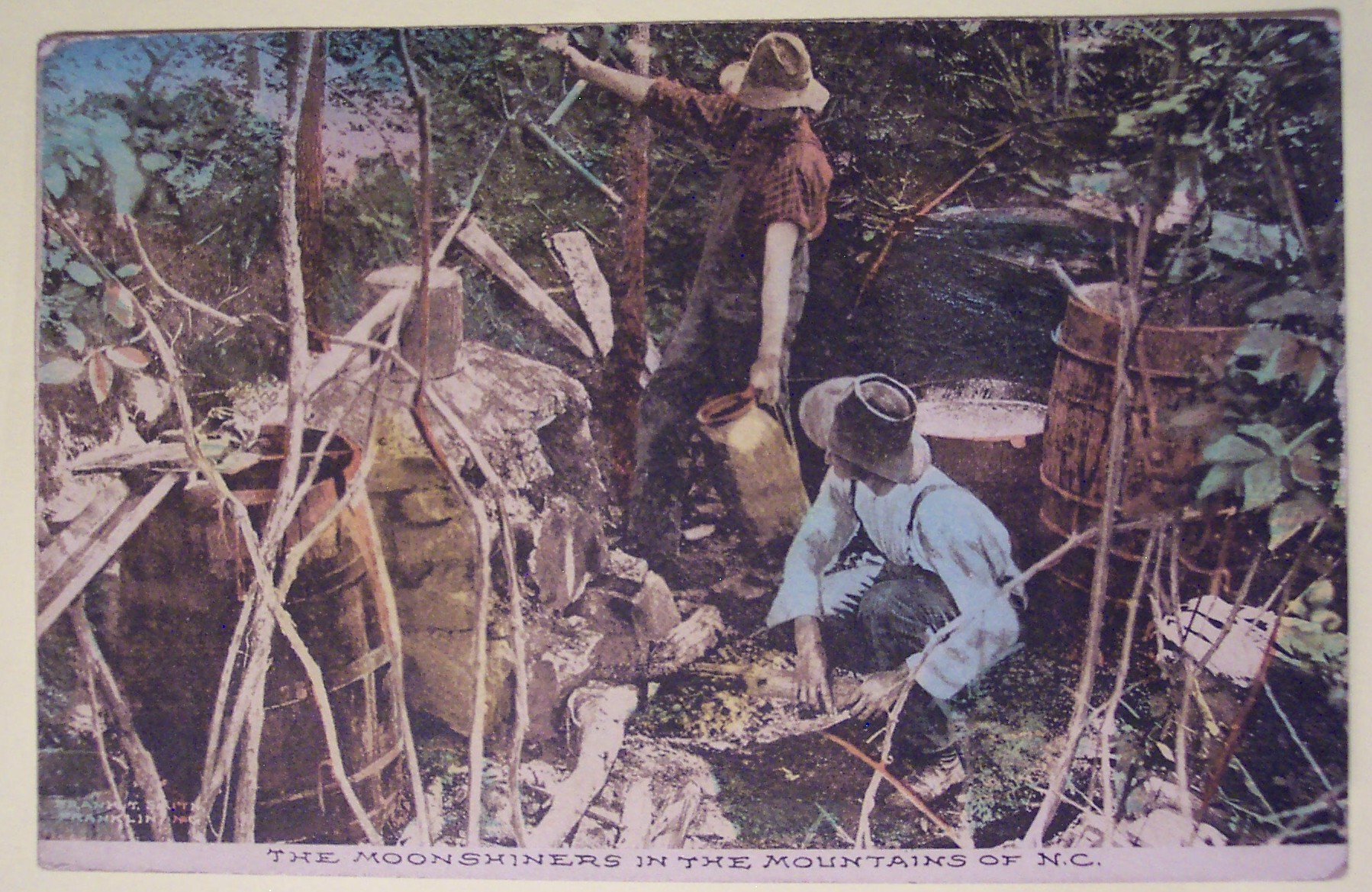
New businesses are not always welcome, especially when uninvited. Some time around 1950, without the knowledge of the owners, a still was being operated on the Green farm, in one of the ravines north of the barn. For several weeks there had been rumors of a still in operation somewhere in Dayton. Then Dom DiBernardi, who kept the store in Dayton, told Charles Clifford, operator of the Green farm, that three boys had seen the still. Clifford investigated and, upon finding the still, contacted Harland Warren, La Salle County State’s Attorney. Warren, in turn, contacted the Internal Revenue Service. An agent for the Alcohol and Tobacco Tax Division was sent out immediately and was shown to the scene. He commented that apparently someone had returned to the still the previous night and attempted to burn part of the barrels and remove several pieces of pipe. He described the still as “peculiar” and seemed to think the operators were on the amateur level. The still had been chopped to pieces, and no further investigation was planned. Mrs. Ruth Green, owner of the farm, was subjected to considerable teasing in the days that followed.

A Party in Dayton

party-ribbons-balloons-background-free-vector

Dayton on September 14, 1929, was the scene of a glorious centennial party, marking the 100th anniversary of the arrival of the Green party in Illinois. Two bands, a children’s chorus, and a dance orchestra provided music; a gigantic tug-of-war and other tests of skill and strength amused the merry-makers; and former residents came from near and far to join the festivities.

A marker was dedicated on the spot where the mill-stones were found which were used in Green’s mill, the first water-powered mill in northern Illinois. The marker, a brass plate with the story of the discovery, was placed on a boulder set in cement, along the east bank of the river. Although the boulder may still be there, the brass plate disappeared many years ago.

During the afternoon, Miss Maude Green, Mrs. John Bowers, Miss Helen Hallowell and Miss Edith Reynolds donned garments of several decades ago and promenaded the streets, reviving an interesting bit of history in regard to modes and fashions. Only the marcelled hair of Miss Hallowell and Miss Reynolds which peeked from underneath their quaint old bonnets showed that they were maids of the twentieth century rather than of the days when Dayton was in its infancy.

There were many mementos, relics and curios on display:
.     straw plug hat and woman’s straw hat of the vintage of about 1800
.    old candle molds
.    flintlock guns which belonged to Peter W. Ainsley and Tim Thompson
.     blankets and coverlets made in the old woolen mill
.     hoop skirts, dresses, black silk and satin capes
.     an 85 year old spinet, having twenty-nine keys, and thirty inches in height
.     a tardy bell and a call bell from an old school
.     mourning shawls and hats, which were loaned out at the time of funerals

The revelry went on well into the evening and a good time was had by all.

John Heath Breese – Civil War Veteran

photo of John H. Breese tombstone

John Heath Breese was born October 12, 1830 in New Jersey. He was married to Elizabeth Lewis in Peoria, Illinois, on November 16, 1859. They had seven children: Nellie Virginia, born September 2, 1861; Ellis E., born April 14, 1867; Emmor E., born 29 June 1869; Cora, born September 19, 1871; Nora B., born March 11, 1874; William L., born October 25, 1876; Walter, born December 24, 1878.

At age 32, he enrolled as a private in Company C, 1st Regiment, Illinois Light Artillery Volunteers on August 22, 1862. He participated in a number of noted campaigns: the battles of Chicakamauga, Missionary Ridge, and Kenesaw Mountain, and Sherman’s march to the sea. He was discharged at Springfield, Illinois, June 12, 1865. He suffered from rheumatism and heart trouble as a result of a fever he contracted at Nashville in the winter of 1862-3. He spent some weeks in the hospital and suffered from rheumatism from then on.

This severely limited his ability to do farm work and made him eligible for a pension. On his return from the war, he spent 8 years in Kansas, returning to Dayton in 1874. In the summer of 1880 he was working in the paper mill in Dayton when he injured himself jumping up out of a pit without waiting for the ladder to be brought. In 1889 he applied for a pension from the federal government, claiming rheumatism and heart trouble due to the sickness he suffered in January 1863. In 1892, after the investigation into his claims, he was granted a pension of $8/month, retroactive to August 16, 1889. In 1903, he applied for an increase, claiming total disability; his pension was raised to $12/month.

He died in Dayton, September 30, 1914. Both he and  Elizabeth are buried in the Dayton cemetery, along with children Nellie Virginia, Ellis, Emmor, and Nora (wife of Lowell Hoxie).

Holidays at Dayton

Walter Brown cottage - Dayton

Walter Brown cottage – Dayton

In the late 1800s and early 1900s Dayton was quite an attraction. In the summer weather it was the stamping ground of many a picnic party. During the fishing season, sportsmen and picnickers flocked there by the hundreds.  A few brought tents and camped out for a few days, although unseasonal cold weather could put a damper on events. A number of summer cottages were built along the east side of the river, below the dam. One of these cottages, pictured above, was owned by Walter Brown, and the Green and Brown families spent many vacations there in the summer. A camping trip to Dayton was popular with residents of other towns, also, as shown in the newspaper reports below:

1881
The river is falling slowly, and is now being crossed at both fords. Fishermen and sportsmen are here in great numbers. The Earlville people seem to have struck a “boom” and are turning out en masse for a good time fishing and camping out.

1882
Our busy little neighbor, Dayton, besides becoming famous for her horse collars, woolen goods, tile and paper, is getting to be quite a popular summer resort. The stream of visitors during the few weeks since the fishing season opened must be enormous, for on every bright day at least the banks of the river are lined with people. As a sample of the size of parties: – Some 25 couples from Streator went up in a special car on Tuesday! Already the campers have begun to put in their appearance, and it is altogether likely that from this time until fall there will be no great diminution in the number of visitors. We should think the citizens would turn this flood of tourists to their advantage; and they certainly could make themselves vastly popular with the people of the Fox River Valley by lending their aid in the suppression of illegal seining in their waters.

1885
A mammoth pleasure excursion and basket picnic has been arranged to run from Streator to Dayton on Tuesday, Aug. 18th. For three years similar excursions have left there, and this promises to be the most enjoyable of all. Dayton’s beautiful scenery, fine shade, and unequaled reputation as a pleasure resort is unsurpassed, and Streator people, having no such beautiful or romantic camping out places near their city, have to come this way for such beneficial pleasures.

1901
The camp just north of the ice house above the dam, is certainly an ideal spot. There are about a dozen glass blowers from Streator at the camp, and sometimes as many as fifty visitors can be seen enjoying camp life at one time. Good boating, turtle soup and fresh fish always on hand, and no one who ever visited there ever went away without leaving sweet memories behind. On Saturday, August 17th, will be “Ladies’ Day” at the camp, when the wives and lady friends of the members will be present and a most enjoyable day is expected by all. Good music and dancing will be one of the features of the day.

Twenty-nine boys ranging in age from five to ten years of the “Fresh Air Fund” arrived over the Q. R. R. at 11:17 A. M. on Tuesday. A number of ladies and gentlemen from Ottawa met them at the train and escorted them to their camping ground, just west of Basil Green’s residence. The camp presents a very pretty appearance, everything about it being very neat and tidy. Eight tents comprise the sleeping apartments, while one dining, two commissary and one kitchen tent make up for the rest. Felix Mader of Ottawa presides over the culinary department, while Charles Caton acts as his assistant. Through the courtesy of Mr. Basil Green a dam has been built just south of the camp, where the boys may bathe and enjoy a fresh water bath, unlike that of the Chicago river. Judging from the first day or two, the visitors next week will be very numerous, and will no doubt wake up this old burg, which has so long been sleeping.

1902
There are more than one hundred people in camp along the Fox river between Dayton and Wedron.

1908
Dayton, just north of Ottawa, on the Fox river, is becoming a great summer and fishing resort. A party from Streator has been camping there for several weeks. The Burlington sells from fifteen to twenty tickets each day to parties who go there to spend the day fishing and visiting the campers already there.


Stay Away From That White Clover

cows

An example of quick thinking:

A few days ago one of J. Baker’s (Dayton township) most valuable cows was taken violently sick after eating white clover. Seeing that death was inevitable unless immediate relief was given, Mr. B. made an incision, with a knife, 7 ½ inches below the backbone and 7 inches from the hip. Result, the cow is now well.1

One of the great dangers to cattle pastured in a field with white clover was that of pasture bloat. Bloat, the buildup of gas in the stomach, is part of the normal process of digestion and is usually gotten rid of by belching. Eating the white clover produces foam which blocks the release of the gas. Death can come on in as little as fifteen minutes, so Mr. Baker’s quick act was necessary to save his cow’s life.


  1. The Ottawa Republican, June 22, 1883, p. 8, col. 4

Kill or Cure?

cartoon of shivering man

The early settlers of Dayton were subject to the fever and ague which prevailed to a large extent for a number of years. It was expected that every newcomer would necessarily have a siege of it to acclimate him. Jesse Green tells of how he became acclimated.

I will relate a little of my own experience in this line. It seemed to require more of the shaking up process to acclimate me than most others. I had it regularly every fall up to 1843 when I became so tired and disgusted with it that I concluded to try the remedy that my father experienced when moving to this country, and which proved successful in his case. I began to think that if cold water alone was a specific for that annoying complaint, we had plenty of it very convenient in a wool scouring box about six feet long, two and a half feet wide and three feet deep in the woolen factory. I had made up my mind to jump into this box of water a little before my chill came on, but being busy neglected it until I was shivering like an aspen leaf. I jumped in with my chill and with my clothes on, not caring very much whether it killed or cured. It came very near the former, as by the time I walked up home with wet clothing, I was shaking so badly that my wife thought I would shake down the old brick hotel where we were living at that time. I had a slight chill the next day, but have not had an attack of fever and ague since.

Christmas Greetings, 1884 Style

1884 Prang Christmas card

If you received this card in 1884, you were part of the new American practice of sending Christmas cards. The first Christmas card originated in England in 1843, but not until Louis Prang, a Boston lithographer, introduced them in 1875 did they become popular in America. By 1881 he was printing as many as 5 million cards a year. The earliest cards were simple flower designs with the words “Merry Christmas.” Later, the cards had more traditional holiday motifs and some were fringed with silk, as in the 1884 Prang card shown above. His cards used the new method of photolithography to produce the intense color and gradation that he was known for. This was a very labor-intensive process, and when cheap German cards flooded the market in the early 1890s Prang got out of the greeting card business rather than lower his standards. Perhaps you could have bought this card or others like it at the Dayton store, but if not, a good supply could be found in Ottawa at the millinery store of Mrs. Gregg, on Main street.

The Terrors of Cholera

Cholera was an ever-present danger in the middle of the 19th century and the disease could strike swiftly and cruelly, as this newspaper article from 1854 shows. Aaron Daniels lived just across the Fox river from Dayton and was related to members of the Green family.

Cholera—Fearful Mortality

While there has not, during the present season, been a single case of cholera in Ottawa, originating here, and our city has been unusually healthy, the disease has on several occasions broken out in some isolated families in our vicinity, like a fire in the night, consuming every thing before it. The last family that has suffered from its terrible visitation is that of Mr. AARON DANIELS, a respectable farmer, residing about three miles north of Ottawa, east of Fox River. The disease first made its appearance in his family on Friday of last week, and up to last Thursday morning six of its members has fallen victims to the ruthless scourge, as follows:

On Saturday evening, Minerva Daniels, daughter of A. Daniels, aged about 17.
On Monday night, Jonathan Daniels, son, aged about 20 years.
Ruth Ann Daniels, daughter, aged about 14 years.
Judith Daniels, daughter, aged about 11.
Aaron Daniels, son, aged about 4 years.
And on Thursday morning Mrs. Aaron Daniels, aged about 40.

The family of Mr. Daniels being largely connected in the neighborhood, a number of persons—friends and relatives—visited and remained at the house during their affliction, nearly all of whom have since been taken with the disease, and in many instances, with fatal results, as the following melancholy list of the dead will show.

On Monday evening Geo. Head, son of Thomas Head, aged about 18 years.
Same day Louisa Parker, child of Mrs. Parker, daughter of Aaron Daniels—aged about 4 years.
On Tuesday morning, Mrs. B. Fleming, sister of Mrs. A. Daniels.
On Wednesday, Alvah Channel, living with A. Daniels—aged about 20.
On Sunday, Miss Kingsley, school teacher, lately from Mt. Palatine. She had been boarding in the family of Mr. Daniels until the cholera made its appearance, when she started for home, but was taken at Ottawa, where she died.
On Thursday, Mr. Garrett Galvin, who had assisted in burying the deceased members of the family of Mr. Daniels.

We hear of several others in the neighborhood who have taken the disease, but up to yesterday morning of no more deaths. All the persons taken thus far, we believe were at the house of Mr. Daniels, either calling or assisting there, during their affliction; and it is remarkable that the disease has spread in no families where there have been cases except that of Mr. Daniels. The only cause we have heard assigned for this fearful visitation is the fact that a few days before the disease made its appearance, Mrs. D. had used fresh pork in his family. This alone, although doubtless very unhealthy food at this season, is not believed to be of itself sufficient to account for the fatality ascribed to its use, except on the hypothesis that the pork had become tainted. Considering the extreme heat of the weather, this is not unlikely to have been the case, and although it may not have been perceptible, we are assured that the slightest taint will render such meat otherwise not unwholesome, as poisonous as strychnine.

The reports circulated in town that the family had suffered for want of attention, and that great difficulty had been found in obtaining assistance to bury the dead, &c., we know to be wholly untrue. The truth is, that during most of the time, too many persons were at the house. The family has many friends and relatives in the whole neighborhood, and frequently they gathered in so numerously that they were advised to keep away. Sufficient help was constantly at hand, and complaint on that score is neither made by Mr. D. nor, if made, would be just to his neighbors.1


  1. The Ottawa [Illinois] Free Trader, August 19, 1854, p. 3, col. 1

Christmas Shopping 1875

Christmas

If you were Christmas shopping in Dayton in 1875, you were reading the ads in the Ottawa Free Trader carefully. You might have chosen your Christmas gifts from any of these:

Handsome trimmed cloaks at $5.00
Table lines, towels and napkins – fine turkey red damask – $1.00
Nice two-button kid gloves $.75
Handsome new chintz print dress goods – 6 to 8 cents per yard
Paisley shawls from $9 to $60
Large, all wool blankets $5.50

For the ladies: special attention is called to the new Florentine hat, which is a marvel of beauty and commands the admiration of all. Also, the “Vampire Queen”, trimmed beautifully by our new trimmer.

For the gentlemen: cigars, tobacco, and tobacconists’ fancy articles generally, such as fine genuine meerschaum pipes, cigar holders, cigar cases and brier pipes.

And of course, toys for the children!

For Christmas Trees

Mr. Louis Hess, on Madison street, has bought the largest stock he ever had of fancy candies, for special use as ornaments for Christmas trees, such as fruits, toys, &c., &c.; also fancy cakes of all kinds, of which he always has a fine assortment, and will manufacture to order. And, by the way, as we need crackers with our oysters, it should be remembered that he manufactures all his crackers himself and his customers will hence be able to get them fresh every day.

All Kinds of Woolen Goods

Jesse Green and Sons business card

The woolen factory at Dayton produced many different products. Cassimere was a closely woven twilled fabric. It had a smooth surface and was used for suits. Jean was not the same fabric as denim in the 19th century. Topcoats, vests and jackets could be made of jean in different colors – black, blue, or white. Denim was used for work clothes worn by manual laborers, while other workers would be dressed in tailored trousers made of jean. Although the two fabrics were similar, denim was made with one colored thread and one white thread; jean was woven of two threads of the same color.

Sock yarn could be had in a light mixture or in a blue grey. Carpet yarn also came in assorted colors. Blankets (white, grey, or multicolored) and buggy rugs were available to keep out winter’s cold and wind. Carpet was made in a number of styles and flannel could be purchased in white, scarlet, grey striped, or black and white check.

Other varieties of cloth included satinett (half wool and half cotton, but finished the same as wool); doeskin (a twilled fabric that came in different weights); linsey (a strong, coarse fabric with a linen or cotton warp and a woolen weft); and tweed.

Maud Green remembered that “Grandma [Barbara Grove Green] spent her time knitting socks and long stockings for all of us, out of factory yarn, and we had woolen underwear, skirts and dresses made of factory flannel.”


Elizabeth Lair

Elizabeth Letts tombstone

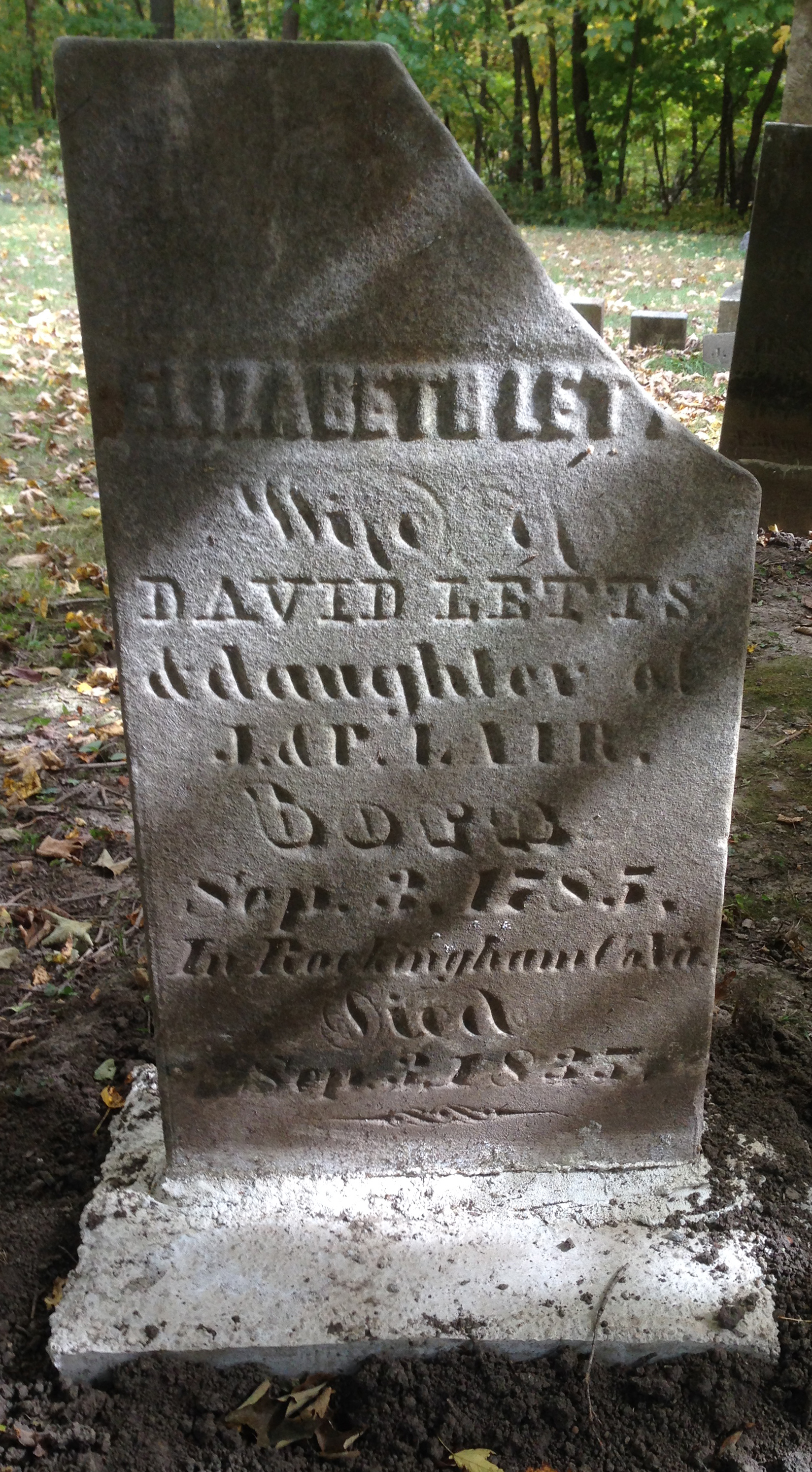
Elizabeth Lair was born September 3, 1785 in Rockingham county, Virginia, the daughter of Joseph and Persis Lair. She married Samuel Dunavan December 22, 1807 in Rockingham county, Virginia. They had three sons, William Lair, Joseph Albert, and George Milton. Samuel died June 22, 1816 in Licking county, Ohio and she was left with 3 small boys, aged 8, 4, and 1. The following year she married David Letts, February 27, 1817 in Licking county, Ohio. In 1830 David removed his family to the new country in Illinois, joining another group of Licking county people in La Salle county.

Her son Noah Harris Letts gave this description of his mother when, in 1900, he wrote an account of his family’s history:

“My mother at the period of time I am writing about [about 1829] was a very robust woman weighing about 150 pounds, dark hair, blue eyes and fair complexion, and I can safely say a very handsome woman and was of a very kind disposition, beloved by all that personally knew her, and was a loving mother, and idolized her children, and in return they dearly loved her. She could govern us children by kindness and never used the rod, but it was somewhat different with our father. He would use the beech limb on us, if we displeased him, but I presume not without a cause, as we were rather wild”1

“This fall [1835] on the third day of September our mother died after a short spell of sickness with the bilious fever. We were left a lonely set of children, who had lost a kind and loving mother and we felt the loss, for our mother was beloved by her children and all who knew her. She was a woman in the prime of life and had always been a very healthy, robust woman until this last spell of sickness. On the day she died she was just fifty years old. She was buried in a new graveyard on the bank of Fox River about three-fourths of a mile north of Dayton, opposite the mill dam, and I think was the first person that was buried there, and since it has been the burying ground of Dayton and quite a distance around. The graveyard is kept up very nicely but I have not had the satisfaction of visiting my mother’s grave for a number of years. But she is not lost to my memory or ever will be while I am alive.”2


  1. Paul M. Angle, editor, “PIONEERS / Narratives of Noah Harris Letts and Thomas Allen Banning / 1825-1865” (Chicago: The Lakeside Press,1972), 22-23.
  2. Ibid., 59-60.

Quite a Fish Story

muskellunge

Dayton has always been a good fishing site, but nothing has been caught there in recent years that can hold a candle to this 1849 monster.

“A ROUSER! – We are sorry for our friend DELANO, of the Fox River House – his reputation’s gone! Hitherto he has stood unrivalled in this region as a fisherman – taking not only vastly more than any body else, but larger ones. But he must ‘come down’ now on size. The largest muskelunge he has caught we believe weighed but 28 or 29 pounds – Mr. Sherwood caught one at Dayton on Monday with a hook and line, that weighed over 32 lbs.! It was over four feet long, and 9 inches across the body. We got the head! It looks like that of some monster of the ‘briny deep.’1


  1. Ottawa [Illinois] Free Trader, March 30, 1849, page 2, col. 3

Bridge Collapses

Collapse of Fox River bridge

From the Chicago Tribune, May 20, 1940, p. 8

Bridge Collapses

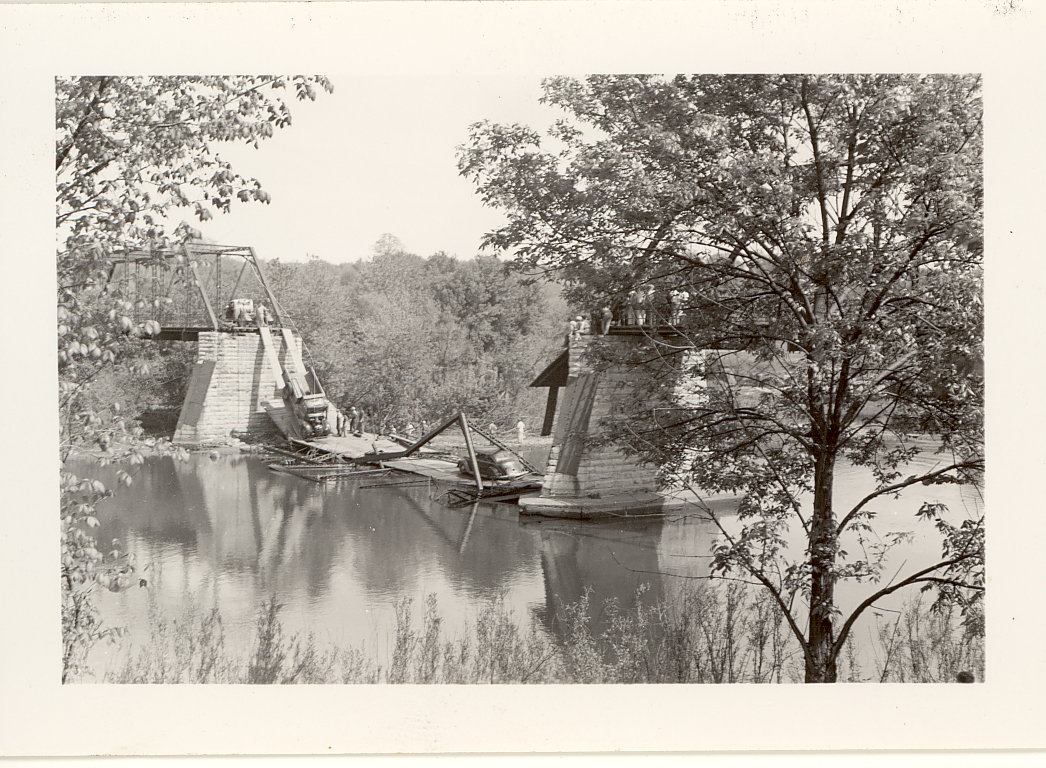
            Ottawa, Ill., May 19 (Special). – An automobile and a truck were thrown into the Fox river at Dayton, northeast of Ottawa, late this afternoon when the bridge which spans the river collapsed. Two occupant of each vehicle were rescued unhurt.

            According to information given to Sheriff Edmund J. Welter, an Ottawa newspaperman, D. M. Davis and his wife were in their sedan, near the center of the bridge, when a truck driven by Robert Shelton of Marseilles, who was accompanied by his wife, drove upon the bridge. Then the span broke and both cars plunged downward. Timbers kept the cars from falling into the water, which is 10 feet deep.

            The bridge at Dayton is on what is known as the Old Chicago road. Sheriff Welter blocked the gravel road at intersections on both sides and posted detour signs.

You own a piano? That’s $4, please.

piano

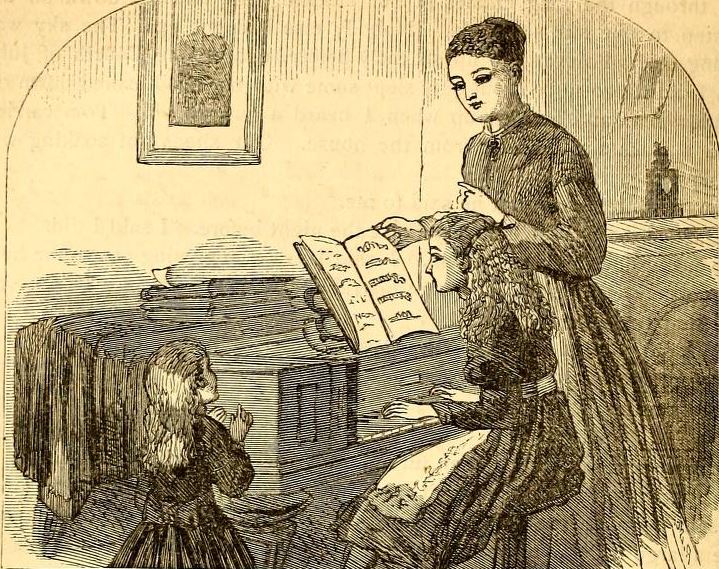
It’s not well known, but income tax in the US didn’t begin with the ratification of the 16th amendment in 1913. In 1862 an act of Congress established an income tax to pay the cost of the war. In addition to income, a number of luxury goods, such as watches, carriages, or pianos were taxed and the records show that a number of Dayton people possessed such luxuries. For example, in 1866 George W. Dunavan was taxed $2 for a watch, $4 for a piano, $2 for one carriage and $3 for a second, presumably of greater value. Isaac Green was taxed $1 for his watch, obviously not as valuable as George’s was. David Green paid $4 for his piano and brother Jesse had to come up with $2 for his carriage. James Hite was taxed only $1 for his carriage; it must not have been in very good condition. Seth Sage also paid $1 for his carriage. Moab Trumbo had a carriage ($1) and a watch ($1). Fred Tavener’s piano wasn’t all that good – he paid only $2 tax on it. Luckily, no one in Dayton had an unlicensed billiard table – that would have cost the owner $10. The Civil War taxes were not immediately repealed at the end of the war, but most of the “emergency” taxes were repealed in 1872.

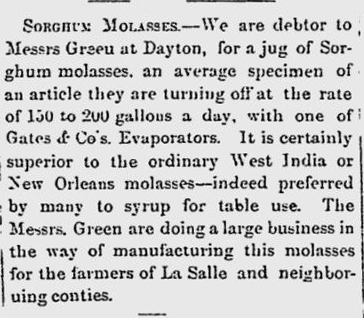
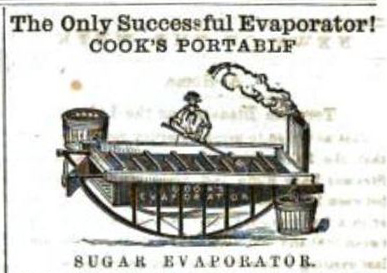
Sorghum molasses

Sorghum Molasses article1     Evaporator2


Sorghum comes from the sorghum plant and is not a true molasses, which is produced from sugar cane. Sorghum is a type of grass, the juice of which produces a naturally sweet syrup. Special milling equipment extracts the juice from the crushed stalks, and evaporating pans with heating units steam off the excess water, leaving the syrup. Cook’s evaporator was the primary rival of Gates & Co. and they would have looked much the same.

The Greens’ sorghum venture in 1861 was apparently of recent origin, as the 1860 agricultural census of Dayton showed no one producing sorghum or molasses. Sorghum syrup could be used to flavor baked beans or barbeque sauce, or used straight from the jug on pancakes. It could be used in any recipe calling for molasses; it has a milder taste than the true, sugar cane, molasses. There are a number of modern recipes using sorghum. If you’d like to try one of these, check out  http://blueridgecountry.com/newsstand/flavors/mother-nature-in-a-jug/


  1. The Ottawa [Illinois] Free Trader, October 12, 1861, p.3, col. 2
  2. Prairie Farmer, (Old Series) Vol. 22, No. 9, (New Series) Vol. 6, No. 9, August 30, 1860, p. 175

May I have your autograph?

Autograph album 2

Maud Green’s autograph album, shown above, was given to her for Christmas, 1879, when she was 13 years old. She kept the album and treasured it, as years later, she added the married names of some of her young friends to their verses. A sample of some of the entries:

Remember me when washing dishes
Remember me and my best wishes.

Dear Maud,
Many a bow the archer sent
Hits a mark that was never meant.
So many a word though lightly spoken
Has healed a heart that’s almost broken.
Yours truly
Frankie R. Trumbo, by her mama

Passing through life’s field of action
Lest we part before its end;
Take within your modest volume
This memento from a friend.

Autograph album

The album from which this page came was given to Grace E. Green for Christmas, 1885, when she was twelve.

Dear Grace,
A little word in kindness spoken
A motion or a tear
Has often heal’d the heart that’s broken
And made a friend sincere.
Your friend and school-mate,
Allie Ainsley
Dayton, Jan. 12th 1886

My pen is poor
My ink is pale
My love to you
Shall never fail.

A verse you ask this fine day
Of course I’ll write you one.
The task of writing finds its pay
In joy that it is done.