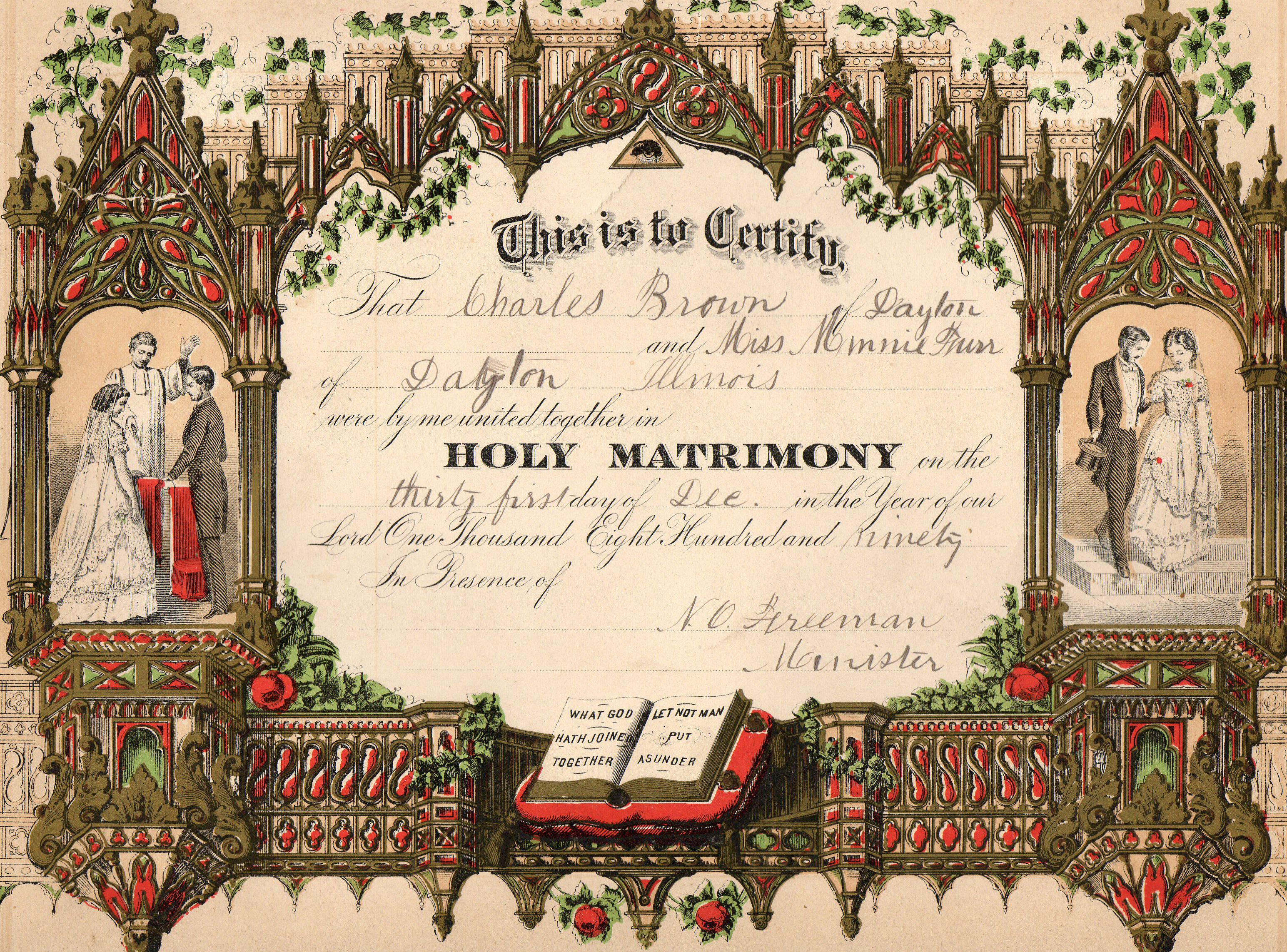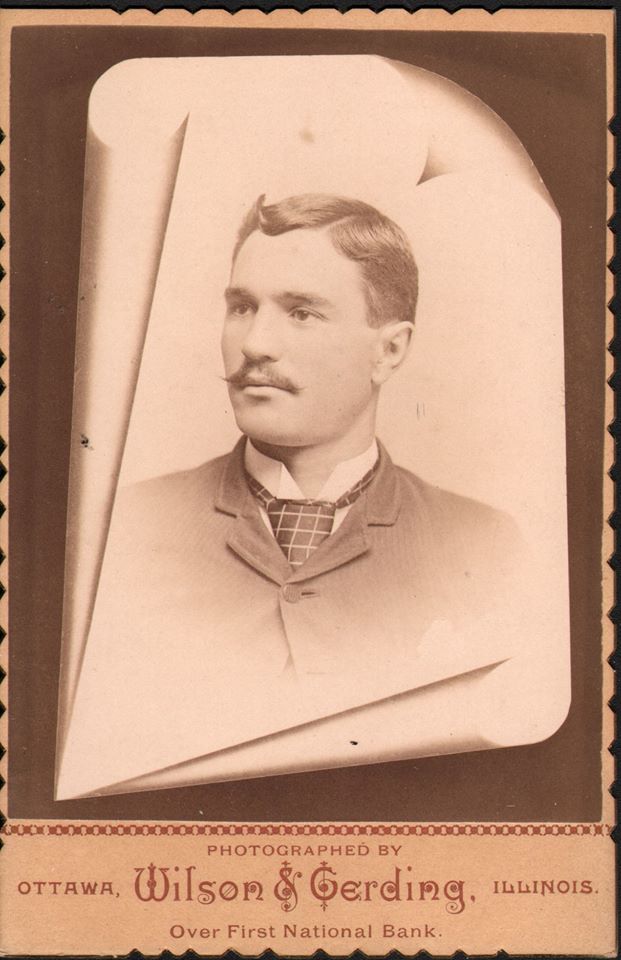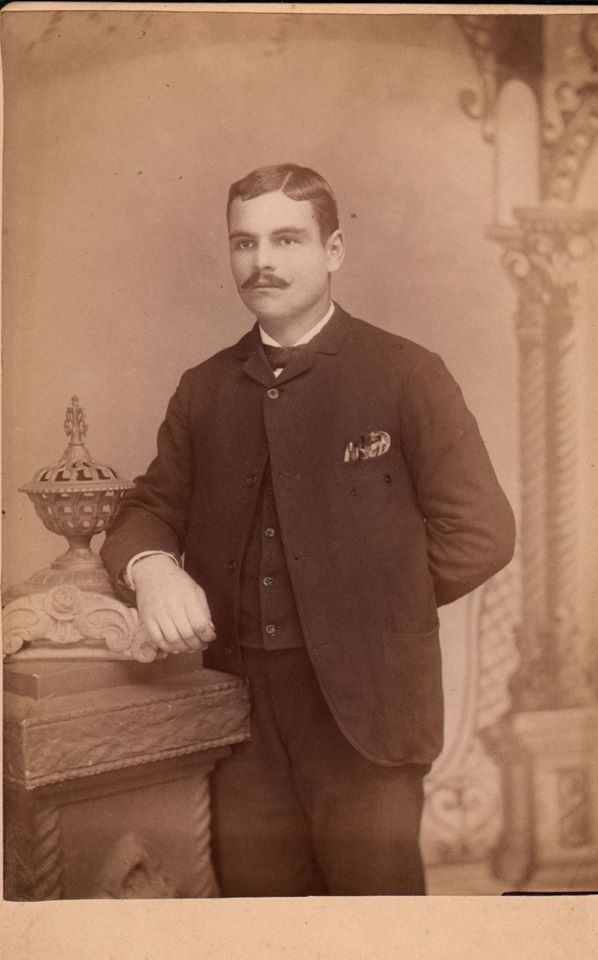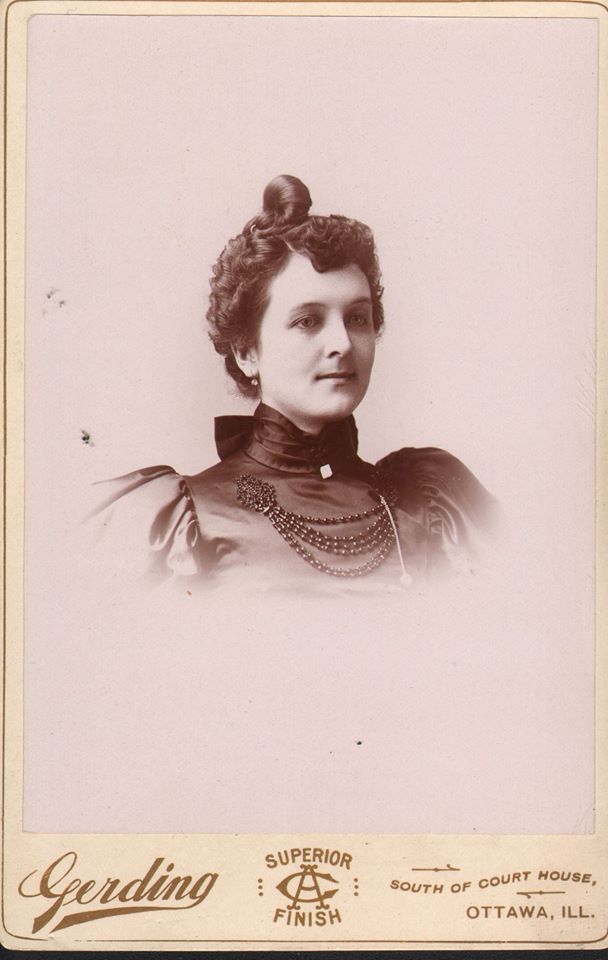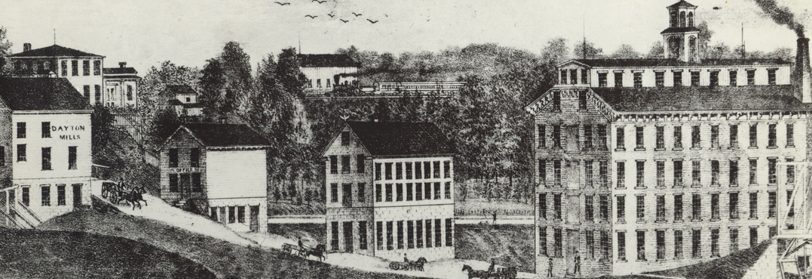
D. Green & Son in 1880

Flour mill and tile factory

This description of the flour mill at Dayton comes from the1880 Manufacturing Schedule for Dayton, La Salle County, Illinois

The Manufacturing census schedules in 1820, 1850, and 1860 provided the following information for each farm:

  • Name of the manufacturer
  • Type of business or product
  • Amount of capital invested
  • Quantities, kinds, and value of raw materials used
  • Quantities and value of product produced annually
  • Kind of power or machinery used
  • Number of men and women employed
  • Average monthly cost of male and female labor

The amount of detail reported in these schedules increased in 1870 and again in 1880. In 1880, supplemental schedules were also used for specific industries, such as boot and shoemaking, lumber and saw mills, and flour and grist mills.

Exclusions: Small manufacturing operations that produced less than $500 worth of goods were not included on any of the schedules.

D. Green & Son

Flour Mill

Capital invested in business         $10,000

2 employees, both males over 16

Greatest number of hands employed at any one time in the year – 2

Number of hours in the ordinary day of labor May-Nov – 10, Nov-May – 10

daily wage for skilled mechanic – $2.50

daily wage for ordinary laborer – $1.00

Total wages paid for the year – $110

In operation ½ time only – 6 months

Idle – 6 Months

Number of runs of stone – 4

Estimated maximum capacity per day in bushels – 550

Do you do custom work or make only for a market? If the former, what proportion of your product is custom grinding? 4/5

Is there an elevator connected with your establishment? No.

If water power is used:

On what river or stream? Fox River, flows to Illinois

Height of fall in feet – 18

——–Wheels———————

Number – 5

Breadth in feet – 4

Revolutions / minute [Blank]

Horsepower – 150

—————-Materials————————-

Number of bushels of wheat – 400

Value – $480

Number of bushels of other grain – 1500

Value – $600

Value of mill supplies – $20

Total value of all materials – $1100.

———————Products—————————-

Number of barrels of wheat flour – 80

Number of barrels of rye flour – None

Number of Barrels of buckwheat flour – 500

Number of pounds of barley meal – None

Number of pounds of corn meal – 1000

Number of pounds of feed – 6000

Number of pounds of hominy – None

Value of all other products – [Blank]

Total value of all products – $1500

Tavern Stand to Let

The Subscriber offers to let that well known TAVERN STAND, 7 miles from Ottawa, on the road leading from Ottawa to Chicago. Attached to the tavern, is a tract of land, containing 10 acres, on which are erected a large barn, and other convenient out-houses, together with a fine Young Orchard of apple, peach, and cherry trees, which yield annually an abundance of fruit.

Possession will be given by the first of March. Persons wishing to examine the property, and ascertain the terms, can do so by applying to the subscriber at Dayton, Ill’s.

W. L. DUNAVAN

January 8, 1841

Local News From Dayton

For a brief period of time, Dayton had its own newspaper, the Dayton Enterprise. It was produced by Charles Green, son of David. With his own small printing press, Charlie was reporter, editor, printer, and publisher. He was also a musician, giving lessons and conducting a singing school at the schoolhouse

The front page of the October 18, 1878, edition contains local and area news, humor, and advertising. It is a great loss that only this one issue has survived.

Page 2 of the 4 page issue provides more area news, a census of Dayton, and the premiums offered to subscribers. Coincidentally, the visiting and floral cards were printed by Charles as a sideline.

If sufficient interest is shown, pages 3 and 4 may be forthcoming at a later date.

135 Years Ago Today – Death of Barbara Green

Barbara Grove Green

Barbara Grove Green

            Died May 5th, 1886, at the age of ninety three years, five and a half months. She had been confined to bed for about two months, and gradually and gladly passed away like an infant going to sleep. It was her desire to cast off this earthly tabernacle and be present with her Lord.

She retained her faculties to the last, with the exception of her sight, of which she had been deprived for the past seven or eight years. She was never heard to murmur or complain of her misfortune, but on the contrary seemed cheerful and happy.

She was born in Shenandoah county, Virginia, November 15th, 1792. At the age of thirteen she, with her parents, removed to Licking county, Ohio, being in the year 1805, and lived there until the fall of 1829, when she and her companion, John Green and family, removed to this county. A few incidents of their journey will show the hardships and privations of those early pioneer days. We quote her own words from statements made by her to one of her grand daughters, who has recorded them:

“We started from Licking county, Ohio, on the first of November, 1829, for the state of Illinois. There were 24 in the company. Father had gone to Illinois the September before we started and bought land. He and three other men rode on horseback around by Cleveland and along the lakes. When they reached Chicago, where there were only two families besides the garrison, father bought some provisions and in paying for them pulled out quite a roll of bills. That night his brother, Wm. Green, dreamed there were robbers coming and woke the others up, but they refused to start out in the night just for a dream, and he went to sleep again only to dream the same thing again, and when he had dreamed it three times he told them they could stay there if they wanted to, he was going to leave; so they all started and soon after they saw three men following for the purpose of stealing they [sic] money.

“When we reached the ‘Wilderness,’ in Indiana, a man who lived on the edge of the woods told us it was impossible to go on, as the mud was so deep, unless we could travel on the wagons already stuck in the mud; but if we were foolish enough to try it, we must leave ‘those two smart little boys’ (Jesse and David), for we would surely freeze to death. But we did go on and the men cut a new road through the woods for sixty miles, about ten miles a day.

“Then, when we got to Cicero river, we had to take the wagons over with bed cords. One wagon, loaded with mill irons and blacksmith tools, was so heavy it tipped over, and we lost a good many things.

“Then the next place we came to was Sugar creek, and it was so high we had to pull the wagons over with ropes again and cut trees for us to walk on. Then there was a swamp next to the creek that the men had to carry the women over on their backs. Between Iroquois and Nettle creek there were five days the horses had nothing to eat, as the prairie was burnt, and they became so weak they got stuck in a ravine and could hardly pull the empty carriage out.

“One evening we had only bread and tea for supper, but that night father came back with corn and beef that he had obtained at Holderman’s Grove, and we were the happiest people you ever saw. We spent the next night at the Grove and the next day home, at what is known as William Dunavan’s farm.”

She lived in the town of Rutland something over a year when she removed to Dayton, being at this place at the time of the Black Hawk war in 1832. Of this war she says: “On the 16th of May, 1832, the girls and I were at the spring, near where the feeder bridge now stands, when Eliza came down on horseback and told us that the Indians were coming, and we would have to go to Ottawa immediately. Then we went to a place a couple of miles below Ottawa and stayed there all night, and the third day returned home again. This was Sunday, and the next day the men made a stockade around the house out of plank. After it was finished they tried it to see if a bullet would go through it, and as it did, they hung feather beds all around. There were about sixty people here at the time, and we were so crowded that they had to sleep on tables, under the beds and all over the house.”

Mr. Green had intended to remain in his improvised fort during the war, but at about twelve o’clock at night, hearing of the massacre on Indian creek, and fearing there might be too many Indians, all those in the fort went to Ottawa. “When we got to Ottawa, there was no fort there, only a log cabin on the south side of the river, but they soon built a fort on top of the hill. We went to the fort, but there was so much confusion there that we had the log house moved up on the hill and lived in it. The next day a company of soldiers from the southern part of the state passed through Ottawa on the way up the river.”

Grandma Green bore all the hardships and privations incident to the settlement of two new countries and lived to see the development of this vast prairie country far, very far beyond her anticipations. When she came here she supposed that in time she might see the country settled around the skirts of timber, but never in her early days did she anticipate seeing the prairies settled up.

from the Ottawa Free Trader, May 22, 1886, p. 5, col. 2

A Day in Dayton – December 1902

Dayton

Harry Tanner is on the sick list.
A dance will be given at the Dayton dancing hall Friday, Dec 19th.
The Dayton school expects to have quite an entertainment Christmas.
John Lookland came to Dayton Sunday and went to work for Jim O’Meara Monday.
Mrs. Newton Connors, accompanied by her aunt and uncle, Mr. and Mrs. Sam Hippard, went to Minonk Monday.
Miss Nettie Couch, of Seneca, is here waiting on her sister, Mrs. John Edwards, who has been on the sick list.

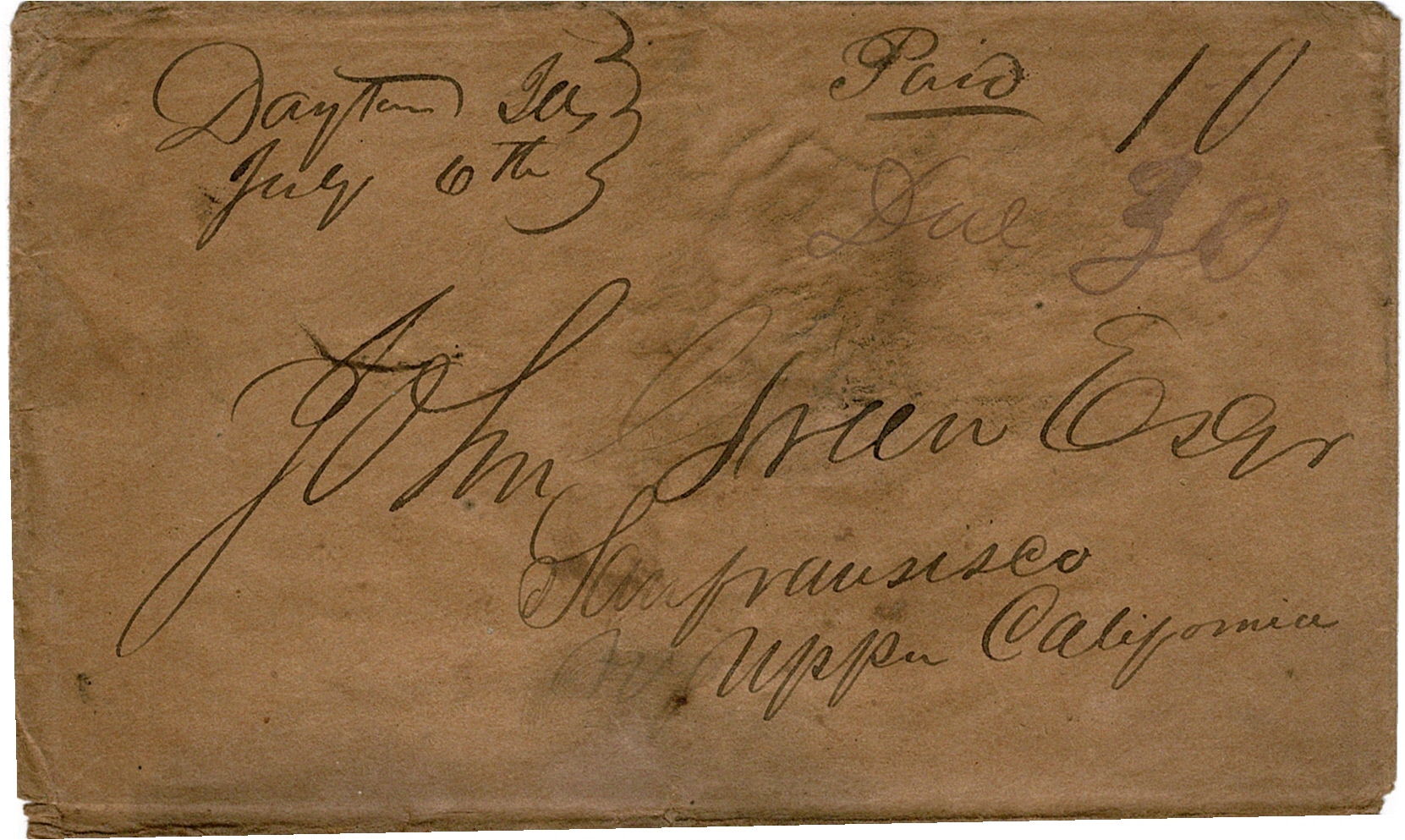
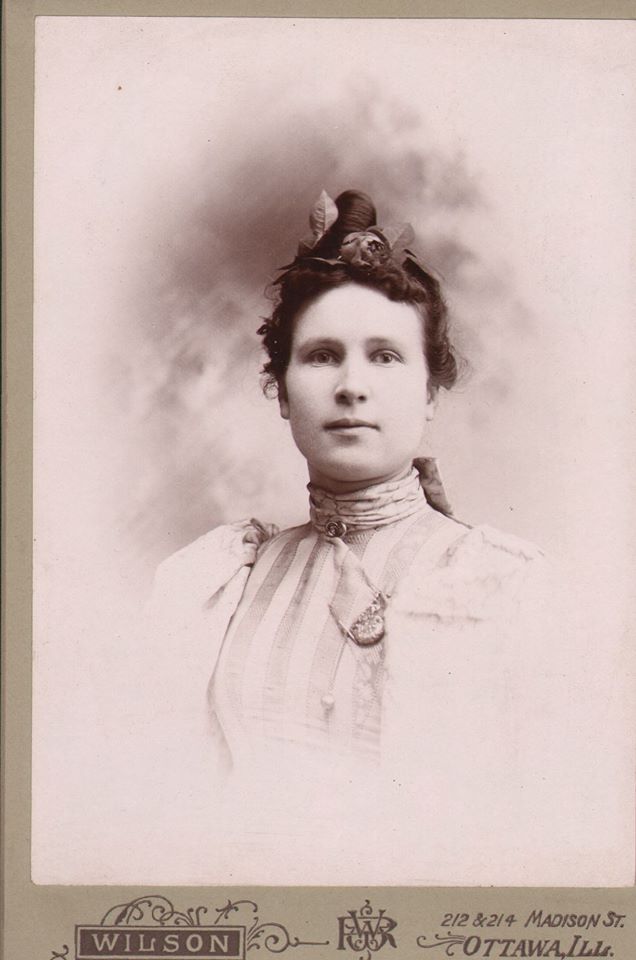
Mrs Pliney Masters, who has been visiting her parents, Mr. and Mrs. Isaac Green, returned to her home in Minnesota Monday. [see photos above]

Mrs. Ed Luce and two sons and daughter-in-law and grandson, of Sears, came Tuesday to spend Christmas with relatives in Dayton.

A very sudden death occurred here Tuesday night, Mrs. Tom Hippard, who has lived here for many a year. She was feeling quite well at supper time and helped do up supper work. She was taken sick and a physician was sent for but before the physician reached her she was dead. She was a kind neighbor and liked by all who knew her. She leaves surviving her besides her husband, two daughters, Sue of this place, and Lue of Chicago, one son John and one brother, George Stover. The funeral took place from the home Thursday at 10 o’clock. Interment in Dayton cemetery.

A precious one from us is gone,
A voice we love is still,
A place is vacant in our home,
Which never can be filled.

To her rest they gently laid her
In the arms of him who gave,
She will sleep but not forever
In the cold and silent grave.

from the Ottawa Fair Dealer, December 19, 1902

Was He Accident Prone?

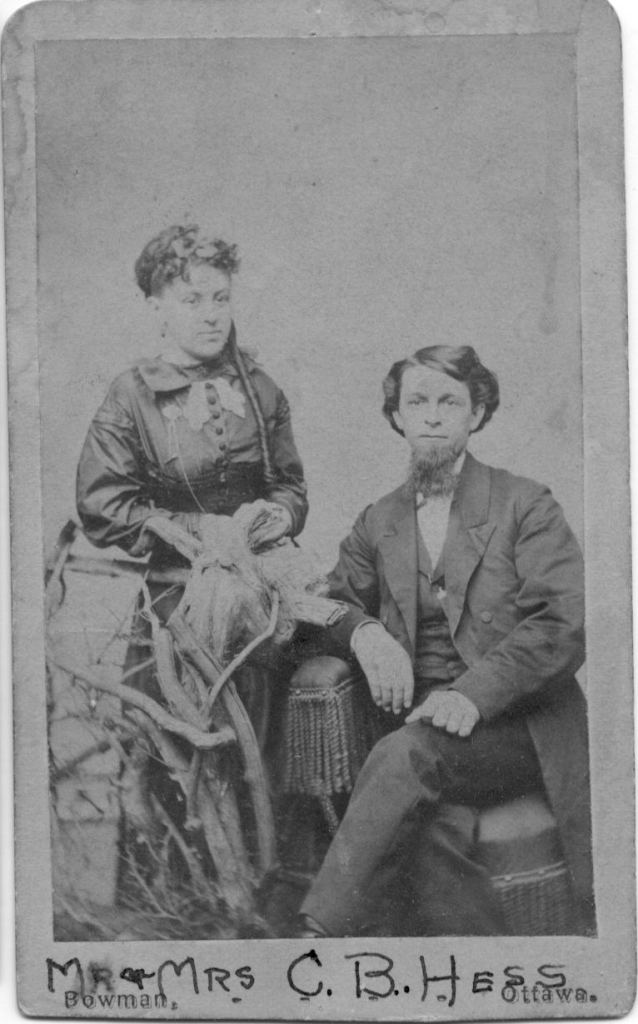
Charles Benton Hess

Ottawa Free Trader, 13 Jun 1891, p5, col 1

CONCUSSION OF THE BRAIN
C. B. Hess Sustains Some Serious Injuries At Dayton

            Mr. C. B. Hess met with a very serious accident at his works in Dayton Tuesday afternoon. The bricks that are made on the top floor of the building are lowered to the drying room through a chute. Mr. Hess was standing close to the chute, talking to one of the workmen, and a brick fell from the chute and struck him on top of the head. The brick weighed seven pounds and fell a distance of twelve feet and fell with such force that it produced concussion of the brain. Mr. Hess was brought to his home in this city in an unconscious condition, and Dr. Dyer was summoned.

            He examined Mr. Hess’s injuries and found that he was not only suffering from concussion of the brain in serious form, but also neuralgia, which was greatly aggravated by the concussion of the brain. He was very restless and suffered intense pain last night, but today he rested very comfortably and is considered out of danger by his physician.

Ottawa Free Trader, 14 Apr 1905, p7, col 1

C. B. HESS INJURED
Falls Through Skylight to Floor of Porch

            C. B. Hess met with an accident yesterday that at the best must be a severe one to a man of his years. He was upon the porch engaged in fixing some windows. He stepped backwards accidentally upon a skylight. Through this he crashed and fell to the floor of the porch, eighteen feet below.

            He was cut on the back of the head and his back injured. It is also feared that there may be internal injuries. The latter fact is not yet definitely known. His many friends will hope to hear of his speedy and complete recovery from the effects of the fall.

He lived many years after this with no further report of accident. Although his death was not accidental, it was unexpected and therefore newsworthy.

September 23, 1918, p. 1, col. 5

SUDDEN ILLNESS IS FATAL TO C. B. HESS, PIONEER RESIDENT
Taken Suddenly Ill While Working in Field, Mr. Hess Passed Away Few Hours Later – Buried Tuesday

            Followed by an illness of only a few hours duration death Sunday morning claimed Charles Benton Hess, one of Ottawa’s oldest and best known residents. The end came at 4 o’clock at the home of Mr. and Mrs. Albert E. Gilman, 526 Congress street, to where Mr. Hess was removed after having been taken ill while at his farm north of the city.

            The deceased spent the greater part of Saturday helping on the farm. Late in the afternoon he was suddenly taken ill, the symptoms either indicating paralysis or hardening of the arteries. A hurried call to members of his family brought help on the scene and Mr. Hess was rushed to Ottawa. His condition showed rapid decline, and, because of the deceased’s advanced years, it was known the end was not far away.

Dayton was a Fishing Mecca

A Trip to Dayton

    Dayton still draws fishermen to the banks of the Fox river to angle for game fish, and most any pleasant day from 30 to 50 persons can be seen between the dam and the town waiting for “a bite.” It was the pleasure of the writer in company with Ed Chapman of Freedom to visit Dayton a few days ago. Those who have been there before will be interested in knowing that Mr. Warner,1 or “old peg leg,” as they call him, is still a familiar figure there. Regardless of his 78 years of age he sits in his boat from morning till night and with a skill that only constant practice can acquire he persuades the elusive bass to “strike” his hook and skurry off in a vain endeavor to shake loose, making the water fairly foam when he happens to be landing a big one. Mr. Warner has fished there for 20 years and everybody knows him. He fishes as a business and makes quite a nice living out of it, each morning visiting his “night lines” and picking up the cat fish that fall a victim to the bait he set for them – then spending the day in silent meditation, contentedly smoking his pipe while the water ripples by him, gently stroking the side of the boat as he makes a “cast” far out to lure in a bass, pickerel or carp.

    One incident of the trip was the sight of a drunken father and three little boys, the youngest not over five who had driven there to fish and who slept in the open air with nothing but some old pieces of blanket for a cover. The reckless actions of the father were such before he sobered up that how one or more of the children escaped drowning was a mystery.

    The old four story stone mill where in war times woolen blankets were turned out by the thousands for the soldier still stands on the river bank near town. Surface coal is still mined as in years gone by, enough to supply most of the little town and sometimes the price is as low as $1.75 per ton. The dam at Dayton is each year repaired by workmen employed by the state. As fishermen stand below it they wonder what would become of them if the old dam would suddenly give way. It has stood there 25 years, but is built in sections and is strong. Those who know the river bottom can wade to almost any part of it and “cast” their line into the deep holes where the fish stay. Sun fish can be caught by hundreds and any body can catch them – they are a lovely little fish too. But the other game fish are harder to lure to the hook and not everybody lands a big string unless the “silver hook” is resorted to. Now Ed says the only way to make a sure thing of getting lots of fish is to have “peg leg” put you onto the best holes in the river and then to have him catch them for you. But we believe that as sure a way as any is to string everything that comes in sight from gars with their sword shaped mouths to “dog fish” that nobody will eat except as a last resort – then weigh in your string and tell how many pounds you caught.

    Though the weather was cold a few good sized game fish were caught and many smaller ones. The little trip was a most enjoyable one and the pleasant quarters we had to stay added much to it. Many from Earlville are planning a trip to Dayton. The fishing should be good from now on.2

  1. Joel F. Warner, Civil War veteran, lost the lower part of his leg in an accident.
  2. Earlville Leader, May 19th, 1899, p. 4

Spring in Dayton – 1902

DAYTON

Farmers are about through sowing oats.

O W Trumbo began assessing this week.

School began Monday for the spring term with an enrollment of thirty-five pupils. The 7th and 8th grade pupils received from the county superintendent their record in the central examination. All passed satisfactory grades.

Mrs Chas Temple of Serena, visited Mrs Ed McClary Monday.

Mr Trumbo and Miss Maud Green attended the funeral of Mrs Bradford at Ottawa Monday.

James O’Meara Jr has recovered from a case of the mumps.

Mr Beck is enlarging and improving the appearance of his house.

Reports are that Dayton is to have an elevator.

Newton Connors is working at Wedron.

Dayton school has a base ball nine averaging 13 years of age that would like to arrange some games.

Mr McBrearty is laid up with rheumatism. His son Roy has charge of the depot.

The school trustees met with Treasurer McClary Monday.

Jas O’Meara is preparing to grind clay at the brick mill.

second correspondent

Mr Elsbury has been quite sick the past few days, but is better now.

Mr and Mrs McBrearty returned home from Marseilles Saturday where they have been visiting their daughter, Mrs Ed Emmons.

Steve Koenig returned home Friday from Ottawa where he has been visiting his aunt.

Bessie Davis is quite sick with the la grippe.

Some of the people of this place were very much excited Thursday evening. Old lady Keough started a bonfire. It got into the dry grass and was making a fair way toward her house. While she was putting it out some of her clothes got pretty badly burnt. If it had not been for the neighbors she would have been burnt up alive.

from the Ottawa Fair Dealer, April 11, 1902, p 8, col 3

The Depot at Dayton

The Chicago, Burlington & Quincy branch railroad line through Dayton began in Aurora and went through to Streator. We know the names of a few of the station agents who manned the Dayton depot. See below for mention of Wilmot Van Etten, Thomas Belrose, and Roy McBrearty in the Ottawa newspaper..

The route ran as follows:
Aurora
Montgomery
Oswego
Yorkville
Fox
Millbrook
Millington
Sheridan
Burgess Junction
Serena
Wedron
Dayton
Ottawa
Grand Ridge
Streator

Ottawa Free Trader, 10 Sep 1881, p5, col 1
An appalling accident took place at the C., B. & Q. railroad crossing on Columbus street in this city on Wednesday last, resulting in the death of Bernard Dougherty
[description of accident omitted]
We believe the time allowed on the card for making the run to Ottawa depot from Dayton is too short. The time for leaving Dayton is 11:16 and Ottawa 11:28 – 12 minutes; distance four miles, one and a half of which is through the city, further the engine takes water and crosses a railroad track and a swing-bridge.

Free Trader, March 3, 1888, p. 8, col. 4
James Ryan, our Cornet Virtuoso, is studying telegraph with [Wilmot] Van Etten at the depot. Jimmie is always on the key and we hope he will become an expert and get big pay.

Free Trader, January 24, 1891, p. 8, cols. 2-3
Thos. Belrose, Jr., has now taken charge of the station at Fox. He has been a student at the depot here for a long time, and we all wish him success in his new quarters.

Free Trader, April 11, 1902, p. 8, col. 3
Mr McBraerty is laid up with rheumatism. His son Roy has charge of the depot.

Meet Mr. and Mrs. Van Etten

TRUMBO – VAN ETTEN

            Married Wednesday, June 13th by the Rev. Gault, of Aurora, Illinois, at the residence of Mr. and Mrs. Oliver W. Trumbo, Dayton, Illinois, their daughter Jessie to Wilmot Van Etten.

            The large and commodious residence of the bride’s parents was neatly and tastefully decorated for the occasion with flowers and evergreens, and a large number of relatives and friends of the bride and groom were present to participate in the wedding ceremonies.

            At one p. m. during the familiar tones of Mendelsohn’s wedding march, rendered on the piano by Miss Davis, the wedding party consisting of the ushers, Messers A. E. Butters and John Green, flower bearers, Barbie Green and George Wright, the bride and groom entered the parlor and presented themselves before the Rev. Gault, who in a short and impressive manner repeated the marriage service.

            The congratulations to the newly wedded pair were many and sincere, and all wished them much joy and a life full of happiness and prosperity.

            The wedding feast was a grand affair, and the tables were loaded with choice and tempting viands. The bride and groom departed on the 3:50 p. m. accommodation for Chicago, from whence they will go east to make a short visit among the groom’s relatives and friends in New York.

            The bride is one of Dayton’s fairest daughters, and we trust will not be obliged to leave our midst.

            The groom has been station agent here for a couple of years, and has formed a large circle of friends and acquaintances who hope he and his fair bride may make their future home among them.

            The wedding presents were many and elegant, and showed the respect and esteem in which Mr. and Mrs. Van Etten are held by their many friends and acquaintances. About eighty guests were present.

from the Ottawa Free Trader, June 16, 1888

Albert F. Dunavan

A. F. Dunavan, eldest of seven children of William L. and Eliza G. (Green) Dunavan, was born Oct. 29, 1832, in Rutland Township, La Salle County, Ill., where he was reared on a farm. He went to California, being six months on the road, going with eight teams and six yoke of oxen and cows, and worked in the gold mines in a place called Volcano for three years. He then, in 1855, returned to his home in Rutland and bought a farm of 160 acres of land, where he followed agricultural pursuits till 1870, when he engaged in his present business. This business was first conducted under the firm name of George H. Pennypacker & Brunk until 1870 when Mr. Dunavan was admitted to the firm. In 1873 it was made a joint stock company, but was bought out in 1877 by A. F. Dunavan & Son, who are carrying on a successful business. They employ on an average twelve men and manufacture annually 1,500 dozen horse collars and fifty dozen fly nets, beside other articles pertaining to their business. Their business is exclusively wholesale. He was married July 4, 1860, to Emma R. Cooper, of Kalamazoo, Mich. They have three children – W. J., in business with his father; Jennie C., attending school at Ottawa, Ill.; and Herbert L., attending high school at Ottawa. Politically Mr. Dunavan is a Democrat. In his religion he is liberal. He has held the office of School Director. His father is a native of Licking County, Ohio. He left Ohio in 1829 and lived a year and a half near Peru, Ill., where he was married. His wife is also a native of Licking County. They are now living on a ranch in Texas engaged in the cattle business. His father was a Colonel in the was of 1812.1


  1. History of La Salle County, Illinois, 2 vols. Chicago: Inter-State Publishing Co., 1886, 2: 92.

Spring in Dayton – 1907

News From Dayton

Mrs. Ostrander spent Saturday in Ottawa.
Mrs. Sam Hippard is very slightly better just now.
Mrs. C. G. Wilson visited Mrs. Ostrander Friday.
Mr. Chas. Ballou was a passenger to Ottawa Saturday.
Mrs. Edward Dallam was a passenger to Ottawa Friday.
Mr. Birch is to work for Mr. McClary this coming summer.
Mr. Frain is doing considerable improving to his residence, including a new veranda.
Mr. Tom Maher and Townsend Fullerton are doing some tiling for Mr. Frank Trumbo.
The Dayton township school trustees met with the clerk, Mr. Ed McClary, Monday morning and transacted business.
Mr. Joe Hogan will move Tuesday to the farm of Mr. Frank Trumbo, to whom he has hired out for the coming year.
Mr. Clarence Doran, who has been in Joliet for the past year, is now home and will work the home farm this year.
Mrs. Rush Green and daughter Gladys went to Chicago Saturday via the Rock Island to visit her mother and sister.
Mr. Collamore and wife and grandson, Willie Kelly, went to Montgomery last Monday, probably to stay permanently.

Mrs. R. G. Trumbo came down from Mendota last Monday, where she has spent the winter with her daughter, Mrs. Will Van Etten and family.

Mr. Ray Doran and family have moved to Joliet, where he has a position with the Rock Island railroad. Mr. and Mrs. Jim Collison have moved to Joliet, also. Mr. Collison has the same work as Ray.

Mrs. Edward Dallam entertained a select party of eight last Thursday – Miss Ruth Haight and Ralph Green, Mr. and Mrs. Rush Green, Mr. and Mrs. Edward McClary. Five hundred was played and ice cream and cake were served.

Mr. Geo. Makinson, who died at the home of his daughter, Mrs. G. M. Pedersen, at Yorkville, was buried in Dayton on Saturday, March 30th. He left Dayton about 16 years ago. Previous to that he had been postmaster of Dayton for forty years. He was 81 years of age.

What narrowly escaped being a tragedy occurred in Dayton as a result of the usual April fool joke. Miss Cora Tanner, only daughter of Mr. and Mrs. Al Tanner, was accidentally shot by her cousin, Willie Luce. The shot entered at the knee, struck the patella, glanced off and is buried in the flesh. She was hastily brought to Ottawa and Dr. Hathaway made a careful examination, but says no bones are broken. They will make another examination with the X-ray on Wednesday and remove the bullet if possible. She is resting as comfortably as can be expected.

from The Ottawa Republican-Times, April 4, 1907

Lucy Mabel and Alice May Olds

Lucy (left) and Alice Olds

Alice May Olds was born May 7, 1871, in Mendota, the daughter of Jeremiah E. Olds and his wife, Sarah Jane Zimmerman. On November 6, 1895, she married James Arthur Green of Dayton (she was 24, he was 35). Their son, Rollin Olds Green was born a year later, on September 2. Unfortunately, Alice died 2 weeks later, on September 16, 1896. To further add to this sad situation, baby Rollin died in August 1897.

A year and a half later, in March 1898, James married Alice May’s sister, Lucy Mabel. They went on to have 5 children: Raymond, born May 19, 1900; Arthur, born April 26, 1902; Katherine, born October 15, 1905; Alice, born November 30, 1907 and David, born February 12, 1910.

James and Lucy moved to Grand Junction, Colorado, in 1902, and remained there for the rest of their lives. James died there in 1934 and Lucy in 1943.

He Had Seen Connors

HE HAD SEEN CONNORS
How a Dayton Man Was Licked Despite a Peace Warrant

            William Brown and John Conners, of Dayton, had a difference of opinion over some matters yesterday, and, this morning William came to Ottawa and swore out a peace warrant before Justice Weeks. Dick Norris was chosen to serve the paper, and, accompanied by Brown, at once proceeded to Dayton to do so. When they came within the town lines, Brown stepped out of the buggy and walked along the towpath of the canal, while Dick whipped up his horse and trotted to the factory where Conners is employed. He did not know Conners, and, when a man passed him on a brisk walk, did not consider it his business to question his freedom.

            Arrived at the factory he was informed that Conners was not present, and, turning, drove back along the towpath to find Brown. Presently Brown came in sight holding his nose and mouth, while his face and clothing showed signs of trouble.

            “Conners wasn’t at the factory,” said Dick, “have you seen him?”

            “Yes!” exclaimed Brown, from a battered face, “I’ve seen him.”1


  1. Ottawa Free Trader, 13 May 1893, p1, col 4

River Rampages

It’s winter again and the Fox River at Dayton has a history of ice jams and floods. In 1960, the river again was jammed with ice, causing flooding, as seen here in the powerhouse.

In addition, the houses along both sides of the river were engulfed by ice,

and the bridge was under pressure.

Here are some of the predecessor events for comparison. 1875, 1943, and 1952

Dayton Had Plenty of Water Power

January 27, 1855, 166 years ago today, the following notice appeared on page 4 of the Ottawa Free Trader.

Water Power To Lease

            The undersigned offer great inducements to capitalists and manufacturers, as they have decidedly the best water power in the state, having over 25 feet head and fall, and situated in Dayton, 4 miles above Ottawa, and drawn from the Fox river Feeder, which is kept in repair by the state, without any cost to the undersigned. They have water to lease for a term of years sufficient to drive 20 run of 4 ½ feet burrs, and will lease on very liberal terms to any good, responsible company.

            This is a rare chance for men of capital who may wish to go into the manufacturing business. The location is very healthy and admirably situated; as it is on a navigable feeder, within 4 miles of the contemplated Rock Island railroad, and the head of steamboat navigation. For further information, address Dayton Jny 31.

                                                                                                            John Green & Sons

When John Green bought the west side of the Fox river at the rapids, he became the owner of one half of the water power the river provided. (The other half belonged to the owner of the east bank of the river.) Green deeded one fourth of the power he owned to William Stadden. Green and Stadden then deeded one half of their water right to the Canal Commissioners for the Illinois-Michigan canal. Therefore, John Green’s share was 1/2 of 3/4 of 1/2 or 3/16 of the power of the river. He then deeded to Jesse and David Green one half of the power owned by him or 3/32 of the whole river. A government survey of the river in 1869 calculated the volume of the river was 40,000 cubic feet per minute at or near the mouth of Indian Creek. 3/32 of 40,000 equals 3750 cubic feet per minute and this is equal to 142 horse power. The use of the best wheels and machinery at the Green mills would equal 114 horse power, so John Green & Sons had excess power to lease.

Mrs. Barbara Jackson

JACKSON RITES AT GREEN HOME AT 1 TOMORROW

Funeral services for Mrs. Barbara T. Jackson will be held at the home of L. A. Green in Dayton at 1 o’clock tomorrow afternoon, conducted by Rev. Hugh MacKenzie, pastor of the Congregational church. Interment will be in the family burying lot in Millington cemetery.

The death of Mrs. Jackson marks the passing of another of the county’s pioneers. She came to La Salle county with her parents from Ohio, where she was born almost a century ago. She knew La Salle county when Ottawa was only a settlement in a wilderness, long before the day of the railroads or the canal.

Mrs. Jackson was a daughter of Mr. and Mrs. Mathias Trumbo, who came to La Salle county when there were less than a dozen houses in Ottawa, and who shortly afterwards went to Dayton, four miles northeast of Ottawa to reside.

The pall bearers at tomorrow’s funeral will be L. A. Green, Roy Grove, Frank Brown, Elias Trumbo, Glenn Matlock and Benton Harris.

Mrs. Jackson died at 11:15 yesterday morning.

[Barbara Jackson died February 21, 1927. Her obituary appeared the following day in one of the Ottawa newspapers.]

Derailment in Dayton

These pictures of a train derailment in Dayton were taken about 1958-59. I need to get back to reading the newspaper to see if I can find the exact date. Maybe someone seeing this will know exactly when it happened. If so, please leave the date in the comments.

In any case, you may recognize some of the bystanders, even if you can only see their backs. Click on the picture to see the full size version.