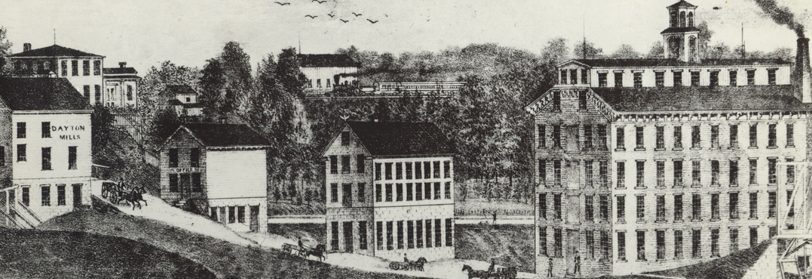
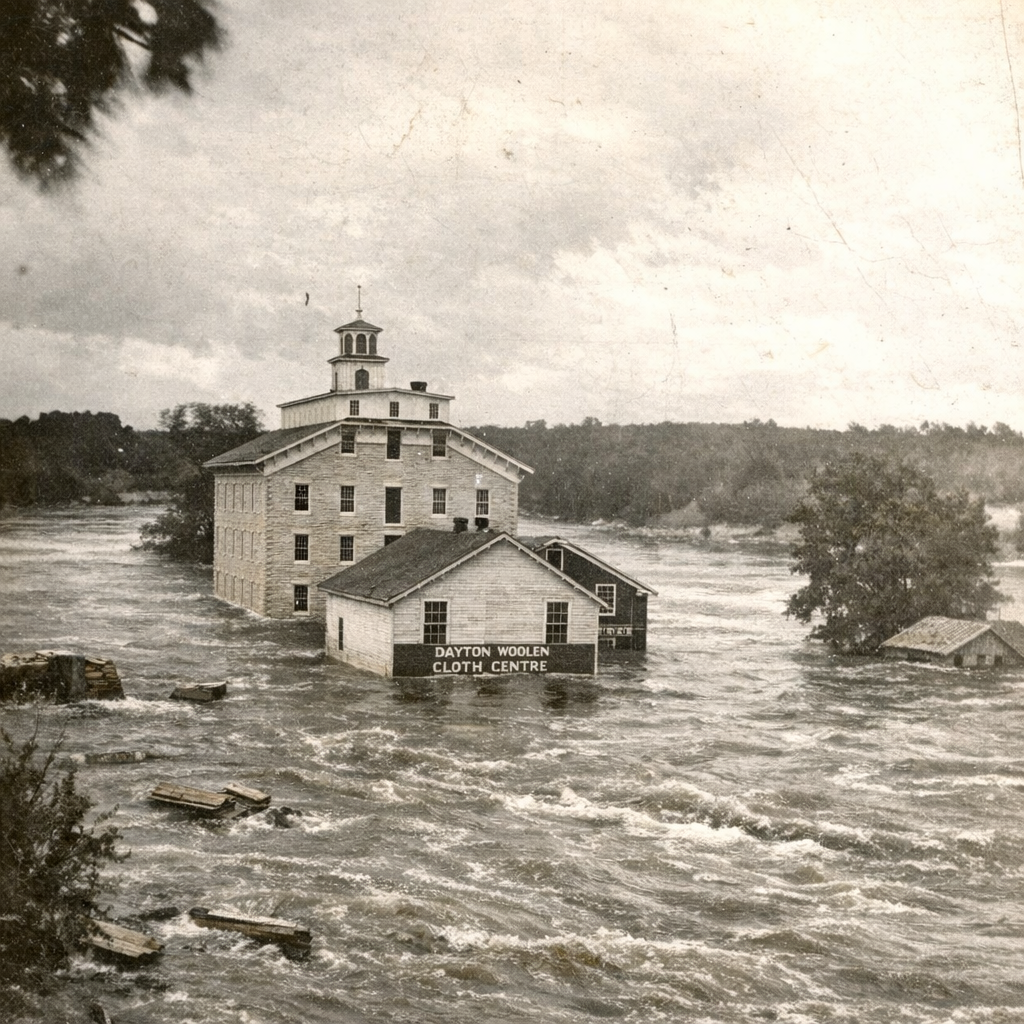
Clearly no camera captured this scene, but this is what it might have looked like.
The February 7,1857 flood stuck in Dayton’s memory like a marker stone — the kind of event people kept referring to for decades afterward. Not because it was picturesque or dramatic in the usual way, but because it rearranged things. It changed the shape of the town’s work, its riverbanks, and its sense of what the Fox River could do when it felt like it.
The Green family took the worst of it. The newspapers called them the “only serious sufferers,” which was probably true in terms of property loss. Their new dye house was wrecked so thoroughly it had to be rebuilt from scratch. The kilns and kettles were ruined. Six or seven feet of water stood on the lower floor of their woolen factory. And with the Fox River Feeder torn open — sixty or seventy rods of it simply gone — their mills were expected to sit idle for a month.
But what people remembered wasn’t just the Greens’ misfortune. It was the scale of the thing.
Dayton’s own bridge, only four or five years old and costing the community a full $1,000, was lifted off its abutments and carried away. And here’s the part that still shocks me: that same day, every single bridge over the Fox River from the Wisconsin line to Ottawa was washed away.
That fact tells you what the flood meant. Not just local damage, but a whole river corridor snapped in two. Travel halted. Communities cut off. A sense that the river had shown its full reach, and that human engineering — however proud or expensive — was only temporary.
No wonder people were still talking about it thirty years later. It wasn’t just a flood. It was the day the river reminded everyone who was in charge.

