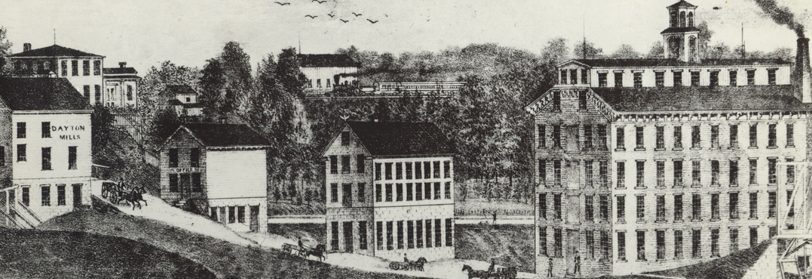
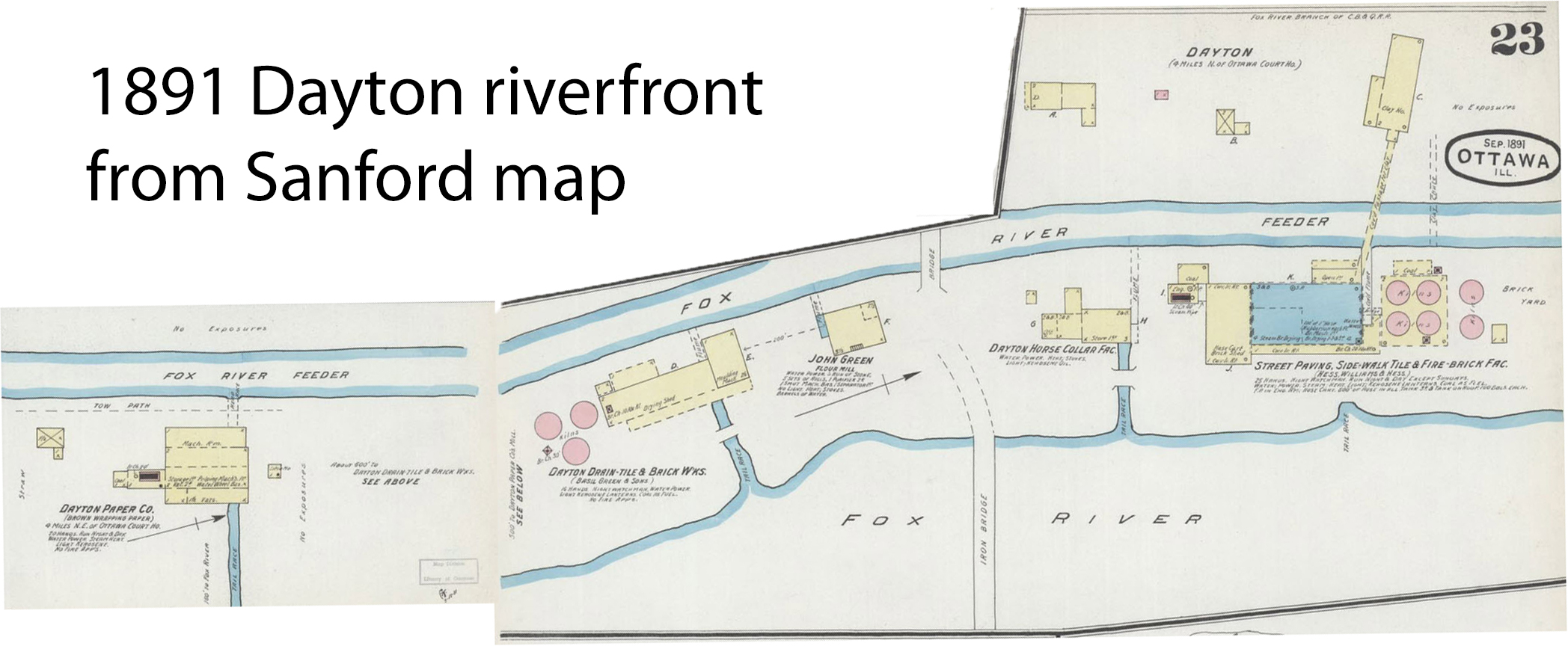
The State of the Village in 1885

OLD DAYTON
Some Reminiscences of the Ancient Village on the Banks of the Fox River

A representative of The Free Trader visited the village of Dayton last Tuesday, drawn thither by the report that considerable damage had been done in that place by the remarkable rise of the Fox river during the recent freshet. Very few of the readers of this paper are not acquainted with the history of the early days of this historic village, which had it not been for the legislative blunder of William Stadden, state senator from this district during the canal agitation, the place, instead of containing 300 inhabitants, as it does today, might be a manufacturing city with a population as large as that of this city.

It was principally through Stadden’s advocacy that the canal terminus was made at La Salle, instead of Ottawa. He was a nephew of John Green, the founder of Dayton, and believed that by having the canal terminate at La Salle he was working for the interests of himself and Dayton. It was his intention to have a navigable feeder from Dayton to Ottawa, which would afford abundant water power for manufactories. Had the canal terminated at Ottawa there would, of course, be no necessity for a feeder. Had the canal ended at the latter city, as it probably should have done, there would be no La Salle or Peru today, and Ottawa would be a city of 50,000 inhabitants and Dayton a large manufacturing point. Lots that sold in that village in 1836 for $500 can now be purchased for $5. In canal days Dayton was a larger place than Ottawa. The cost of running the canal to La Salle would have improved the river to this point, making it navigable for Mississippi river steam boats; and the Illinois Central Railroad would have [illegible] here. But Stadden and those he won over to advocate his views willed all those things otherwise through a huge-sized mistake, which was practically the death-knell of Dayton.

Jesse Green, who is the oldest settler in La Salle county, came to the place with his father in the winter of 1829, from Newark, O. They brought with them mill wrights and mill-irons, and the following July had a grist and saw mill in operation, the mill stones being made form two large boulders. On the east side of the Fox river was then a lodge of the friendly Pottawattomies. At the time of the Blackhawk was, in 1832, John Green was obliged to erect a palisade fort around his dwelling. It was at this time the massacre occurred on Indian Creek by the Sacs and Foxes, in which 15 white people were tomahawked and scalped. During this period the supplies for the Green family were obtained at the store of Geo. E. Walker, located where now are the mineral springs.

At the close of the first year of its settlement Dayton had but 21 inhabitants. Resin Debolt, Henry Brumbach, uncle of the deceased county surveyor George Brumbach, and Daniel Grove, father of Samuel Grove of Utica township, had moved into the vicinity, making in all but three neighbors of the infant colony. In those days there were plenty of wild animals in this region, such as deer and wolves, but only one bear was ever seen hereabouts by the old settlers.

The fame of Green’s Mills from 1834 to 1875 was extensive throughout this region. In the early years of Dayton’s history teams traveled 100 miles to these mills. In the last ten years the flour business has greatly fallen off. John and Charley Green, the proprietors, also run a tile factory. The woolen mills were run by the Greens since 1842. A few years ago they were closed and a pressed brick factory started in the large stone building. The fitting up for this business cost $15,000. The pressed brick factory is in the hands of a stock company; capital, $50,000. One machine has already been put in which weighs 17 tons and cost $3,500, having a capacity of 25,000 brick per day. More machines will be put in during the season, making the total capacity 100,000 per day and giving employment to 50 men. The flood of Jan. 6 has delayed the starting of these works, which would have been in operation this week but for this occurrence. Considerable damage was done to the works by the freshet.

The old woolen mill was erected by J. & D. Green in ’40, and two years later manufacturing commenced. This mill had the first power loom of any in the state. The Greens did a thriving business until 1864 when they erected a new woolen mill — the building which is now the pressed brick factory. The erection of the mill far exceeded their expectations, costing them $65,000.

The next year they bought 60,000 pounds of wool, averaging a cost of $1 per pound. The next season wool dropped from 45 to 50 cents per pound and the firm lost between $30,000 and $40,000, and later on the firm met with another heavy disaster by the burning of $22,000 worth of wool stored in Chicago, and which went up in the great fire. The result of these heavy losses was that the firm was obliged to close its doors, and the woolen industry then was over.

The paper mill owned by H. B. Williams is closed for the winter, having at this time a large surplus stock on hand. It gives employment to 15 men.

The Horse-collar factory was established in 1865. In ’70 A. F. Dunavan & Son purchased the business, which employs about ten hands. It has a capacity of 12 dozen collars per day, manufacturing 25 different grades, ranging in price from $6 to $25 per dozen. The firm has, piled up in its storerooms, $8,000 worth of horse-collars awaiting shipment. The demand is principally in the spring months, and the collars manufactured here are sold throughout this and adjoining states, and in New York, Pennsylvania, Virginia, and California. The firm buys for cash, getting inside prices on material, and by struct and honest dealings the firm sends its goods over a wide area of territory, competing in price and quality with any factory in the United States. This the Dunavans are enabled to do, as they make collars a specialty. In the summer season leather fly-nets are manufactured here. The junior member and another agent are on the road in the interest of the business. The firm have $15,000 invested in their manufactory. A. F. Dunavan, a very courteous and obliging person to met, kindly showed the Free Trader man through the building, where every person was busy as a nailer in the manufacture of that portion of the collar entrusted to him. This factory was also damaged by the high water, which flooded the basement, tearing up portions of the floor.

Dayton has a neat, two-story public school, presided over by Ottawa ladies — Miss Jennie Crane in the higher department, with Miss Mary Miller in the primary. About 70 pupils are in attendance.

A Sabbath school of 75 members is one of the worganizations of the viallage. The superintendent, Basil Green, being absent, his place is supplied by Jas. A. Green.

Itis the proud boast of the little village that it never had a saloon within its borders.

Chas. Miller, Jesse Green, O. W. Trumbo and Geo. W. Makinson are the only names on the roster of postmasters of this place. The latter is probably the oldest postmaster in this state, having been appointed by President Buchanan in ’54. Thirty years of continuous service as postmaster at Dayton will, unquestionably, give him a reappointment under the new administration. The office is a little structure — 2×4 feet, in the only store the village possesses.

Jas. Timmons runs the Dayton Hotel and has a monopoly of that business, and he fears no rival.

In the first few months of its existence Dayton had more inhabitants than the Chicago of those past days. Yet it is pleasantly and very romantically situated, and will always from its traditional and historic associations be an object of much curiosity and interest to the tourist. In the summer weather it is a popular fishing resort and the stamping ground of many a picnic party.

Tuesday night,  Jan 6, the Fox river at Dayton reached its highest point in the memory of the oldest inhabitants. Within 50 years, with one notable exception — the rise of ’59 — the river had not reached such a height. In a few hours, by the gorging of the ice at Howland’s Rapids, about a mile from its mouth, the river at Dayton rose 30 feet about high water mark, reaching to the second floor of the old woolen mills. The chimney of the pressed brick works was demolished and a large lot of lumber swept away. The river banks on both sides were strewn with ice, thousands of tons being piled up by the flood. Tuesday last there were fears entertained of another freshet, as the ice was beginning to gorge as it had done the night of the 6th.

One of the oldest roads laid out by the state was the one which crossed the Fox river at Dayton. Ten years ago the bridge was carried away by the ice, and since that time no means has been provided to cross the river at that point. The county agreed some time ago to pay half the expense, leaving to the township of Dayton and Rutland one-fourth of the cost each. It is not at all probable that this bridge will be rebuilt for some years, unless the townships named take a more active interest in the agitation of the project.

The representative of the Free Trader is indebted to Mr. and Mrs. Jesse Green for courtesies while in the village, for which he thanks them kindly. Mr. Green’s father, the original settler of the place, once owned 1,000 acres of land in that vicinity.1


  1. The Ottawa Free Trader, January 17, 1885, p. 5.

Some School Memories

students & teachers 1895

Dayton school in 1895

The following comes from notes left by my grandmother, Ruth Haight Green, about the schools in Dayton. It was probably written around 1935-1940.

The first school building in the village of Dayton was on the hill near the present site of Miss Rhoades’ house, and tradition tells us that the name of the first teacher was Rhoda Bailey, although nothing definite is known about her.

The next school was on the southeast corner of the same block, across the street from the hotel. It is not likely that either of these were log houses for a saw mill was the first thing erected by the early settlers. The seats were slabs with holes bored for inserting the legs and there were no desks.

On the sixth of October, 1849, the first school election by ballot was held and the directors elected were David Green, Richard Stadden and Rees Morgan. At that time there were eighty children in the district, and the same number twenty-five years later.

At one time, for some unknown reason, school was held in a brick house which stood on the present site of Bert Ainsley’s new bungalow.

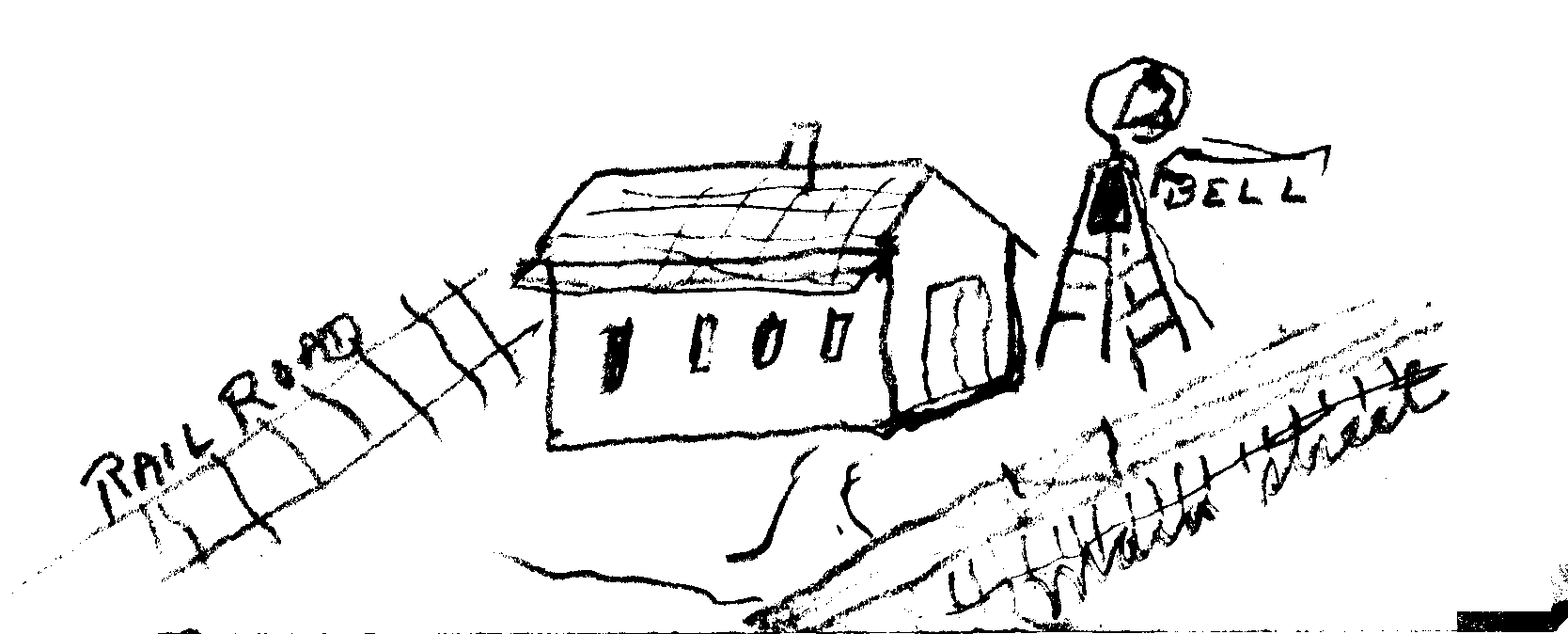
In I859 a frame school house was built where the elevator now stands. This was a building much like our club house with an entry, which served as a cloak room, and an outside belfry at the southwest corner of the building. The bell is in use at Miss Barnes as a dinner bell now.

The desk tops were hinged and when the boys walked on them mischievously they sometimes dropped unexpectedly with disastrous results. A bench ran around three sides of the room to accommodate more pupils. The other furniture consisted of the teacher’s desk and a small organ.

For a quarter of a century this school house was the center of community life – singing school, geography school, spelling school, lyceums, literary society with a library of two hundred volumes, and writing school. Church services and Sunday School were held there and entertainments such as the Swiss Bell Ringers, sleight-of-hand shows, political speeches, etc., were heard at intervals.

This building was converted into a double dwelling house in 1882, and later was used for a club house. It burned in 1902. For a few of the last years this building was in use the school was divided, the primary classes going to a hall over the store.

In 1882 a two story frame house was built where the school house now stands and the first teachers were Clara and Winnie Childs. This building burned on the day before Thanksgiving in 1890 and school was held in the Hosea Williams’ house, now owned by Mr. McClary, until it was rebuilt on the same foundation in time for the opening of school the following September.

In 1897 a well was drilled and last year this well was deepened and a water system installed. About 4 years ago a lot north of the school yard was purchased for a playground and ball park.

The class of ’97 was the first to receive diplomas.

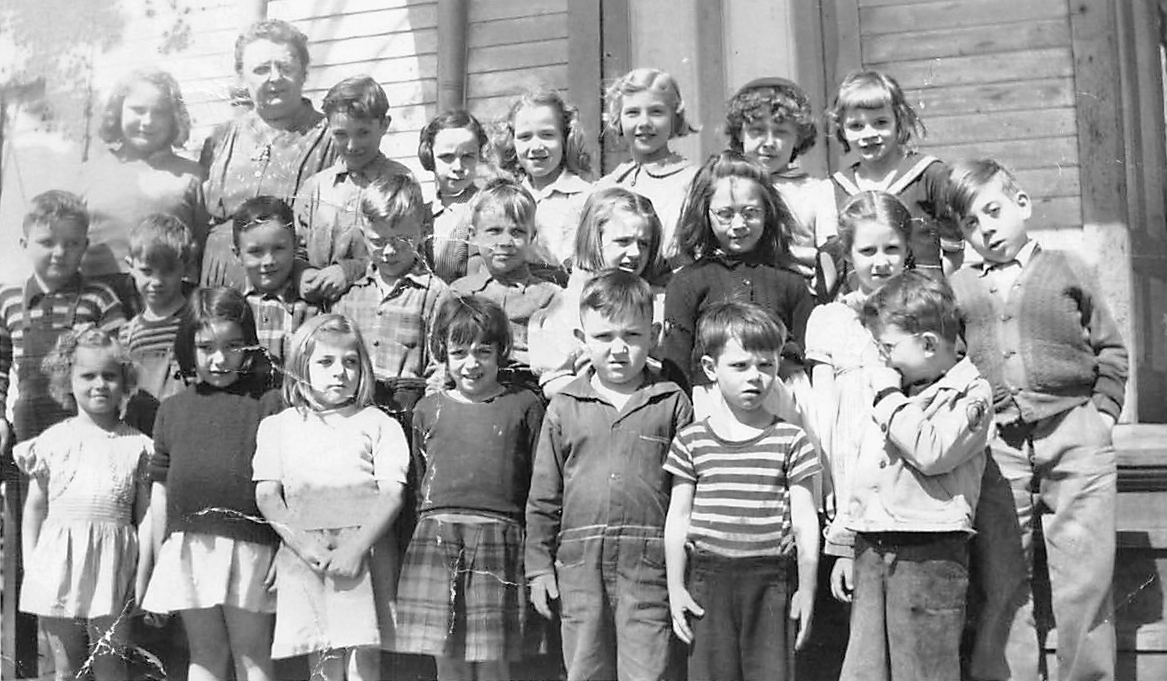
Dayton School 1945-46

grades 1-4 Dayton School 1945-46

How Did the Dayton School Compare in 1876?

The 1859 School

The 1859 School

This drawing of the 1859 school was made by Ruth Green in an article on early schools. The school was by the railroad tracks, in the spot later used by the elevator.

Extracts from the Report of the County Superintendent of La Salle County Schools for the Year Ending September 18761

Number Graded Schools                                                           19
Number Ungraded Schools                                                     282

Number Male Teachers                                                           216
Number Female Teachers                                                       394

Highest monthly salary paid to any Male Teacher              $200
Highest monthly salary paid to any Female Teacher               70

Lowest monthly salary paid to any Male Teacher                     20
Lowest monthly salary paid to any Female Teacher                 15

Number Stone School Houses                                                       1
Number Brick School Houses                                                      21
Number Frame School Houses                                                 280

In 1876 Dayton was one of the 280 frame schools and was still an ungraded school, with a single teacher responsible for all classes. In 1879 the school was reorganized and divided into two branches, taught by Charles Howard and  Ada Green. By 1880 there were definite grades and subjects, though apparently NOT algebra. Female teachers were in the majority, but definitely underpaid compared to their male counterparts.

As this report shows, ungraded schools were the norm in La Salle County
     One-room schoolhouses: A single teacher taught all subjects to students of widely varying ages and abilities.
     Mixed-age instruction: Students were grouped not by age or grade, but by their level of mastery. Younger children sat in front learning the alphabet, while older students worked on more advanced subjects like arithmetic or geography.
     Flexible structure: Lessons were often individualized or taught in small groups. There was no formal progression from one grade to the next.

Graded Schools began to emerge in towns and cities as education reform gained momentum:
     Multiple classrooms: Students were divided by age or academic level into separate grades, each with its own teacher.
     Standardized curriculum: Each grade had a defined set of subjects and expectations. This made it easier to track progress and prepare students for higher education or vocational paths.
     Efficiency and order: Graded schools were seen as more modern and effective, especially in growing urban areas like Alton or Chicago, where population density allowed for more specialized instruction.

The shift from ungraded to graded schools reflected broader changes in public education—especially after Illinois passed its Free School Law in 1855, which expanded access and encouraged more uniform schooling across the state.


  1. Past and Present of La Salle County, pp. 273-4.

Report Card Time

Report of Dayton School

The following are the average standings in the examination of the pupils in the higher departments of the Dayton school for the term ending Dec. 22, 1881:

Maud Green, 98; Frank Green, 70; Etta Barnes, 95; Louisa Benoit, 70; Lyle Green, 87; Will Barnes, 70; James Ryan, 87; Winnie Green, 70; Carrie Barnes, 85; Claud Rost, 65; Ralph Green, 80; Ellis Breese, 63; Herbert Dunavan, 76; Luther Fuer, 47; Hugh Metcalf, 74; Charlie Fuer, 40; Lizzie Bogerd, 71; Jennie Bogerd, 67.

There will be a change of teachers in this department next term. C. H. McGrew having been recently elected county superintendent of Keokuk co., Iowa, his native place, has resigned, and Mr. Clauson succeeds him as principal.

Very respectfully,
C. H. McGrew1

I was very pleased to see that my Great-aunt Maud had the highest marks.


  1. The Ottawa Republican, Thursday, 29 Dec 1881, p. 2.

Celebrating the End of the School Year – 1944

graduation cap & books

Friday night, May 26, 1944, the rural schools of districts 204, 208, and 209 (Dayton) held joint graduation ceremonies.

200 at Graduation Program in Dayton Hear W. R. Foster

Eight pupils of the eighth grade received diplomas last night at a combined rural and village school commencement exercise attended by 200 at the Dayton school

Diplomas were presented by County Supt. of Schools W. R. Foster, who made the graduation address. Members of the class were Le Roy Reindel, John Edsan, Jimmie Lambert, Truman Eltrevoog, Naomi Winchester, Edward Patterson, Dorothy McLean and Francis Alvig.

Seventh grade promotion certificates were presented to Elaine Thomas, Ruth Schmidt, Marshall Claude, Dick Thomas and Dale Reindel.

The program was in charge of the teachers of the school combining for the commencement, and was opened by graduates and the audience singing “The Star Spangled Banner” and “God Bless America,” and giving the salute to the flag.

District 208 pupils under direction of Mrs. F. J. Giehler presented a sketch, “The Colonial Time.”

A playlet, “The Story of America,” was given by district 204 pupils directed by Mrs. Edith Miller.

The Dayton school primary department under direction of Miss Emma Fraine staged a skit, “All Out for Defense.” Pupils of Mrs. Naomi Trent’s room at the Dayton school staged a playlet, “Salute to the Flag.” The program closed by all pupils singing “The Victory Polka.”1


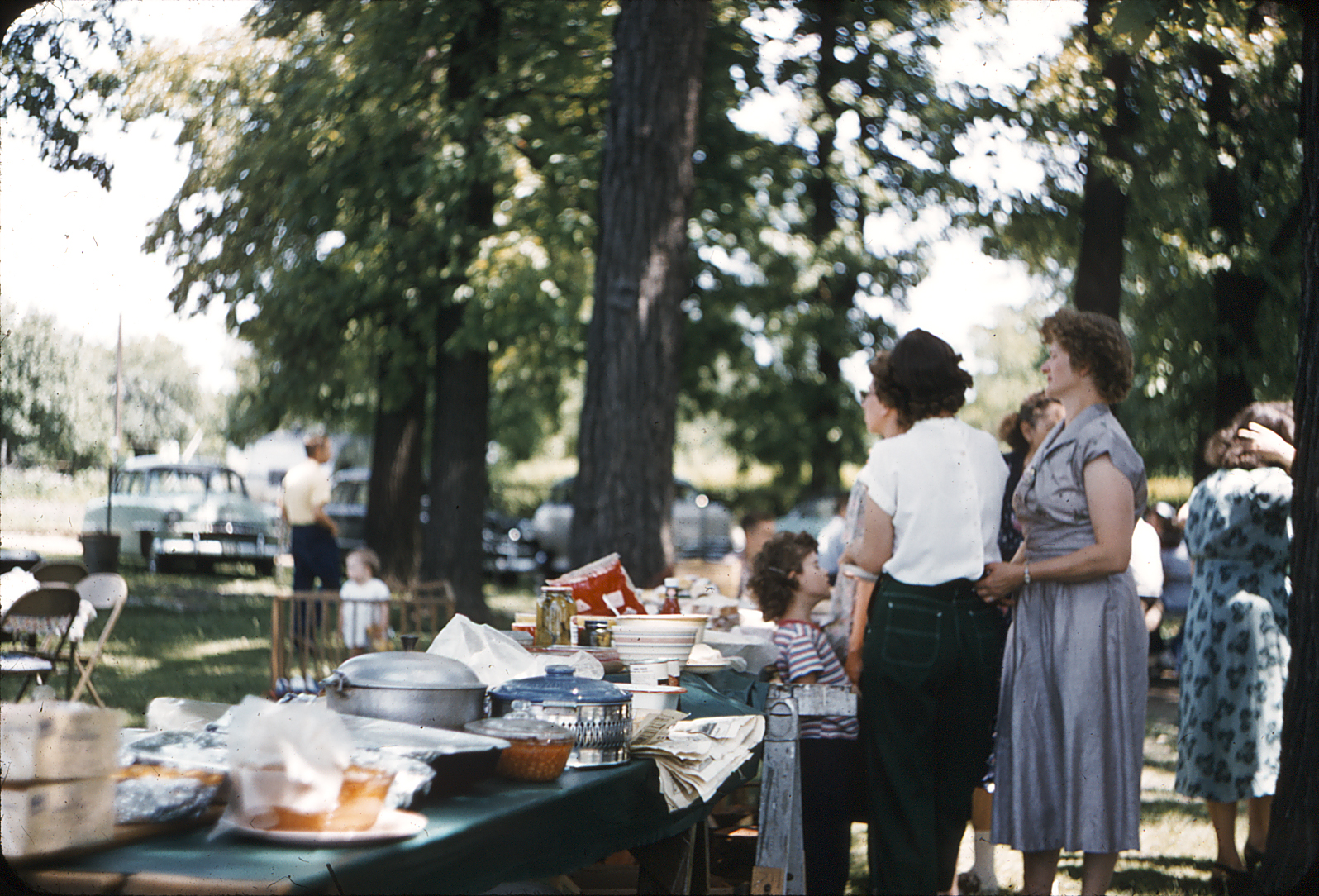
Two days later, everyone gathered at the school for the annual picnic.

the picnic table

This is a later picnic, but I’m sure the table was just as loaded in 1943.

100 Gather for Annual Picnic at Dayton School

One hundred attended the annual picnic of the Dayton school yesterday at the school grounds.

Dinner at noon was followed by races and other sports. Later ice cream and cake were served.

Winners in races were Carl Schmidt, preschool age; Shirley Patterson, 1st grade; Sylvia Ralrick, second grade; Rosemary Patterson, third; Bobbie Buckley, fourth; Ardelle Taylor, fifth and sixth; Elaine Thomas, seventh; Edward Patterson, eighth; Teddy Mathews, high school; Mrs. Homer Matthews and Mrs. Naomi Trent, married women’s.

Mr. and Mrs. Tony Summons, Mrs. Morris Ponton, Mrs. Mayme Ryan and Miss Elizabeth Ryan of Chicago, and Mrs. Fred Ritzius of Ottawa were out of town guests.2


  1. Ottawa Republican-Times, May 27, 1944, p. 8, col. 1
  2. Ibid, May 29, 1944, p. 8, col. 6

Schoolteachers Cora and Winnie Childs

Cora and Winnie Childs

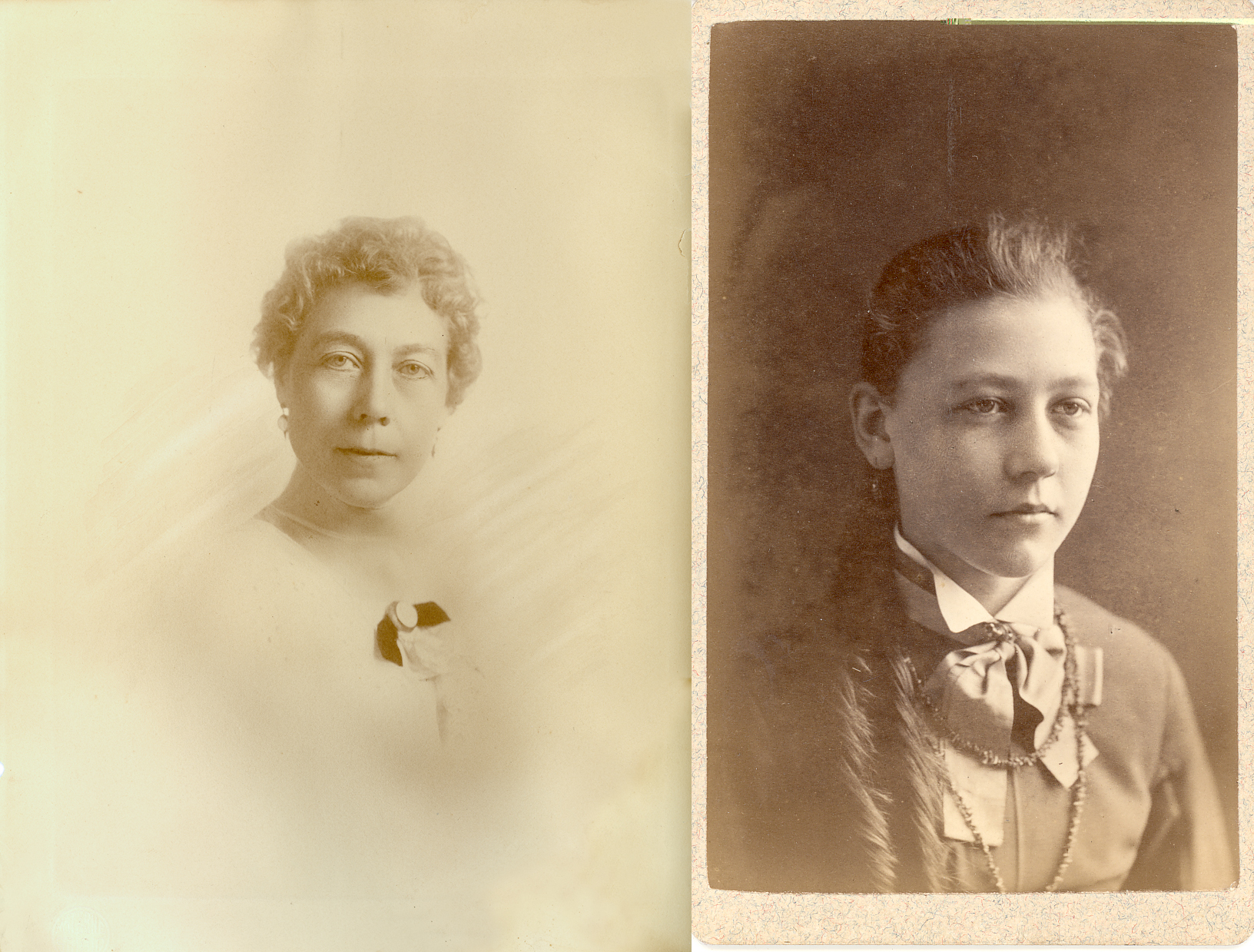
In 1882 a two-story frame house with a belfry was built at the top of the hill in Dayton. It served as the schoolhouse until it burned in 1890. The first teachers in that building were Cora and Winnie Childs, the daughters of Franklin P. Childs and Margaret Price.

They were born in Marshall county, Illinois; Cora in 1860 and Winnie in 1863. In 1864, their parents moved to Ottawa to take advantage of the better educational opportunities for their daughters. Cora graduated from Ottawa Township High School in 1879 and Winnie in 1881.

Cora completed the two year program at Wesleyan Female College in Cincinnati in one year, graduating in June 1880. She taught at several other La Salle County schools and after Winnie graduated in 1881 they came to Dayton together in 1882.

They taught there for two years, until their father moved the family to a farm near Morris, in Grundy county. Cora applied for and was granted a position teaching in the Morris junior high school.

The two years spent in Dayton made many opportunities to get to know the Dayton people, and Cora and Winnie kept up friendships with many of the Green family and others into later life. One of these friendships ended in the marriage of Cora Childs and Harry Green on February 22, 1888. They lived in Morris, where Harry had a bakery and restaurant. After that building burned, they returned to Ottawa where he went to work for the Standard Brick Company, where his brother-in-law, C. B. Hess, was a partner.

In 1892 they moved to Chicago where Harry established himself as an electrical engineer. Cora was very active in various patriotic organizations. She held a number of offices with the DAR, including many years as regent. She was the first regent of the Chicago chapter of the DAC, the Daughters of the American Colonists; was a member of the Daughters of 1812 and many other similar organizations. Cora died February 1, 1951 and is buried in Ottawa, Illinois.

Winnie never married and spent most of her life on the farm near Morris or in the Chicago area. She worked at various times as a stenographer, a reporter and a music teacher. She became an invalid following a fall in1940 and in 1950 was in a private nursing home in Morris. In 1958 she was in Chicago with her niece, Mabel Greene Myers, where she died February 11, 1958.

Kirby Todd and Folk Valley

In 1947 Kirby Todd became the music teacher for the rural schools of La Salle County. I was attending the Dayton school when he first took up his post, succeeding Miss Ida Chamberlain. He taught us folk songs and square dancing and was immediately very popular.

He was the founding president of Folk Valley, a non-profit corporation dedicated to the preservation of the art of square dancing and other folk arts. Folk Valley was situated on land near the Illinois river east of Marseilles. The idea of Folk Valley came to him when he was teaching the school children in Grand Ridge. The principal and several adults asked him to teach adult square dancing. He began teaching square dance classes every fall and winter.

He was an assistant professor of health and physical education at Illinois State University from 1964 to 1972 and served as sponsor and director of two groups that provided recreational activities for students –  Shufflin’ Shoes and the Lloyd Shaw Dancers. He retired in 1989 and died September 21, 1998, at the age of 88.

Who is on the Honor Roll?

Honor roll of the pupils of districts 2 and 10, Dayton township, for the term commencing May 3d, 1880, and ending July 1st, 1880. The pupils were graded on a scale of 10 in their studies and deportment, a deduction being made for each case of tardiness and absence. There were 13 pupils enrolled. The following named pupils attained an average grade of 8: Mabel Trumbo, Bertha D. Angevine, Clara S. Angevine, Lester Brown and Mamie Debolt.
E. M. Angevine, Teacher1

Mabel Trumbo, born 1866, was the daughter of Moab Perry and Rebecca (Kagy) (Walters) Trumbo.

The Angevine sisters, Clara, born 1864, and Bertha, born 1867, were the daughters of Charles Edward and Cornelia (Davenport) Angevine. The teacher was their sister, Eva.

Lester Brown, born 1871, was the son of William M. and Kate (Hess) Brown.

Mamie DeBolt, born 1868, was the daughter of George W. and Mary (Sutton) DeBolt


  1. The Ottawa Free Trader, July 24, 1880, p. 1, col. 4

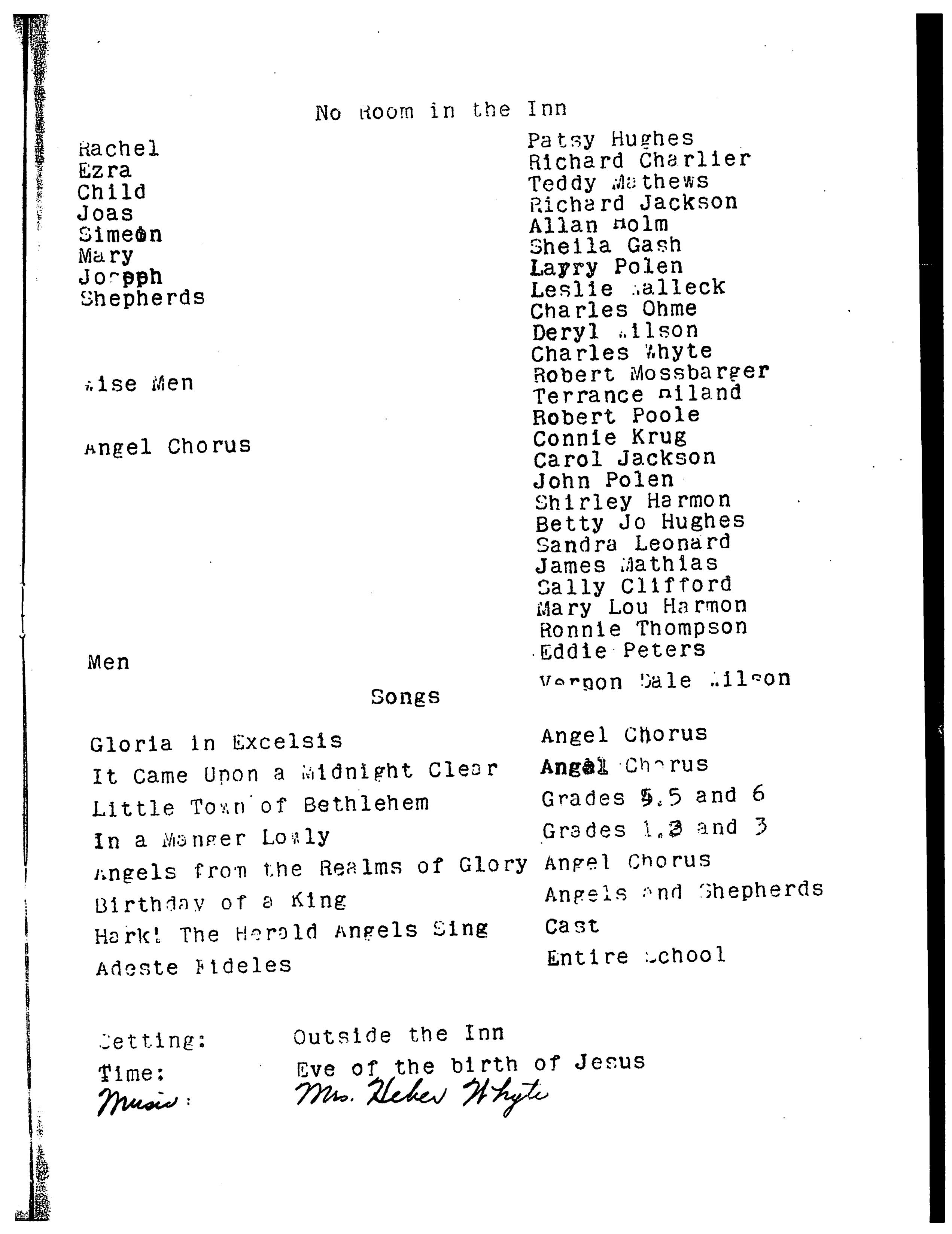
Holiday Memories – Christmas 1953

The following column is reprinted from volume 3 of the 1953-54 publication, Our School News, produced by the students of the Dayton School.

Holiday Memories

Mrs. Genevieve Hall of Ottawa called at the John Jackson home on Christmas eve.

Mr. and Mrs. Thomas Hiland, Terry, Janelle and Laurel visited Mr. and Mrs. Vernon Hiland and family of Moline.

Mr. and Mrs. Charles Clifford, Candace, Sally and Mrs. Ralph Green spent New Year’s Day with Mr. and Mrs. Eichelberger of LaGrange.

On Christmas Day, the Clifford family called on Mr. Clifford’s mother. Mr. and Mrs. Sears, their children, Mr. and Mrs. Roberts and their two girls also were there.

On Christmas Day Mr. and Mrs. Floyd McMichel, Mrs. Mossbarger and Bobby called at the home of George McMichel of Wedron.

Mr. and Mrs. Cruit and their children, Mr. and Mrs. Lloyd Ray and their three children, Mr. and Mrs. Cecil Barr and child came to spend a day at the home of Oran Mathias in honor of Mrs. Mathias’s birthday.

On New Year’s Day, Mr. and Mrs. Wayne Thompson and their three children came from Florida and spent the day at the Chester Thompson home.

Mr. and Mrs. Bernard Hackler, Bryan and Gary were vacation guests of Mr. and Mrs. Howell of LaGrange.

Holiday visitors at the Mathias home included Mr. and Mrs. Cecil Barr of Decatur, Mr. and Mrs. Lloyd Ray of Bethany, Mr. and Mrs. Wayne Cruit and Mr. and Mrs. Henry Heiland of Findlay, Ilinois.

Mr. and Mrs. Charles Poole, Robert, David, Nancy and Patty spent Christmas Day with Mr. and Mrs. George Poole.

Mrs. Oran Mathias, Jimmy, Linda, and Gary spent Christmas in the home of Mr. and Mrs. Chester Mathias in Shelby County. They also visited Mr. and Mrs. Ray of Bethany.

Mr. and Mrs. Jesse Leonard spent Christmas Day with the Don Leonard Family.

Mr. and Mrs. Jason Hughes spent New Year’s in Pontiac at the Ramsey home.

Dixie Slover spent Christmas in Chicago with her father. She had an enjoyable time shopping, going to the big stores and visiting relatives. Mr. Slover brought her home New Year’s.

Mrs. Kossow’s parents from Peru were New Year’s guests at the Kossow home.

Marty reports a vacation in Florida during the holidays where he went swimming, sight seeing and fishing. To go fishing Marty and his Dad went out in a boat.

The George Pinske family visited relatives in Freedom township during the holidays.

Mr. and Mrs. Joe Frig, Lounetta, Clarence and Mary Jo spent Christmas at the home of their grandmother, Mrs. McConnahay in Ottawa. Lounetta enjoys using her flash bulb camera which she received as a gift.

The traditional gathering at the home of Fred Eichelkraut in Ottawa was attended by the Robert Ohme family, it is held on Christmas eve.
Robert and Charles are busy with the gas model airplanes which they received at Christmas.

Carol Dezso accompanied her parents, Mr. and Mrs. Frank VanDorn, and brother, Jimmie, to South Bend, Indiana, during the holidays where they visited friends and relatives.

Sally Ann Peters enjoyed riding her mule during the holidays. Her grandmother, Mrs. Pearl Peters entertained relatives at Christmas time.

Mr. and Mrs. Leslie Carrier, Jack Traeger of Chicago were holiday visitors at the home of Mr. and Mrs. A. Walleck.
During the holidays, Bob skated to Wedron.

Mr. and Mrs. Harold Fosse entertained the Melvin Holm family on Christmas Day. On December 27, Mr. and Mrs. Melvin Holm and family attended the Fosse family reunion held at the Masonic Temple in Ottawa.

Larry Mettille is the possessor of a new gun and enjoyed hunting during the holidays. The Jess Mettile family visited Mr. and Mrs. L. Halterman of Ottawa on Christmas Day. An interesting specimen, that of a heart, was viewed by Larry Mettile while at this aunt’s home,

Dick Jackson visited friends at Earlville at Christmas time, later during the vacation he entertained these Earlville friends at his home. Dick has a new electric train which he enjoys greatly.

On Christmas eve, a gift exchange was held at the home of Mr. and Mrs. Theodore Wilson. Guests present included Mr. and Mrs. Eugene Davis and son of Maywood and Mr. and Mrs. Lum McKinney.

Kenneth Newtson received a 16 gauge shotgun for Christmas. He skated to Wedron during the vacation period. Guests at the Newtson home for Christmas included Mr. and Mrs. LaVerne Jamieson and daughters, and Fred Newtson.

Larry Polen tried out his new skates during the holidays.

Eddy Peters visited relatives in Marseilles during the holidays. Eddy enjoyed decorating, then later taking the tree down.

Mrs. Eva Charlier, Miss Emma Fraine, Mrs. Mathias and Linda were guests at the home of Mrs. J. Trent during the holidays.

A Trip to The Court House

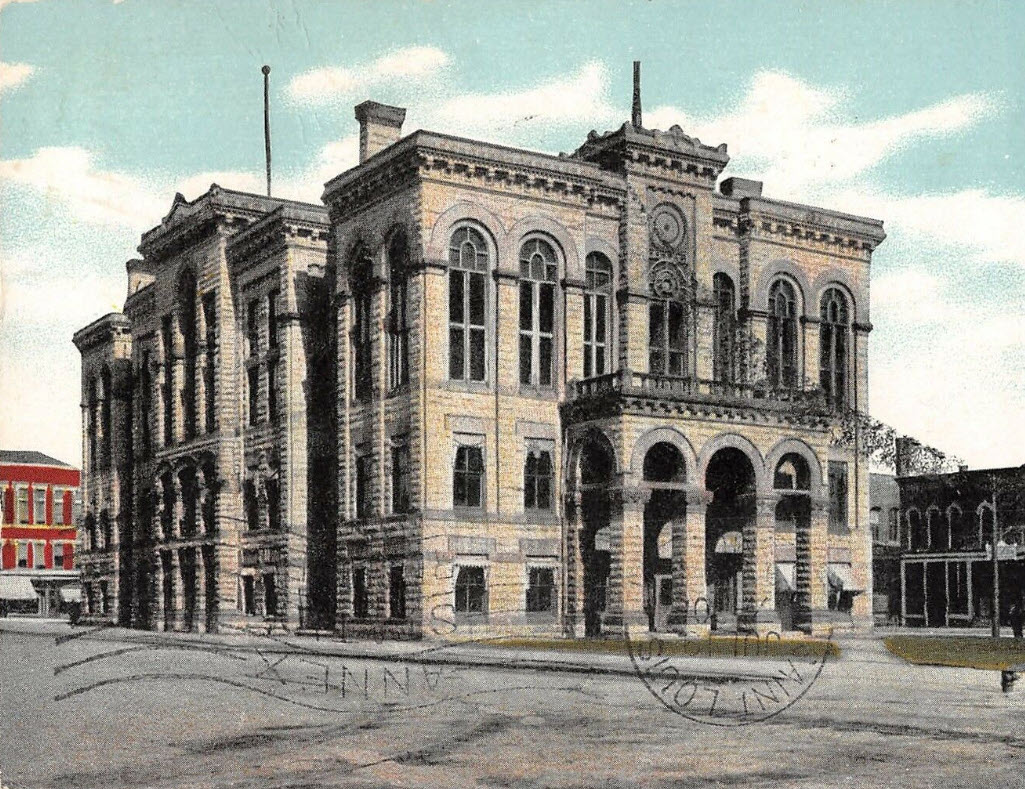
Ottawa Courthouse

Ottawa Courthouse

The following column is reprinted from volume 3 of the 1953-54 publication, The Dayton News Reel, produced by the students of the Dayton School.

The seventh and eighth grades are studying county, city and state government in civics, and in connection with that visited the Court House in Ottawa on January 14.

They visited the Sheriff’s office, the office of County Recorder and there saw the photostat machine at work and the addressograph machine being worked.

We learned of the work of the County Recorder and how the records of the county real estate, deeds, mortgages, etc are kept.

We were given a photostat copy of a chattel mortgage and watched a plate made for the addressograph machine and were given a copy of the work done by this machine.

We went to the County Clerk’s Office and learned how the records of births,  marriages and deaths are kept, and were given a demonstration of how a delayed birth certificate may be secured from these records.  Connie Krug’s record was looked up and we saw the information available when needed.

We also saw the jury box and the names in it which may be drawn for jury duty as needed. The County Clerk has the only key to this box.

We saw the files where the permanent registrations are kept for voting privileges, the books which are sent to the precincts on voting days, and the files for those who have not voted for four years and where the registrations of deceased persons are kept.

We saw where the Board of County Supervisors hold their meetings, where the Board of Review meets.

We witnessed a class of twenty-seven persons from LaSalle County, Grundy County and Bureau County receive the oath of allegiance to the United States. They had fulfilled all the legal requirements for naturalization previous to this final step. Following the oath of allegiance short speeches were made by representatives of the following organizations:
The American Legion
Veterans of Foreign Wars
Daughters of the American Revolution
War Mothers
Relief Corps
La Salle County Bar Association
Dept of Naturalization and Immigration
Judge Zearing of the District Court

Following the oath of allegiance the pledge to the flag was repeated, the new citizens were given their naturalization papers, other patriotic material including flags, and were taken to the office of County Clerk where they registered as voters for their respective counties.

The Little Red Hen

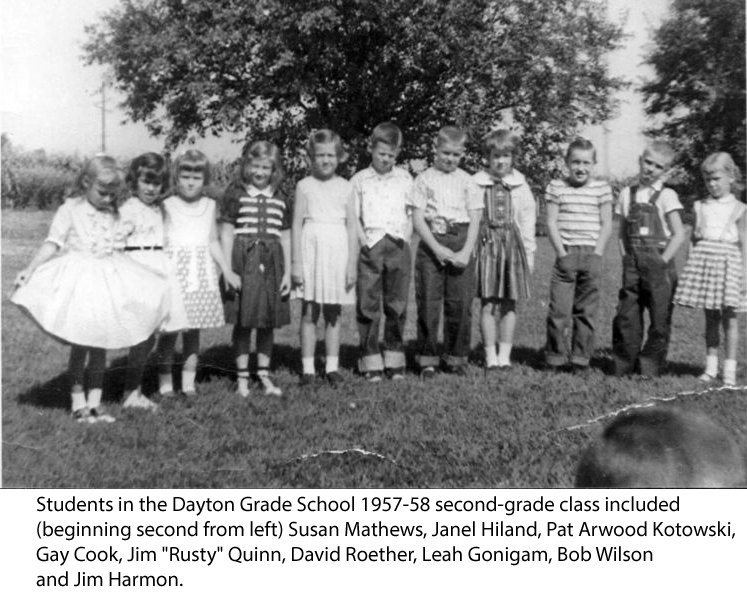
In June 1957 the graduation ceremonies at the Dayton school included a number of songs and plays.
Grades 6, 7, and 8 presented the operetta “All About Spring”.
The 5th grade girls gave a reading, “O Wide Wide World”.
Grade 3 sang the English hiking song, “Heave Ho”.
Grades 1 and 2 sang “The Robin in My Cherry Tree”.
The boys of grades 3, 4, and 5 sang “Take Me Out to the Ball Game”.

But surely the highlight of the festivities must have been grades 1 and 2’s presentation of “The Little Red Hen”. Here’s the cast:

Narrators: Danny Kossow and Susan Krug
The Little Red Hen: Nancy Sensiba
The Miller: Stephen Robertson
The Cat: Georgia Clark
The Pig: Robert Wilson
The Frog: Tim Gage
and last, but not least, the Little Chickens: Gerald Abell, Patsy Arwood, Shirley Arwood, Darlene Clark, Ronald Grieves, David Harmon, Janel Hiland, Judith Mathews, Susan Mathews, and Pamela Spence.

If only cell phone cameras had existed then!!

Dayton School Has Reunion at Community House

picture of school

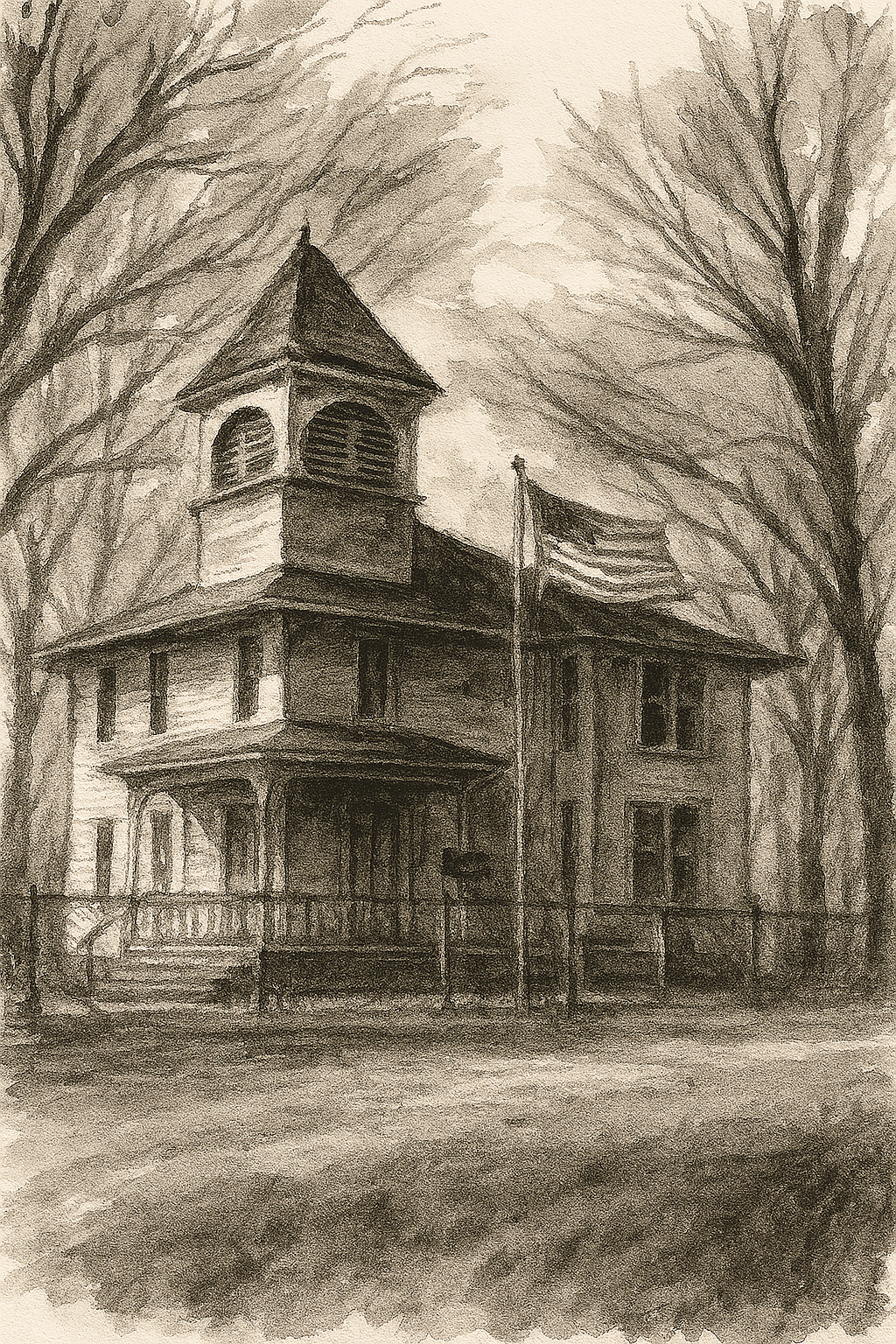
Opened in 1891, this school replaced the one which burned in 1890

From the Ottawa Republican-Times, June 14, 1937, p6

Graduates of the Dayton school from towns and cities in various parts of Illinois gathered Saturday night in the Dayton Community House for a reunion, planned by the Dayton School Alumni association.

There was a banquet and dancing. Mrs. George Pool, who later was elected president of the association, presided as toastmistress.

Mrs. Fred Sapp of Ottawa told of the coronation in England, which she viewed.

Short talks were given by Ralph Green, who offered a toast to members of the 1937 graduating class of the school; Miss Blanche Reynolds and Miss Emma Fraine. Miss Maud Green told of the history of the Dayton school and how it was established over 100 years ago.

Miss Beulah Canfield, who arranged this year’s reunion, presided at a business session at which Mr. Pool was elected president; Rush Green, vice president; Miss Loretta Gleason, secretary and Herbert Mac Grogan, treasurer. Retiring officers are Miss Canfield, president; Ralph Green, vice president; Miss Helen Hallowell, secretary and Herbert Mac Grogan, treasurer. A social time and dancing followed.

Blush pink and gold were used in the appointments of the banquet. There were yellow tapers and pink peonies and roses in crystal services on the tables. At the place of each guest were miniature girl graduates in pink and tiny tulip nut cups.

The basement of the house, where there was dancing, was decorated with honeysuckle.

Miss Canfield was in general change of the reunion. Mrs. Gilbert Masters and Miss Hallowell arranged the program and Miss Jennie Fraine had charge of the table decorations.

100 Years Ago Today

Grade-School-Graduate

ANNOUNCE DATES FOR GRADUATIONS OF COUNTRY SCHOOLS
Rural Schools of the Entire County are to Unite for Exercises
Each Grade to be Represented in Programs

Dates for holding graduation exercises thruout the county has been set by County Superintendent of Schools W. R. Foster. It has been arranged this year to have several of the schools unite in holding their commencements. Each grade of each school is to furnish at least one number for the programs which will precede the presentation of diplomas.

Arrangements have also been made for charging 15 cents admission for the exercises this year instead of the ten cent charge of previous years. Five cents of this money will be turned into a fund to purchase stereographs for the rooms and the remaining ten cent fee for a book fund.

The complete list of dates for the holding of exercises and the committee of teachers in charge of each community unit follow:
. . .
Dayton, June 10. – Jennie Fraine, Margaret Durkee, Bessie Eaton1

Final exams for the seventh and eighth grades of the rural schools were held on May 7th and 8th. About 800 students participated. The first commencement was held at Harding on May 18th, and graduation exercises were held almost  every night until June 15th, including those in Dayton on June 10.


  1. The Ottawa Free Trader, May 6, 1920, p. 4, cols 2-3

A Dayton School Reunion – 1937

picture of school

Dayton School Has Reunion at Community House

Graduates of the Dayton school from towns and cities in various parts of Illinois gathered Saturday night in the Dayton Community House for a reunion, planned by the Dayton School Alumni association.

There was a banquet and dancing. Mrs. George Pool, who later was elected president of the association, presided as toastmistress.

Mrs. Fred Sapp of Ottawa told of the coronation in England, which she viewed.

Short talks were given by Ralph Green, who offered a toast to members of the 1937 graduating class of the school; Miss Blanche Reynolds and Miss Emma Fraine. Miss Maud Green told of the history of the Dayton school and how it was established over 100 years ago.

Miss Beulah Canfield, who arranged this year’s reunion, presided at a business session at which Mr. Pool was elected president; Rush Green, vice president; Miss Loretta Gleason, secretary and Herbert Mac Grogan, treasurer. Retiring officers are Miss Canfield, president; Ralph Green, vice president; Miss Helen Hallowell, secretary and Herbert Mac Grogan, treasurer. A social time and dancing followed.

Blush pink and gold were used in the appointments of the banquet. There were yellow tapers and pink peonies and roses in crystal services on the tables. At the place of each guest were miniature girl graduates in pink and tiny tulip nut cups.

The basement of the house, where there was dancing, was decorated with honeysuckle.

Miss Canfield was in general change of the reunion. Mrs. Gilbert Masters and Miss Hallowell arranged the program and Miss Jennie Fraine had charge of the table decorations.1


  1. Daily Republican-Times, June 14, 1937, p6

Another Maypole – This One Really is in May

A Maypole at graduation

Graduation Day at the Dayton School, May 1955

The Maypole was a big deal in Dayton School celebrations (see here for a Christmas version). The girl in pink in the front is Sally Clifford. If anyone knows any of the others, please leave a comment identifying them. There were four graduates that year, and only two of them are identified, so please – let’s rescue them all from oblivion.

Graduating class 1954-55

Graduating class 1954-55

The two in the center are Richard Charlier and Sheila Gash. Who are the other two? Leave your answers in the comments.

If you don’t know any of them, ask your parents or grandparents!

Dayton School Reunion – 1937

Dayton School Has Reunion at Community House

Graduates of the Dayton school from towns and cities in various parts of Illinois gathered Saturday night in the Dayton Community House for a reunion, planned by the Dayton School Alumni association.

There was a banquet and dancing. Mrs. George Pool, who later was elected president of the association, presided as toastmistress.

Mrs. Fred Sapp of Ottawa told of the coronation in England, which she viewed.

Miss Fraine

Emma Fraine

Short talks were given by Ralph Green, who offered a toast to members of the 1937 graduating class of the school; Miss Blanche Reynolds and Miss Emma Fraine. Miss Maud Green told of the history of the Dayton school and how it was established over 100 years ago.

Maud Green

Miss Beulah Canfield, who arranged this year’s reunion, presided at a business session at which Mr. Pool was elected president; Rush Green, vice president; Miss Loretta Gleason, secretary and Herbert Mac Grogan, treasurer. Retiring officers are Miss Canfield, president; Ralph Green, vice president; Miss Helen Hallowell, secretary and Herbert Mac Grogan, treasurer. A social time and dancing followed.

Ralph Green

Ralph Green

Blush pink and gold were used in the appointments of the banquet. There were yellow tapers and pink peonies and roses in crystal services on the tables. At the place of each guest were miniature girl graduates in pink and tiny tulip nut cups.

The basement of the house, where there was dancing, was decorated with honeysuckle.

Miss Canfield was in general change of the reunion. Mrs. Gilbert Masters and Miss Hallowell arranged the program and Miss Jennie Fraine had charge of the table decorations.1


  1. Ottawa Daily Republican-Times, June 14, 1937, p6