Support of a Family Burying Ground

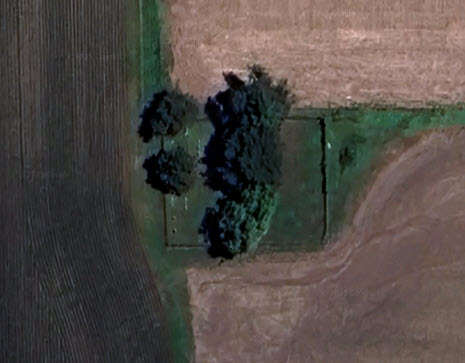
The red circle indicates the location of the Trumbo burying ground

When Mathias Trumbo wrote his will in 1865 he had thought carefully of how his estate was to be divided and had left explicit instructions. However, in 1874, just a year before his death, he realized that there was something else he wanted done at his death. In order to accomplish this, he created a codicil to his will stipulating that out of the proceeds of his estate, one hundred dollars should be invested for ornamenting and keeping in good order the grave yard located in Section Twenty Seven, Township Thirty four North in Range Four East in the Town of Rutland LaSalle County, Illinois.

An overhead view of the burying ground in 2025.

It appears that when Mathias wrote this codicil no trustees for the grave yard had yet been appointed. He directed that at his demise, if no trustees had yet been appointed, his executors should invest the one hundred dollars and hold it in trust until trustees were appointed, at which time the money would be paid to them. He further stipulated that the trustees were to spend only the interest on the investment and that the said principal of one hundred dollars was to be held by the said trustees and their succession forever.1

Mathias’s care for the burying ground did not end there. When he conveyed the land around it to his daughter in 1870 in return for her care of him for his lifetime, he stipulated that she must grant a right of way 2 rods wide from the Chicago road to the burying ground.

In 1988 when my father took me to see this tiny cemetery, we had to walk through a field to reach it (so much for the 2 rods right-of-way). It was totally overgrown and it was difficult to see the stones, although I was able to photograph the one I had come to see.  Unfortunately, I did not know of Mathias Trumbo at that time, so I missed seeing his stone. Now the cemetery is being cared for, as you can see in the photograph above. I don’t have any information though as to whether the interest on that hundred dollars is still accumulating somewhere.

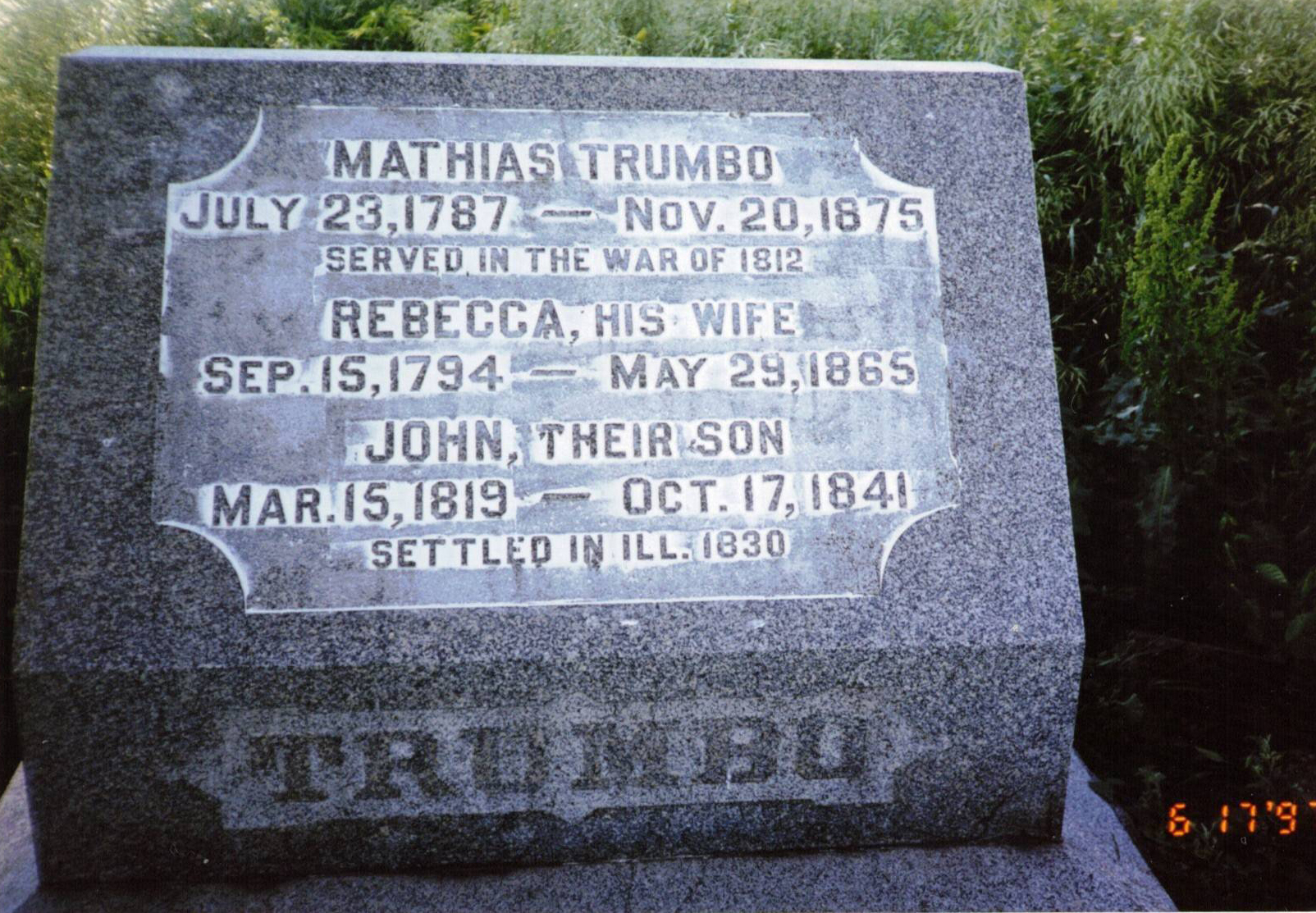
Thanks to the folks at the La Salle County Genealogy Guild (lscgg.org) for this picture of Mathias Trumbo’s tombstone. They have a wealth of information on La Salle County families and are wonderful at sharing it.


  1. You can see the complete text of Mathias’s will and codicil here.

Dayton Cemetery Association Celebrates 10th Anniversary

DINNER HELD AT CLIFFORD’S

The Dayton Cemetery Assn. held its annual meeting Sunday, with Mr. and Mrs. Charles Clifford of Dayton. After the morning work party had completed their task of mowing the grass, trimming trees and decorating the graves all met at the Clifford home for a picnic dinner and historical program. A display of family heirlooms was in charge of Mrs. Clifford, historian.

Mrs. Lewis E. Myers of Chicago was presented with a cake and ten lighted candles to mark the anniversary of the Association; for it was her idea that sparked the restoration of this beautiful old pioneer burial ground, which was started by John Green, who in 1829 led a party of settlers from Licking County Ohio to settle the community of Dayton.

At the business meeting Mrs. Mildred Summins of Ottawa was elected president. Other officers to serve with her for the coming year are Miss Dorothy Masters of Evanston, secretary; David Holmes of Oak Park, treasurer and Mrs. Myers, Care Fund Officer.

The following committees were named by the president.
Grounds: Charles Clifford of Dayton, Howard Baker of Leland, David Holmes of Oak Park.
By-laws: Mabel Greene Myers and Dorothy Masters.
Membership and Funds: Helen MacLoraine of Wilmette, La Vonne Gillman of Ottawa, and Eugene Pottinger of DeKalb.
Research: Candace Clifford Wilmot of Champaign, Mrs. William Temple of Serena and Mrs. Oakley W. Esmond of Ottawa.

Members and friends of the Association are from all parts of the United States. Those coming from the greatest distance at this meeting were Mr. and Mrs. Kenneth L. Green Jr. of Corbin, Ky.1


  1. The (Ottawa, IL) Daily Republican Times, May 31st, 1966, p. 11, col. 3.

The Dayton Cemetery Association – a retrospective

There have been several different Dayton Cemetery Associations over the years since the first burial in 1835, The current group was organized in 1956, with the object of cleaning up the cemetery, which had been allowed to go wild, and building a fund for providing on-going maintenance and support.

The first job was to mow the tall weeds.

Cleaned around the stones and trimmed branches

The annual meeting of the Association is held on the Sunday of Memorial Day weekend, and for many years met at the home of Grace and Charles Clifford, in Dayton.

Mabel Myers, Sandra Dunavan, and the 10th anniversary cake – 1966

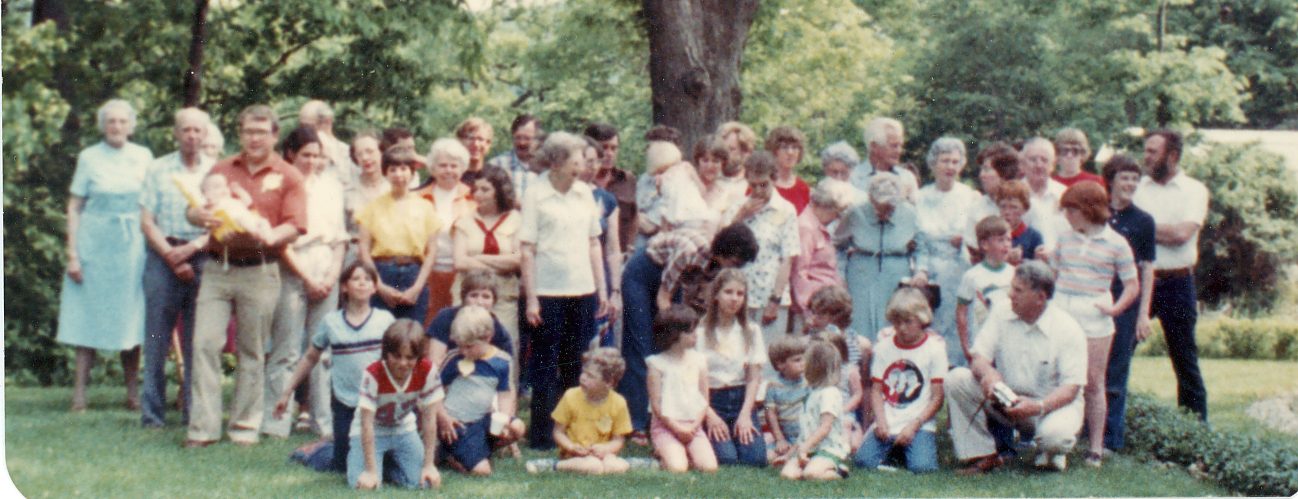
As the years went by, the group grew larger.

1980 – taken on the Clifford lawn

In 1996 Secretary Carrie Ann Green searched through the minutes and created a timeline of the organization up to that point. The timeline and the program Carrie gave in 1996, can be seen here.

Every year the meeting concluded with a historical program, frequently a story of families buried in the cemetery. More of the old programs will be added to this site as I get around to it.

In 2000, after the Cliffords moved from Dayton to Ottawa, the annual meetings were held at Skydive Chicago.  The traditional potluck meal and the historical program following the business meeting carried on the traditions, regardless of location.

2007 – We had to draft someone from the skydivers to take our picture.

In 2014 we worked with John Heider, a professional cemetery restoration expert. That year we restored 20 stones and the following year he came back and we did another 30 or so.


In 2020 Covid changed everything and we went to Zoom for meetings (though not for the pot-luck meals). In 2024 we are returning to Skydive Chicago and a more normal existence.

A view to the west

The One Left Behind

photo of Brunk, Ida Bell - tombstone

The Dayton cemetery is full of family groups. Among the graves are more than seventy members of the Green family, eleven Hippards, nine Hites and seven Makinsons. There are only a few instances of a burial that appears to be a solitary one. Perhaps the youngest of these is little Ida Bell Brunk, who died in 1868, at the age of five years, four months and ten days. There are no other Brunk monuments in the Dayton cemetery

Ida’s father, Noah Brunk, was born December 14, 1828 in Rockingham County, Virginia. He moved to La Salle county, Illinois, in 1855, where, on September 24, 1857, he married Amanda Elizabeth Parr, daughter of Thomas J. and Sarah Ann (Pitzer) Parr. 

In 1860 Noah and Amanda had a one-year old son, Thomas. Also in their household was Jesse Parr, Amanda’s 21 year old brother, who helped Noah with the farm work.

Between 1860 and 1870, little Ida was born in 1863 and died in 1869, so that in 1870 the household still consisted of Noah, Amanda, and Thomas, now age 11. They were living in Dayton township, where Noah was a Director of the Fox River Horse Collar Manufacturing Company, in partnership with J. A. Dunavan. He also served several terms as road commissioner and township treasurer. 

In 1880, the household had expanded to include an eight year old daughter, Cora, and Amanda’s parents.

In 1899, Cora married William D. Hedrick and they moved to Kansas. Thomas had graduated from Cornell University and was a professor at Texas A. & M. None of Ida’s family remained in the area, as Noah and Amanda went to Austell, Georgia for a few years, before moving to Kansas to be near Cora.

It is very possible that Ida is not the only member of her family buried in the Dayton cemetery. Her parents lost three children who died in infancy in the 1860s, when the Brunks were living in Dayton township. The probability is high that they, too, were buried in Dayton, but there are no stones and no other evidence has been found to verify this.

The following epitaph appeared on Ida’s tombstone. It is no longer readable, but luckily it was copied in 1967, when the stone was less worn:
          Dearest Ida, thou hast left us.
          Here thy loss we deeply feel.
          But ’tis God that hath bereft us.
          He can all our sorrow heal.
If other Brunk children were buried here too, surely this sentiment also applies to them.
Repairs to the cemetery – 140 years ago

The Dayton Cemetery

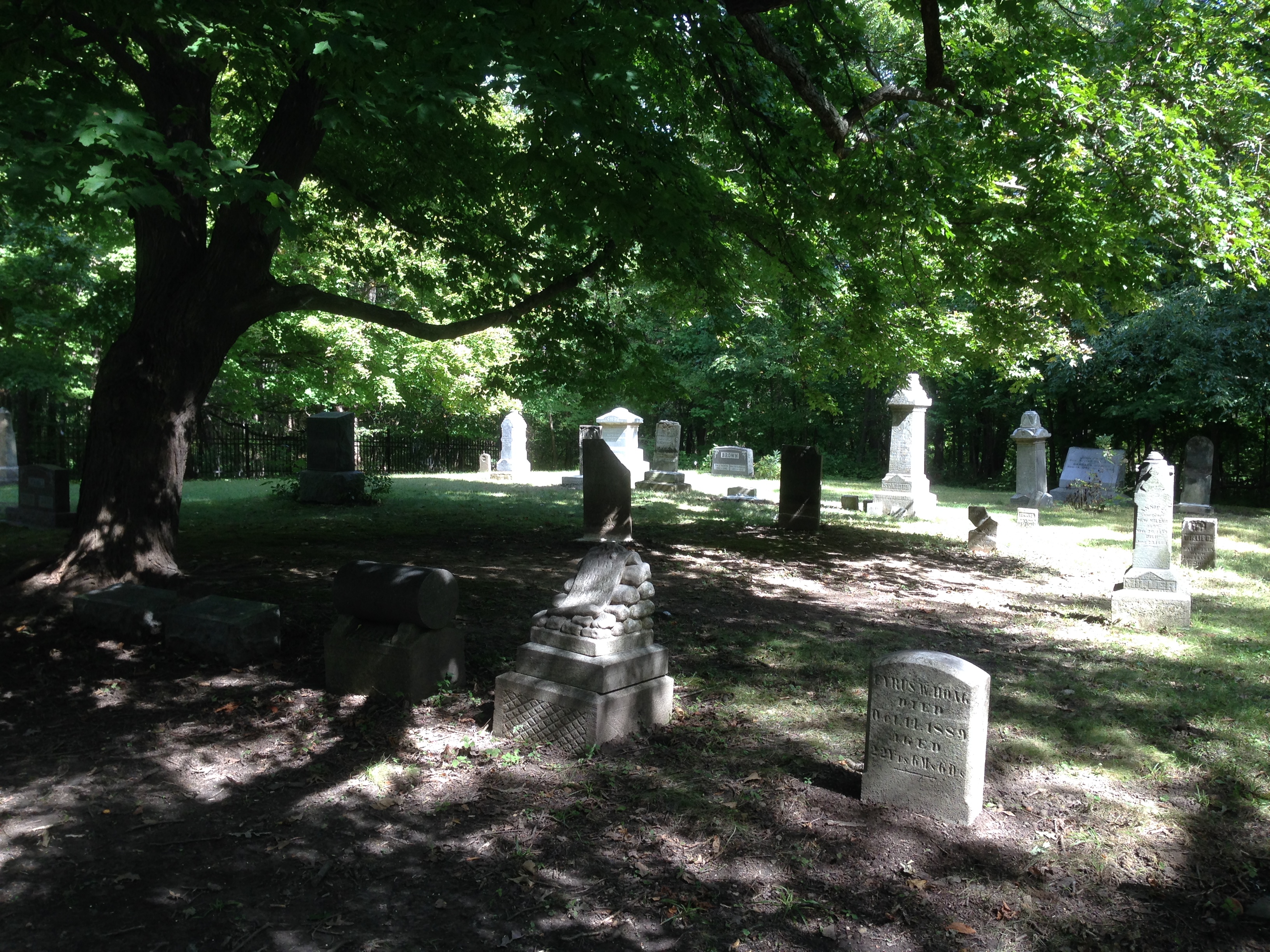
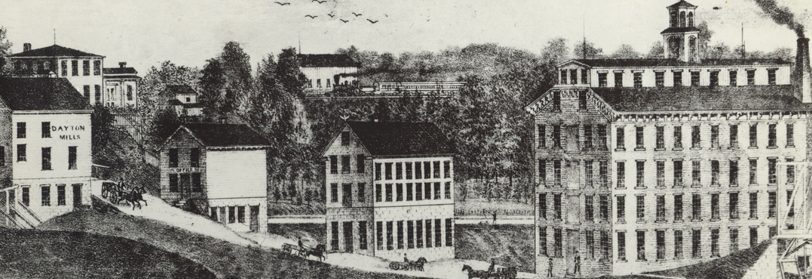
In 2014 and 2015 a major restoration project worked on cleaning and resetting about 70 stones in the Dayton cemetery, with the result shown above. It seems that 140 years ago the cemetery also received a face-lift, as described below —

Dayton, Ills., June 20. –
Passing through the cemetery north of town a few days ago, we were struck by the clean and white appearance of the tombstones. Many stones that had been lying on the ground were reset and were in their proper positions, many that had become dirty were now as white and clean as when first erected. Upon due inquiry we found that the work had been done by Mr. L. A. Smith of Marseilles, a gentleman who makes tomb-stone cleaning and resetting a business, who has many years experience, and judging by his work, gives good satisfaction. We are glad to see our citizens have made a move in this direction, and with the community would move a vote of thanks to Mr. Smith for his excellent work.

Occasional1


  1. The Ottawa Free Trader, June 28, 1879, p. 8, col. 2

Informal Burials in the Dayton Cemetery

champaign-albert-john tombstone

Handmade memorial stone for a child

In the early years of the Dayton Cemetery, many of the burials must have been informal – that is, not handled by an undertaker. The primary source of this information comes from the death certificate, where available. The earliest burial with a death certificate was in 1878, so clearly, for those burials between 1835 and 1878, we have no way of knowing who performed the burial. However, even for those burials after 1878, some were done informally.

William Hoag’s 1879 death certificate leaves the undertaker field blank. Frank Hudson was buried by A Trumbo in 1881. Burials in 1888 and 1902 either specify “unknown” for the undertaker or leave the field blank. Three others specify a single name, with no indication whether they were undertakers or private citizens. As recently as 1922, at least one infant burial was performed without the services of an undertaker.

In an analysis of the 113 death records found for burials in the cemetery, the majority were handles by the Zimmerman/Gladfelter Funeral Home (54 instances). This furniture and undertaking establishment was founded in 1862 by Simon Zimmerman and has been in continuous operation ever since. In 1886, Elmer E. Gladfelter married Zimmerman’s daughter Anna, and in 1889 assumed charge of the business. The business retained the Zimmerman name until his death in 1894, and has operated under the Gladfelter name to the present day.

There are 44 known burials that had no visible stone in 2015, when the most recent restoration was done. There are some pieces of broken stones, too fragmentary to be reassembled, in the woods at the edge of the cemetery, though a few had been recorded before they were damaged.


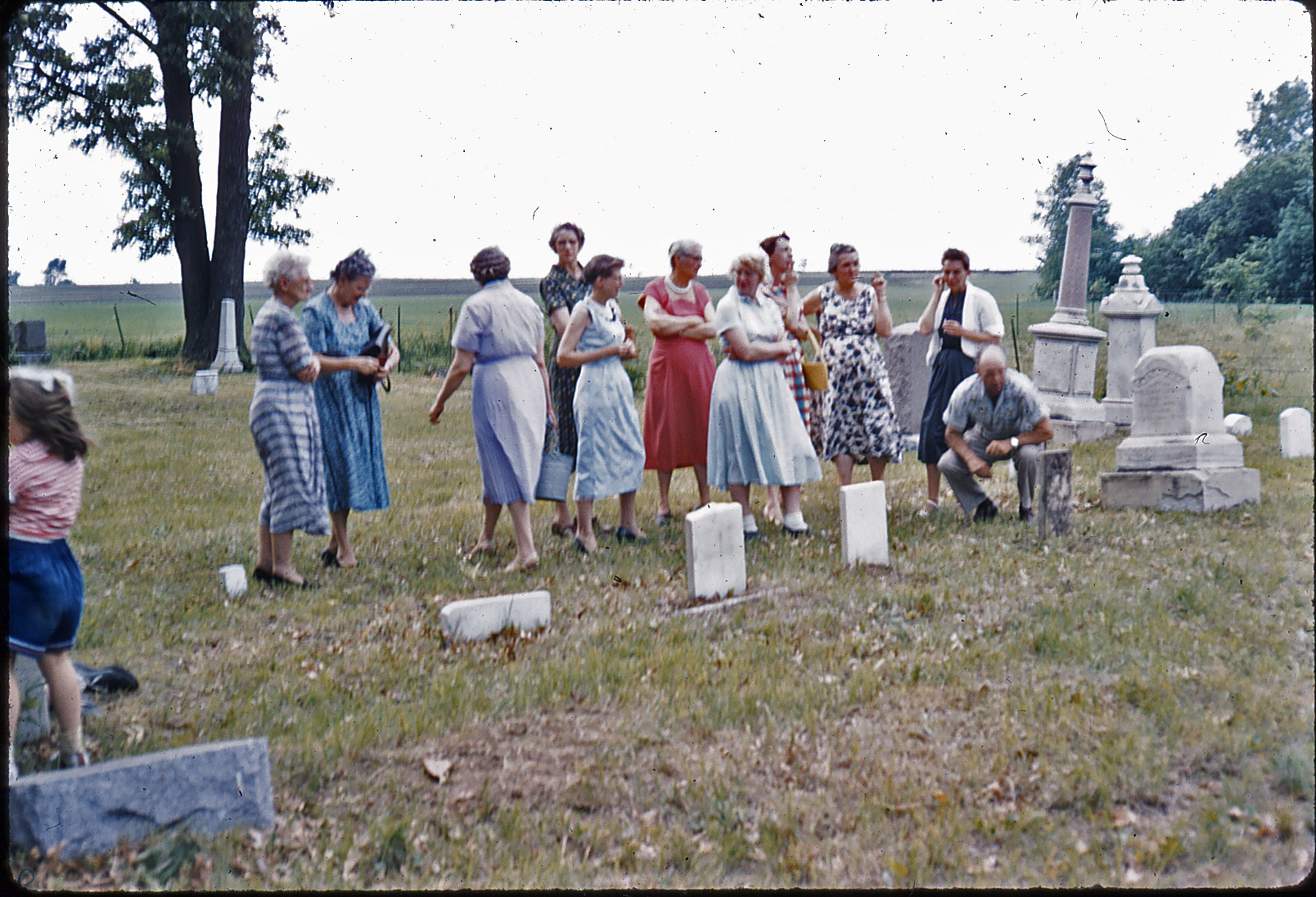
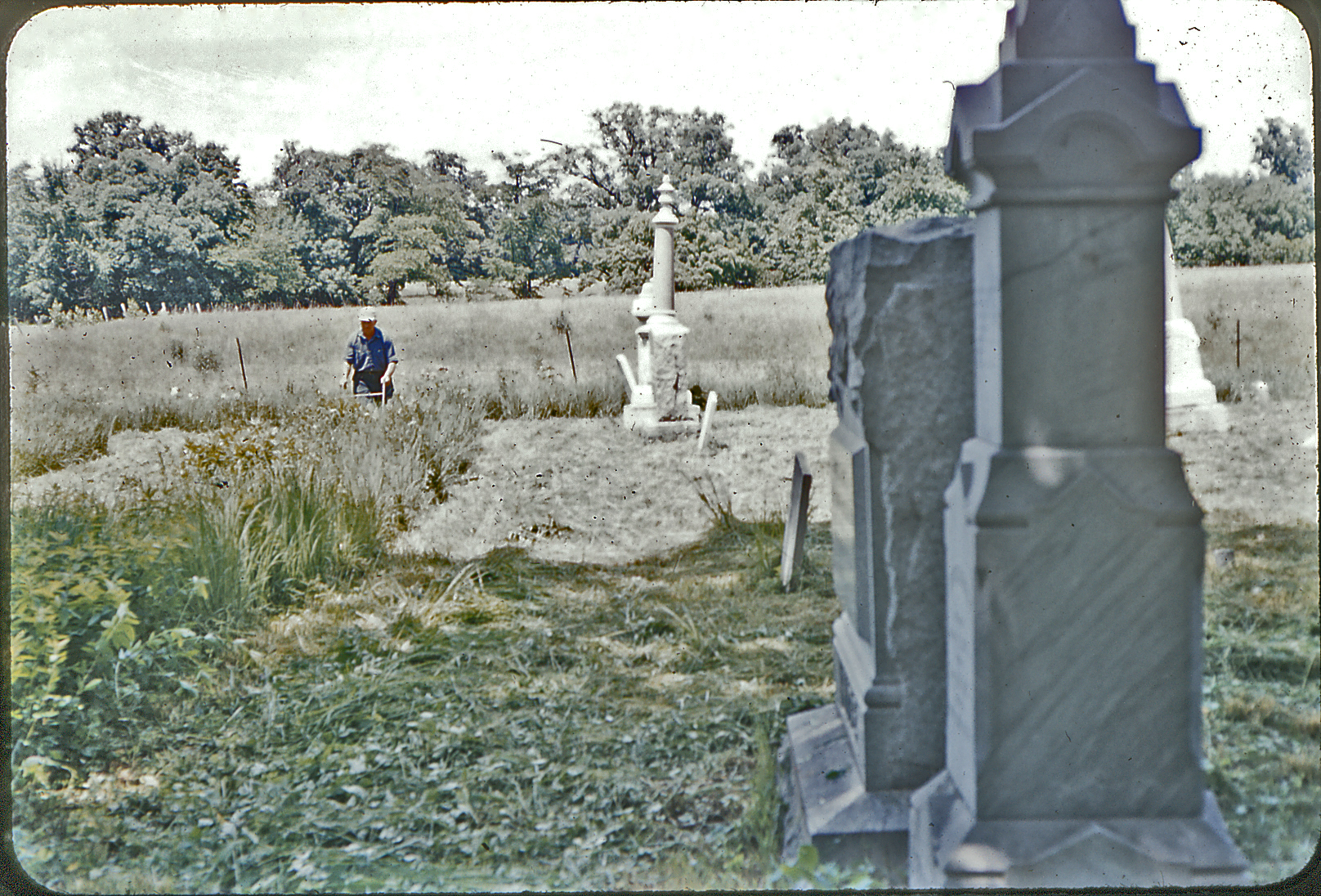
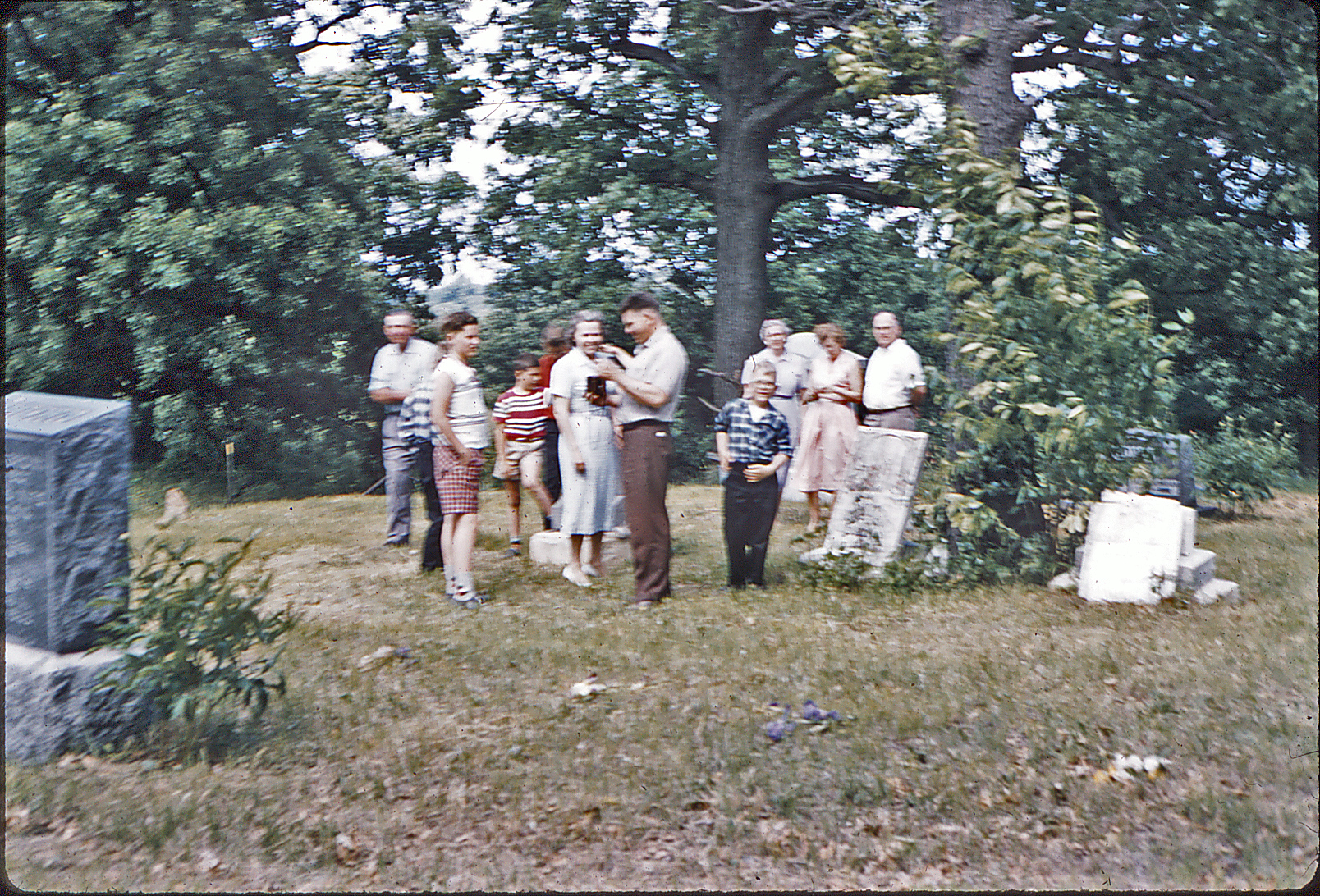
Memorial Day in Dayton – 1958

1958 cemetery work party


Sixty years ago this weekend members of the Dayton Cemetery Association and their families got together to work in the cemetery on Memorial Day weekend. The board members elected at that annual meeting were:

President: R. W. Eichenberger
Vice-President: David Holmes
Secretary: Mabel Greene Myers
Treasurer: Ruth Brown Baker
Care Fund Officer: Alice O. Green

The morning work of clearing away around the gravestones and general cleanup was followed by a potluck dinner at the home of Grace and Charles Clifford in Dayton.

In the lower picture, some of the people have been identified: Ruth Green, ?, ?, Lavonne Gilman, Grace Clifford, Dorothy Masters, Helen McLoraine, ?, ?, Ruth Eichenberger, Charles Clifford

The upper picture is of members of the Holmes, Pottenger, and Baker families. Leave a comment if you can identify any of them.

Repairing the damage


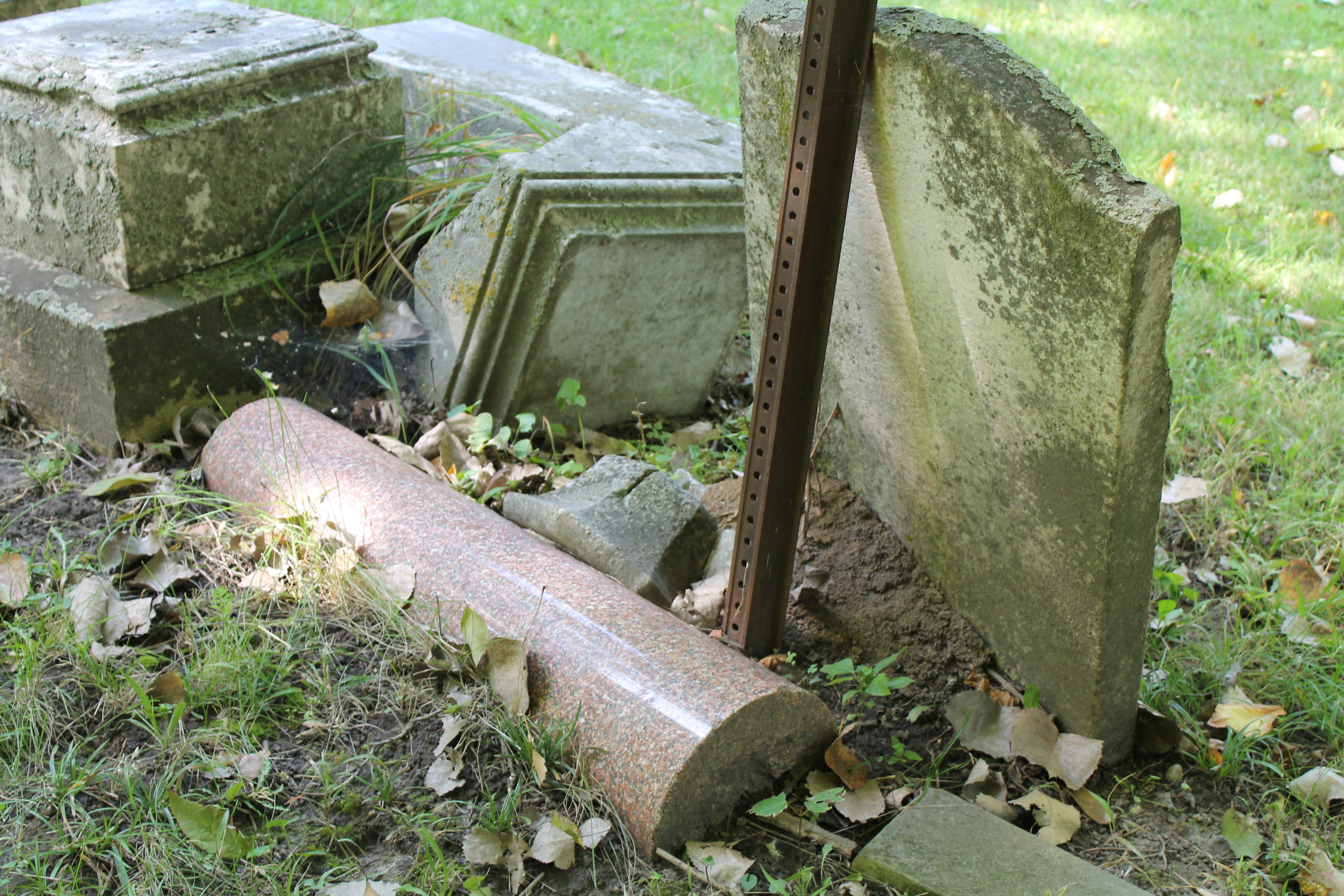
In 2014 and 2015 we repaired and restored a number of the grave markers in the Dayton cemetery. The cemetery was 180 years old and over the years had suffered from vandalism and the ravages of time and weather. Some stones had fallen over and were embedded in the ground, as was the Gerret J. Harms stone seen above. Others had been knocked over or had fallen as the ground shifted beneath them. John Heider, a professional gravestone restorer, drafted a number of family members as his willing, if not terribly able, helpers. Before we were done, some of us were very able.

Some other before and after pictures may be seen here.

A Different Look at the Dayton Cemetery

IMG_0961

How many people are buried in the cemetery?
There are 221 people known to be buried in the cemetery, as of July 1, 2012. Undoubtedly, there are some undocumented burials, as La Salle county did not register deaths until 1877 and even then not everyone complied. Even when deaths were mentioned in the newspaper, women and children were largely ignored. A child whose parents and siblings are buried in the cemetery, and whose family was known to be living in Dayton at the child’s death, is likely to be buried there. Where there is no confirmation of that, that child is not included with the 221 for whom some evidence exists.

Age at death Number of deaths
0-5 years         37
6-10                   5
11-20              13
21-30              15
31-40              16
41-50              10
51-60              16
61-70              33
71-80              40
81-90              21
91-100              8
Unknown         7

Causes of death
Of the 98 persons for whom cause of death is known, the seven most common causes were (in order of frequency): heart disease, cancer, meningitis/pneumonia, accident, apoplexy/cerebral hemorrhage, old age, and tuberculosis.
These seven accounted for 62 deaths.

Family clusters
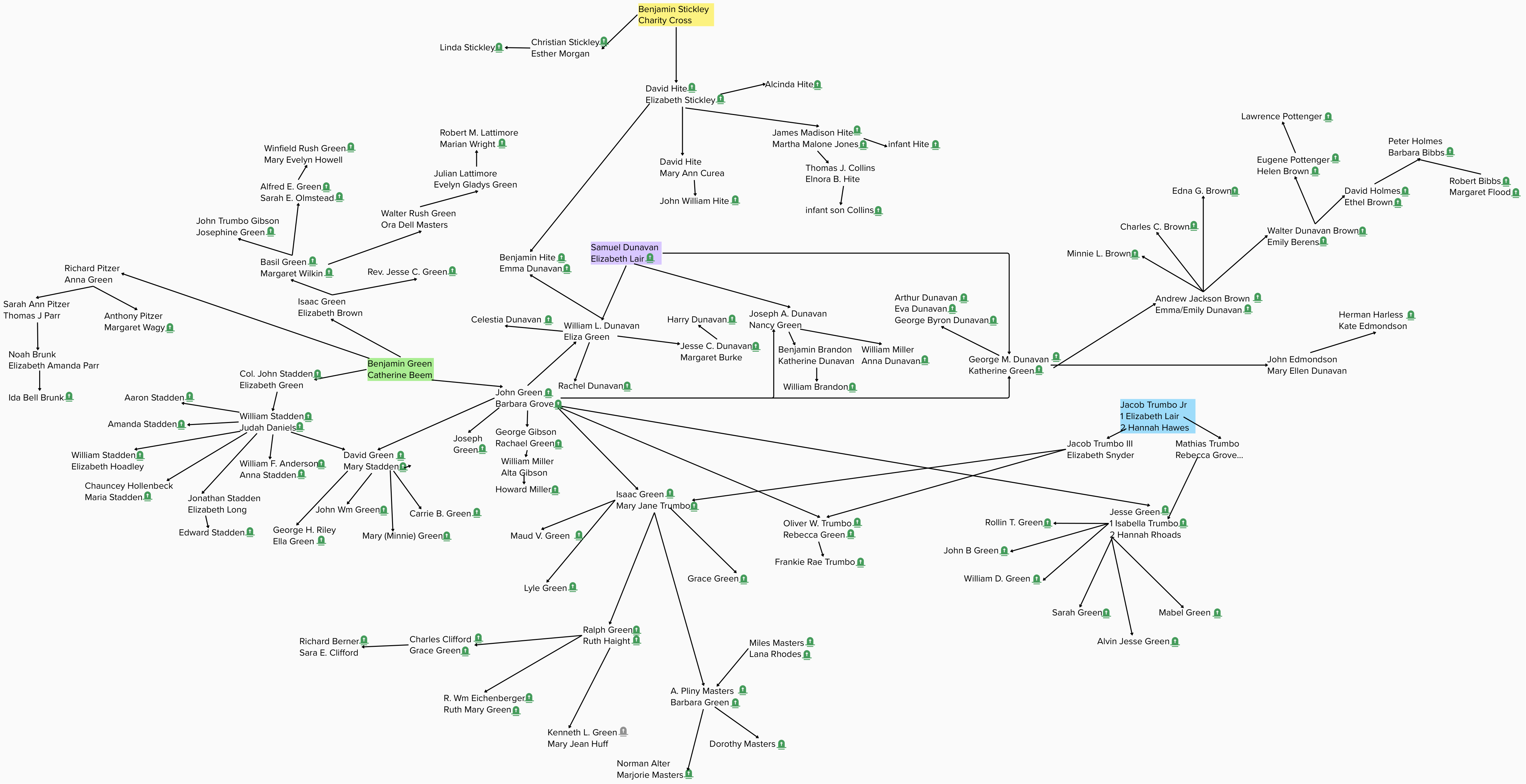
The largest cluster is that of the Green/Grove/Dunavan families, which, with in-laws, includes 147 people. There are ten members of the Warner/Tanner/Luce family, nine members of the Timmons family, 11 members of the Breese/Hoxie family, seven Hoags, and seven in the Bennett/Wilson cluster.

A Handmade Gravestone

champaign-albert-john tombstone

This tiny gravestone, only 12 inches high, stands out in the Dayton Cemetery not only for its size but for its material. It is made of brick and appears to be handmade. John Champaign, the father of little Albert John, was a day laborer in the brick yards in Dayton. Whether he made the gravestone himself or had a friend at work do it for him, it almost certainly was made in Dayton.

John Champaign was born in January, 1858, in Michigan, of French-Canadian stock. In 1870 he was living with his parents and siblings in South Bend, Indiana. On September 21, 1880 he married Louise Haverley in South Bend. Sometime before 1883, John and family came to Dayton, where they were living in 1900. By 1910, they were back in South Bend, where they lived out their lives, John dying in 1938 and Louise in 1947.

One of their daughters, Grace, married James C. McGrogan of Dayton on April 30, 1900, and remained in Dayton when her parents moved back to South Bend.

A Tombstone Jigsaw Puzzle

Welke tombstone in pieces

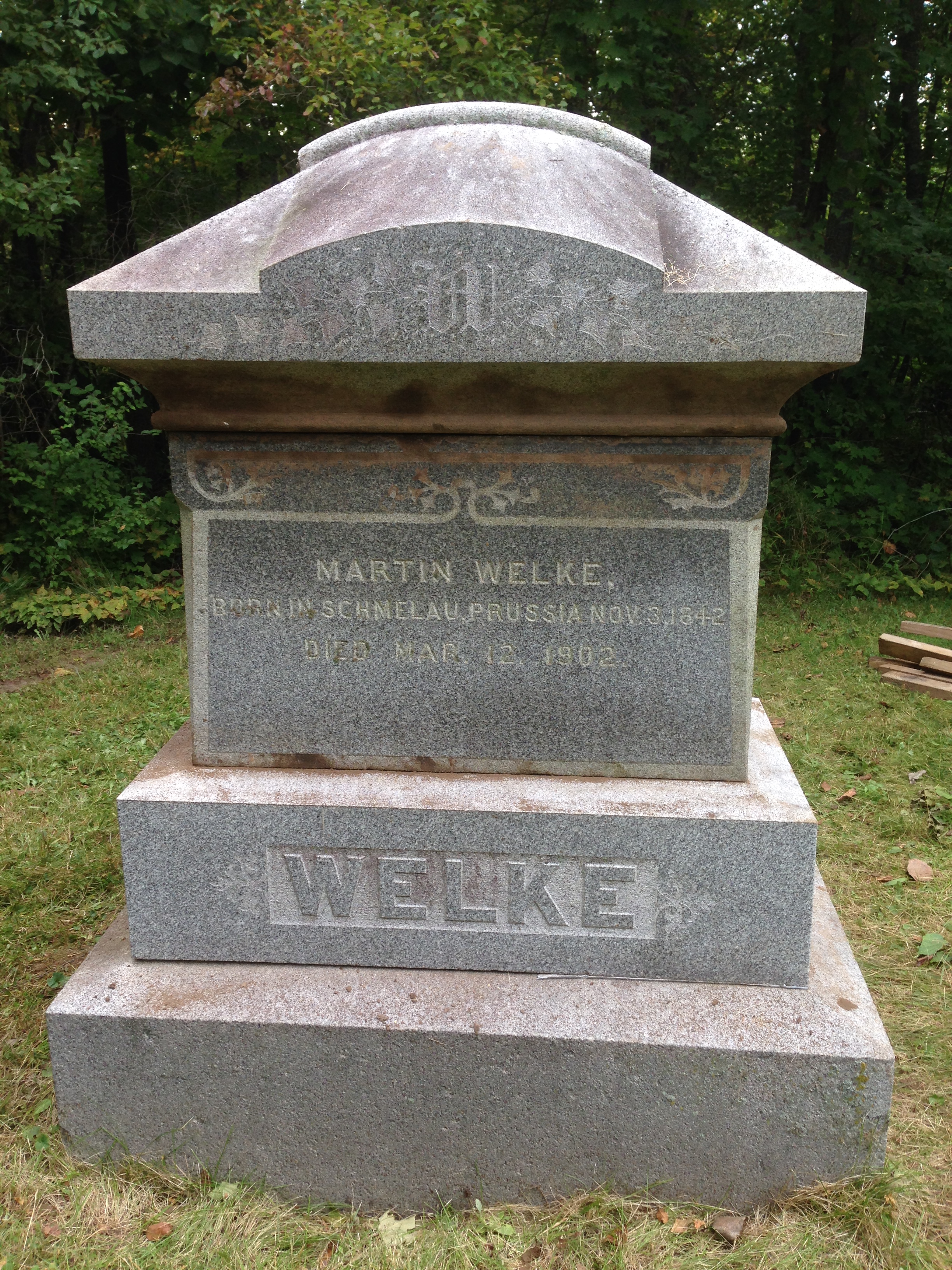
In September 2014, the Dayton Cemetery Association worked with a professional restoration expert to repair a number of monuments which had been damaged by vandals. Our first effort was the Martin Welke stone, seen above. After the middle section was replaced on the base, attention turned to replacing the top.

And here is the reassembled stone:

Welke tombstone completed

We repaired seventeen stones that week and plan to continue the work in 2015.