Contents of a Bride’s Dowry

Matthias Trumbo

No picture of Elma, so here is her father, Mathias Trumbo.

Since daughters typically did not receive land, at their marriage they would often receive furnishings for a home, including furniture, bedding, and even livestock. Mathias Trumbo had six daughters:
Lavina, who married West Matlock in 1840
Isabella, who married Jesse Green in 1843
Eliza, who married William Gibson in 1848
Barbara, who married Joseph Jackson in 1855
Elizabeth, who married Jacob Strawn in 1860
Elma, who married Lewis Robison in 1862

When Mathias Trumbo wrote his will in 1865, one clause applied to only one of his children:

Third, To my daughter Elma Anna Robison I give and bequeath the usual outfit given to my other daughters when married viz: One (1) good horse, Two (2) cows, two (2) good beds and bedding, One (1) bureau, one (1) set of chairs, one (1) Table and Table ware, In case any of the articles so bequeathed to her are not on hand at my decease, my executors shall purchase the required ones for her out of any money belonging to the estate,

Elma was married in 1862. Why didn’t she get her dowry then?

There was this little thing called the Civil War going on. It was no time to reduce Mathias’s ability to plant, harvest, and haul supplies when labor was scarce. By 1865 he felt able to dower his youngest daughter, though only at his death.

Elizabeth Trumbo’s furniture

Continuing our description of Elizabeth Trumbo’s household goods, we’ve already looked at her stable and her kitchen. We turn now to the inventory of her furniture from her probate file. Unfortunately, there are no pictures of her actual furniture, so I have attempted to find examples that convey the idea, if not the actual item.

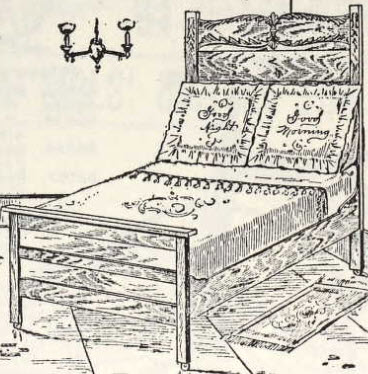
cottage bedstead

4 cottage bedsteads – A cottage bedstead was a wooden frame that supported a mattress and bedding.  The bedstead was often decorated with floral designs, curves, and scrolls. 

common bedstead

1 common bedstead – often made from iron or brass. Considered healthier as there were no crevices to hide dust, dirt, or bedbugs.

bureau / dresser

2 small bureaus
1 large bureau

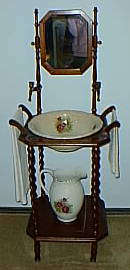
washstand

1 washstand – a piece of furniture to hold a wash basin and pitcher, used before the advent of modern plumbing

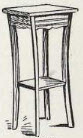
1 stand – small table, possibly for holding a plant

cane seated rocking chair

1 set cane seated chairs
2 cane seated chairs
2 cane seated rocking chairs

flag seat chair

1 set flag bottomed chairs
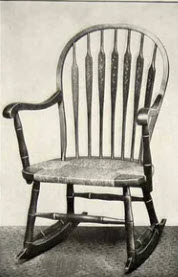
1 common rocking chair – wooden


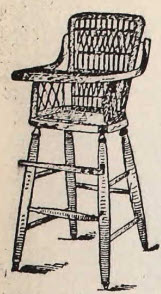
1 high-chair


1 extension table – with extra leaves to make it longer

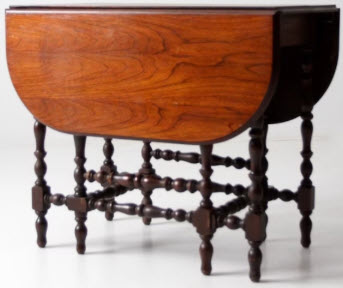
drop-leaf table

2 fall-leaf tables

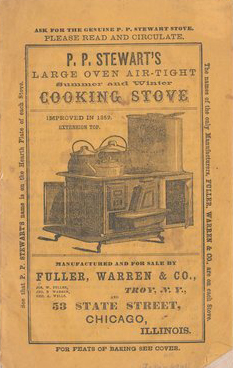
P. P. Stewart’s Large Oven Air-Tight Summer and Winter Cooking Stove

1 Stewart Cooking Stove and fixtures

available from the Sears catalog


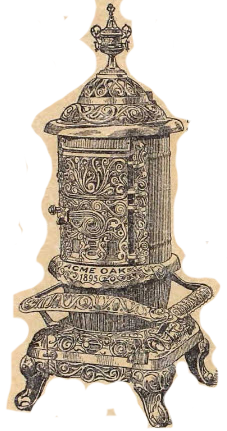
1 Parlor stove  – burned wood or coal. The parlor would be the only room in the house other than the kitchen that was heated.

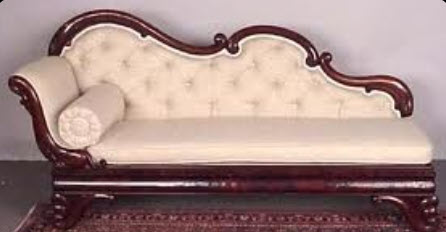
More elegant, but of the right type

1 lounge and mattress

We’re nearly done with Elizabeth’s household inventory. All that remains is the contents of her linen closet. Watch this space.

The Contents of a Lady’s Stable

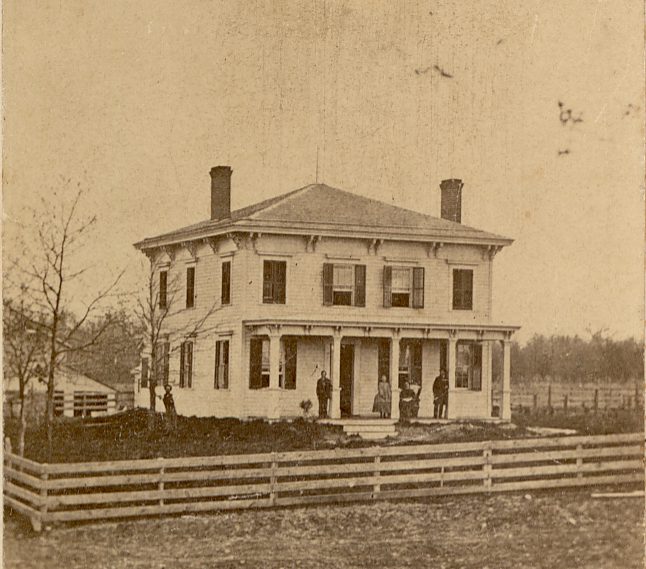
The Elizabeth Trumbo house

Elizabeth Trumbo house

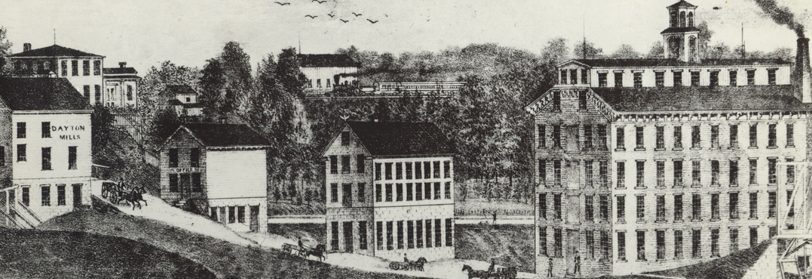
When Elizabeth Snyder Trumbo died in 1873, she was a well-to-do widow living in Dayton, near a number of her children. At her death her estate was inventoried and the list gives a good idea of her life style. Included in the list is the contents of her stable:
1 top buggy (single)
1 spring wagon
1 double wagon
1 pair bobs
1 single cutter
1 buffalo robe
2 horses, one brown, one sorrel
1 double harness
1 single harness

Here’s what they would have looked like.

a top buggy

A top buggy was a type of horse-drawn carriage with a folding top, also known as a “Jenny Lind”. It was a lightweight, four-wheeled vehicle designed for two passengers and was often pulled by a single horse. The top could be raised or lowered to provide protection from the weather, making it a versatile option for rain or sunshine.

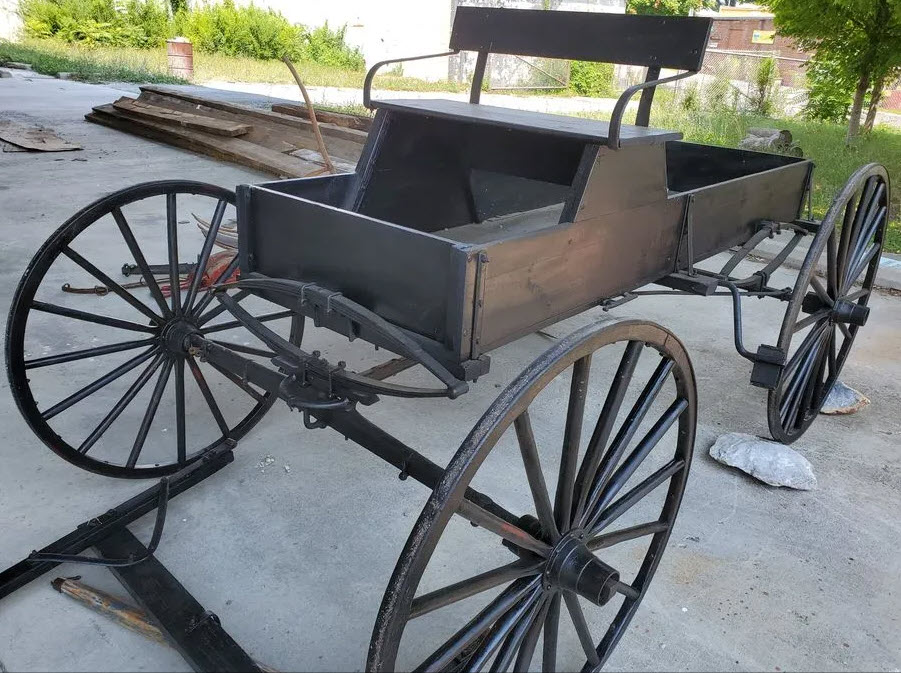
spring wagon

A spring wagon was a four-wheeled vehicle drawn by draft animals, usually horses. It had a square box for carrying goods or passengers and was equipped with platform springs to provide a smoother ride. A single seat for two people was mounted in the middle of the box leaving room behind the seat for cargo.  It was a versatile and popular choice for farmers and general transportation needs, much like a pickup truck or delivery van.

double wagon

A double wagon was a type of freight wagon designed to carry heavier loads than a single wagon. It typically had a sturdy, wooden frame with a large flat wooden bed mounted on four wheels, with high sideboards to keep the load secure. The wagon was drawn by a team of two or more horses and was equipped with springs to provide a smoother ride over rough terrain. The wheels were typically made of wood with iron rims. The front and rear axles were connected by a central beam, allowing for a bit of flexibility over rough terrain. It was often drawn by a team of two or more horses, with a driver’s seat at the front for steering and controlling the team.

bobsled

Bobsleds were used for transportation in the snow and for recreational activities. A snowfall and a hill could prove irresistible to children and even, sometimes, to their elders. Bobsledding eventually evolved into the Olympic sport known today.

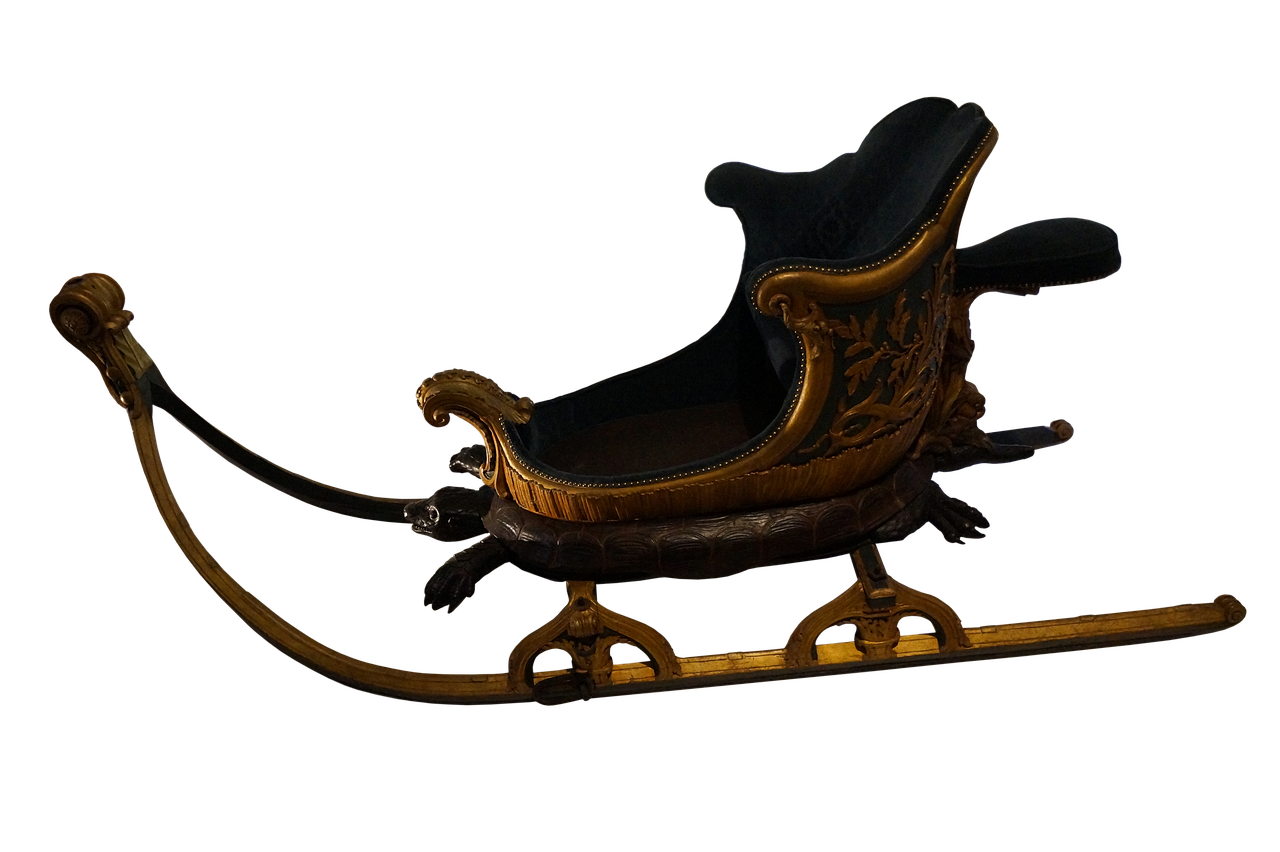
single cutter

A cutter is a type of light, one-horse sled with a single seat. it is smaller than a sleigh, more streamlined, usually for one or two passengers, and has a more open design.

buffalo lap robe

If you had a cutter, then you had to have a buffalo robe. A buffalo robe is a cured buffalo hide, with the hair left on. They were made into lap robes and used as blankets and padding in carriages and sleighs  Only hides taken in winter between November and March when the furs are in their prime were suitable for buffalo robes.

two horses, one sorrel, one brown

The standard harness of America

This illustrates many styles of harness, both single and double.

I like to picture Elizabeth and her daughter Mary Jane, my great-grandmother, going out on a chilly day in the top buggy, with a buffalo robe tucked around them.

Churns

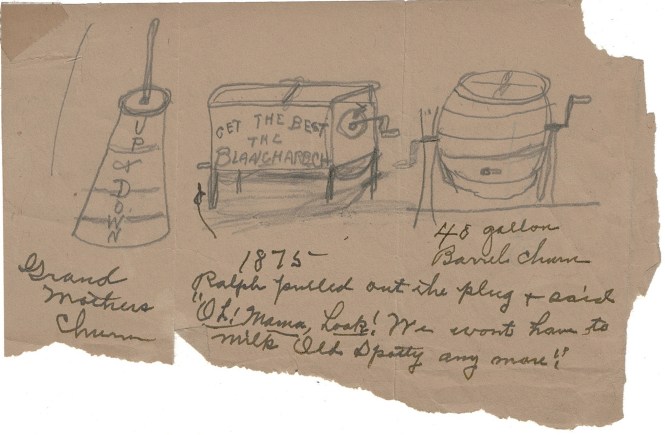
This scrap of paper, with its drawings of early family churns, was found among the papers of Maud Green. She pictured the churn that was used by her grandmother (Barbara Grove Green) on the left. In the center she drew a Blanchard churn (see below) with the story of 5 year old Ralph pulling out the plug. The barrel churn on the right was another means used to convert cream to butter.

Here’s a bit more information on the various types of churn.

Plunge or dasher churn (left, above)

The plunge churn is a container, usually made out of wood, where the butter-making action is created by moving in a vertical motion a staff that is inserted into the top. This type of churn is also known as an ‘up and down’ churn.  The staff used in the churn is known as the dash, dasher-staff, churn dash, or plunger.

The staff might be perforated, or it could have a wooden circle, or crossed boards attached, but even with those to help beat the cream, this method took a long time. The chant “come butter come, come butter come” was thought of as a charm to turn the cream to butter. It was sometimes made into a song that went with the rhythm of the work.

Many cultures had their own churning songs. Some had other charms and superstitions too. Both in Europe and North America metal objects – like needles, knives or horseshoes – were used to drive away evil influences which might prevent cream from turning to butter.

paddle churn

Paddle churn

Paddle churn

Another prominent type of churn was the paddle churn, which was a container that contained a paddle, which was operated by a handle. The paddle churned the butter inside the container when the handle was turned. A wooden box, earthenware crock, or glass jar had a paddle inside attached to a rod, which was turned by a handle on the top or side. These were widely sold as small, convenient household churns in 19th century America.

Barrel shaped oak container

Barrel churn

Barrel churn (right, at top)

The barrel churn was also used extensively. This type of churn was a barrel turned onto its side with a crank attached. The handle would operate a crank turning paddles inside the barrel, as in the paddle churn, or the whole barrel might be turned by the handle, either horizontally or vertically, depending on its construction. 

In the early days of the 20th century, the barrel churn was recognized as the most convenient and efficient kind of churn in use.

The Blanchard Churn (center, at top)
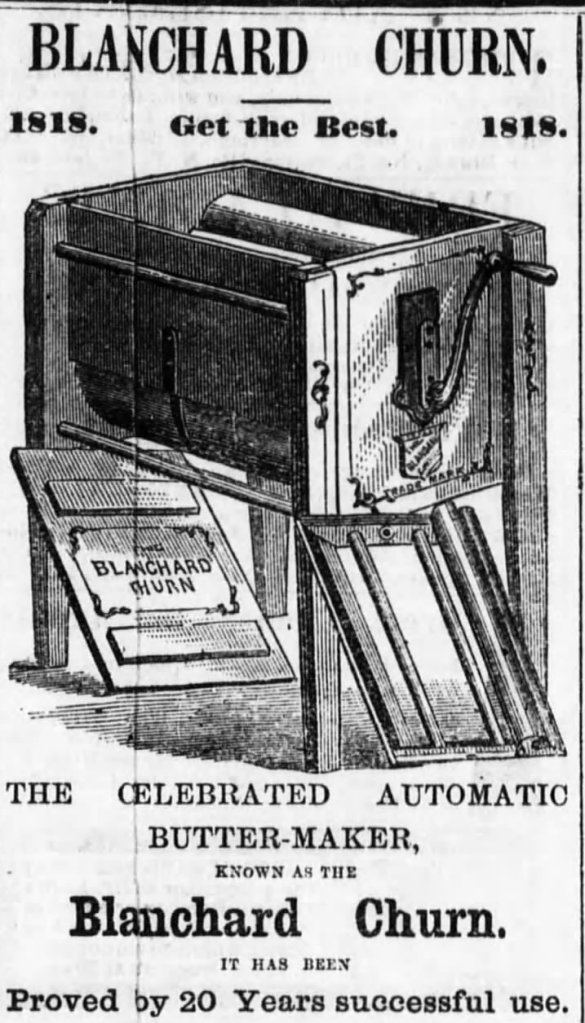
A variant of the barrel churn is the box churn, of which the Blanchard Churn is an example. The handle operated a crank turning paddles inside the box. One of the earliest U.S. manufacturers was the Blanchard Churn Company based in Nashua, New Hampshire. The company name on their product was so well known that Maud had no problem reproducing it in her sketch.

I can still remember one additional way I watched my great-aunt Maud churn. She would put the cream in a large glass jar with a lid and sit sloshing it back and forth between her hands until the butter formed. It was a slow process and made a small amount of butter, but she did it to amuse us, I suppose, not because she needed to.