The Flood was the Big News

From Dayton

Dayton, Ill., Feb. 11th, 1887. – The little Fox became the raging Ohio during the flood of last Tuesday. Never since 1857 have we had such a heavy run of water and ice. The ice commenced running Tuesday morning, and run two hours; just before noon it run two hours, and in the evening it run five hours, making nine hours, run. And contrary to the usual manner, the last ice running, instead of being the lightest, was the heaviest, some of it being two feet thick. The fish chute was carried out, but no damage was done to the dam. One of the gates at the locks was broken, and the feeder bank was washed nearly through for quite a distance. The water was so high it ran over the locks and the surrounding embankment. The trestle work of the second span of the new bridge was carried away Monday night, and during the heavy run of ice Tuesday evening, the stone were all knocked out of the noses of the piers, leaving them in a very battered condition. The water alongside of the piers was nearly twenty feet deep. The paper mill lost six hundred dollars worth of straw, which is quite a loss to them, as it is difficult to replace it at this time of year, on account of the bad roads.

Mr. Uriah Miller, of Ottawa, and his two nephews from Salt Lake City, Utah, visited our town last week.

We understand there is to be a wedding in town next week. Will give particulars next time.

The Progressive Euchre Club met at the residence of O. W. Trumbo, last week, and had a very enjoyable time.

Mr. James Green made a second consignment of honey this week to Haven & Green, commission merchants, at Fort Scott, Kansas.

Mr. S. Hippard is building a residence on his land south of the paper mill.

The paper mill has been fitted up with new calenders, and expected to start up this week, but cannot do so on account of high water.

The rolls for the flour mill still have not arrived yet, but the mill is running on cotton work right along.1


  1. The Ottawa Free Trader, February 12, 1887, p. 4, col. 6

Fidelia, youngest child of David and Elizabeth Hite

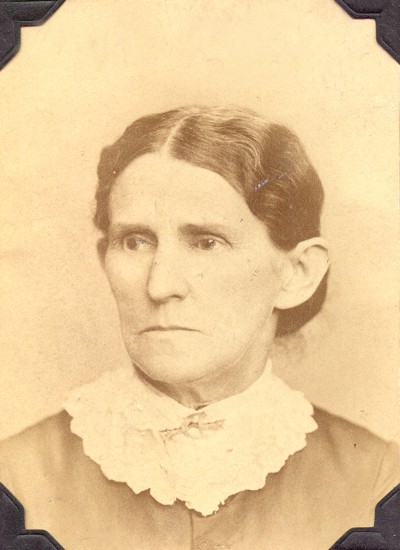
Fidelia Hite was born in 1844 in Licking County, Ohio. She was the 6th and youngest child of David and Elizabeth (Stickley) Hite. The family moved to Dayton township in 1848 and lived on their farm on Buck Creek. On April 26, 1870, she married 22 year old Benjamin G. Babcock, a substantial farmer from Wallace township.

Benjamin had to certify that they were both of marriageable age, as shown below.

They lived on the farm until around 1885, when Benjamin decided to go into business with his brother Calvin, who arranged the purchase of an implement store in Schuyler, Nebraska. Soon after that, Benjamin moved his family to Schuyler. Later he was a representative of the Lightning Hay Press Company of Kansas City. By 1902, he was afflicted with rheumatism and retired, moving to Council Bluffs, Iowa. In 1904 he served as the janitor to the Thirty-second Street school building, at a salary of $40 per month. Benjamin was active in the Republican party, while Fidelia was a member of the W.C.T.U.

Their home was a frequent gathering place for family. In 1903 it was the site of their daughter Cora’s marriage to E. M. Hill. In 1908 Fidelia’s nephew Calvin Hite and his wife Henrietta, from Ottawa, Illinois, spent the Christmas holidays and their honeymoon with them in Council Bluffs.

Benjamin and Fidelia had six children:
Elizabeth, born about 1873, in Illinois
Albert F., born June 9, 1875, in Illinois
Jennie Fidelia, born December 3, 1877, in Illinois
Maude G., born March 26, 1880, in Illinois
Cora, born March 1883, in Illinois
Olive E., born December 1888, in Nebraska

Fidelia died December 30, 1909 in Council Bluffs and was buried in Walnut Hill Cemetery in Council Bluffs. Her obituary appeared in the Evening Nonpareil, December 31, 1909.

Mrs. Fidelia A. Babcock, aged 65 years, died of cancer of the stomach at 7:45 o’clock Thursday evening at her home, 2531 Avenue B. She is survived by her husband, B. G. Babcock; five daughters — Mrs. A. M. Swart, Mrs. W. L. Smith, Mrs. E. M. Hill, Miss Olive Babcock, all of this city, and Mrs. P. J. Clatterbuck of Marsland, Neb. — and one son, A. L. Babcock of Schuyler, Neb. The funeral will be held from the family residence at 3 o’clock Saturday afternoon, but no further arrangements have been made.

Benjamin died February 19, 1930, in Richmond, California. He was buried in Walnut Hill Cemetery beside his wife.

An Anniversary

Today, April 2, is the 175th anniversary of the day John, Jesse, and Joseph Green started for the gold mines.

Californians

At least fifty persons from this county, left this place during the past week for California. The company from Dayton left on Monday, on board the Timoleon, which boat we understand they chartered to take them through to St. Joseph, on the Missouri river. All Dayton precinct was down to see them off, which gave our landing altogether the most crowded and bustling appearance we have ever seen it bear. The company is composed of as good men as there are in the county, and we are sorry to lose them. May their brightest anticipations be realized!

Our Ottawa boys, although there is quite a number of them, have been leaving for a week or two, in parties of two or three. There are among them some of the best of men, and a few whose loss we shall probably be able to survive. May they all have the best of luck, and come back with gold enough to improve the river to Ottawa, and build a bridge across the Illinois!1

1. The [Ottawa IL] Free Trader, April 6, 1849, page 2, col.2

The Social Whirl in 1912

The Dayton Home Makers’ Circle held their monthly meeting on Saturday, May 11, at the home of Mrs. Richard Schmidt. In spite of the inclement weather there were twenty seven members and a number of guests present. After the regular business meeting a musical program was given and then a very enjoyable talk from Miss Mabel Carney, of Normal, Illinois, who spoke upon Country Community Life, especially of our own state. Mrs. Schmidt served refreshments and then came the social hour after which the guests departed, all feeling a pleasant and instructive afternoon had been spent.1

The members of the Dayton Country Club were very pleasantly entertained at the home of Mrs. E. A. Dallam, in that village, Thursday evening. Bridge whist was played and sumptuous refreshments served.2


  1. The Ottawa [IL] Free Trader, 24 May 1912, p8, col-1-2
  2. p.8, col 3

The Hite Twins – Albert and Alcinda

Albert and Alcinda Hite were the fourth and fifth children of David and Elizabeth (Stickley) Hite. They were born May 8, 1840, in Licking County, Ohio, and came to Illinois in 1848 with their parents. They grew up on the family farm that their father bought in 1850. The picture above shows the family farmhouse, though it is not known if it is the original building or a later one on that site.

By 1865, Albert’s older brothers had married and established their own families. Albert remained and farmed with his father, taking over the full management as his father aged. When his father died, Albert was named the executor of his will. The will left everything to the widow, Albert’s mother, for her lifetime. Following her death the property would be divided evenly between the children. Elizabeth did not die until 1890, so Albert’s duties as executor could not be completed until then. He was also named the executor of Elizabeth’s will, but declined to serve, probably due to the complications of administering both estates, so Alcinda was named as administratrix for her mother’s estate.

On February 22, 1881, Albert married Ida Bell Durkee, the daughter of Lewis M. and Zeruah J. Durkee, of Serena township. They had three children:

1. Calvin Wallace, born December 16, 1881; married December 23, 1907, to Henrietta Belrose; died October 11, 1923 in Ottawa.
2. Lavina Maud, born July 10, 1893; married September 9, 1918 to William Temple; died October 15, 1987.
3. James Edward, born July 5, 1897; married June 7, 1922 to Jeanne Hisler; died March 27, 1961 in Ottawa.

Albert died September 26, 1905, and was buried in the West Serena Cemetery, where many of his wife’s Durkee relatives can be found. Ida died in Ottawa, December 23, 1938 and was buried beside her husband.

Alcinda never married. She continued to live at the farm with  her mother and brother after her father’s death.  Sometime before 1900, Alcinda moved to Ottawa. She appears to have rented out the land she inherited, as her occupation in the 1900 census is given as “landlord”. She was a frequent visitor to Schuyler, Nebraska, where she had relatives, and she invested in land in that area.  Around 1912 or 1913 she moved from Ottawa to Council Bluffs, Iowa, where she had relatives. In 1917 she was committed to the state hospital at Norfolk, Nebraska, where she died July 17, 1924. Her remains were returned to Illinois and she was buried in the Dayton Cemetery.

It is the probate of Alcinda’s estate that provides much information about her family. Because Alcinda outlived all but one of her siblings, her heirs, her nephews and nieces, had to be identified in court. One niece, another Alcinda, testified to the names and addresses of all her aunt’s siblings and their children, including the three who died young and others who predeceased Alcinda. The court proceedings are a veritable goldmine for family historians.

Time to Put in Your Orchard

It’s SPRING!

Time to stock your orchard with fruit trees.

Wells Wait was born in New York. In the 1840s he brought his wife and children to Illinois and purchased land in Dayton township. He held many positions in agricultural committees and served as school  commissioner from 1857-1863. As seen in the advertisement below, he could supply a wide variety of fruit trees.


50,000
Grafted Fruit Trees

Are now awaiting purchasers at my Farm and Nursery, on the west side of Fox River, near Dayton, and five miles north-east of Ottawa. They consist of nearly

300 Varieties of Apple,

And a great variety of Pears, Plumbs, and Cherries, which have been selected with care and great expense from the most popular and approved Nurseries in the Union, embracing nearly all the standing varieties in the eastern and southern states, the fruit of which it is confidently believed, cannot fail to suit the most delicate and refined palates.

The subscriber assumes with confidence that he has the greatest variety and most splendid assortment to be found in northern Illinois. The trees are from 1 to 3 years of age, and ranging from 3 to 7 feet in height, and well proportioned.

It is believed that the lamentable remissness on the part of farmers, every where observable in planting fruit trees, is mostly attributable to the almost total failure, in most cases, where trees have been transplanted from a distance; and the fibrous roots on which the tree relies for its nutriment have become dead from too long exposure to dry air or severe frosts after taking them up, either of which is fatal to its growth. But these embarrassments no longer exist. The farmer can now be supplied in his own vicinity with the number and variety he wishes, grown in the same soil and climate in which they are to be transplanted.

If the trees are taken up in the spring, it should be done soon after the frost is out of the ground — at all events, before the leaf begins to put forth. If taken up in the fall, they should be buried until spring.

Apple trees at the Nursery 12 ½ cents; all other kinds, 25 cents.

Wells Wait1


1, The Ottawa Free Trader, March 2, 1849, p. 4, col. 3

David Hite, Jr.

To continue the enumeration of David Hite’s children, his second son, David, Jr., was born in July 1831 in Licking County, Ohio, and came with his father’s family to Dayton in 1848. On December 23, 1851, he married Mary Ann Curyea, the daughter of John and Lydia (Sager) Curyea, whose family had come to Dayton in 1843. The license clearly states that David is not yet 21 and that his father has given consent, as can be seen below.

David and Mary Ann lived in Dayton for thirty-five years and raised their family of 3 boys and 5 girls. One other son, John William, died at the age of three. In 1881 the family moved to Nebraska, where David died in 1928. His obituary  appeared in The Frontier, the O’Neill Nebraska newspaper on April 5, 1928. Barring the errors in his birth information, it gives a good idea of his life in Nebraska.


DAVID HITE
Holt County’s Oldest Citizen Passed Away Monday

David Hite was born July 15, 1830, in Lincoln County, Ohio, and died at the home of his daughter, Mrs. Flora B. Lewis, April 23, 1928, at O’Neill, Nebraska, aged 97 years, 9 month and 8 days.

He was united in marriage to Mary A. Coryea, December 23, 1851. To this union were born nine children, three of which are living.

When sixteen years of age he moved from Ohio to Illinois, and in 1881 with his family to Cass County, Nebraska; in 1912 he moved to Holt county and made his residence in O’Neill. By occupation he was a farmer and gardner. He loved the soil and was a sincere lover of nature.

Mr. Hite was Holt county’s oldest citizen and took keen delight in political conditions. He was an ardent “Dry” and his two aims seemed to be to live to be 100 years old and to vote as often as given an opportunity to make America dry.

His beloved wife passed away February 22, 1905. “Grandpa Hite was the last of seven children in his family to pass away. He leaves to mourn his going one son and two daughters, T. J. Hite, of Ottawa, Illinois; Mrs. Flora B. Lewis, of O’Neill, Nebraska, and Mrs. Nellie B. Ryan, of Denver, Colorado. Twenty-two grandchildren, twenty-seven great grandchildren, and one great, great grandchild (Donna Rae Cooper, of Lincoln, Nebraska, age seven years) are mourning his going. He will be laid to rest beside his beloved wife in the cemetery near Elmwood, Nebraska. His funeral was held Wednesday, April 25th, in the Methodist Episcopal church at Elwood.

So has fallen one of our best known men. He was in good health until October 16, 1927, and since that time has steadily grown weaker. He was confined to his bed for the last few weeks where his daughter and granddaughter gave him the most loving care. The community extends their heartfelt sympathy to these bereaved ones.1


  1. The Frontier, O’Neill, Nebraska, April 25, 1928, p. 7, col 6.

The Almost Inevitable Spring Flood – 1857

The Flood

The great storm and flood last week, of which we had but the beginning as our paper went to press on Friday night, appears to have been general throughout the country, and our exchanges from all quarters comes filled with accounts of disasters and hair-breadth escapes. From New York and New England, from Virginia and Maryland, Pennsylvania, Ohio, Indiana, Michigan, &c., the burden of the papers and telegraph dispatches is the same. To give anything like a full account from all directions would occupy more space than we can command, so that we shall attempt little more than a resume of disasters at and near home.

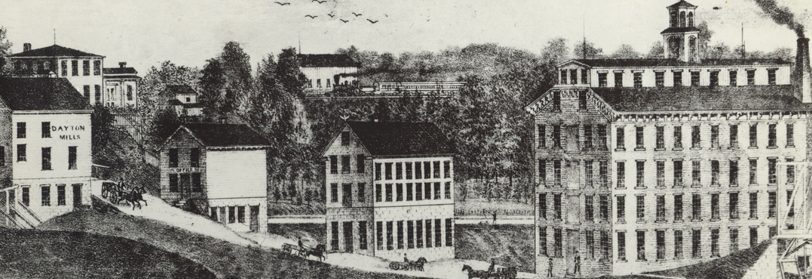
AT DAYTON. – The chief disaster at Dayton was the destruction of the fine bridge, erected by the people four or five years ago, at an expense of some $1000. It was taken off bodily, leaving nothing but the naked abutment. The dam was not seriously injured. A break in the feeder will probably stop the mills from running a month or more. Of individuals, the Messrs. Green are the only serious sufferers. Their dye house, a new building erected north of the woolen factory, has been so badly damaged as to require re-building, and the kilns, hearths, kettles, &c., in it are mostly ruined. The lower floor of the factory was also six or seven feet under water, and suffered considerable damage.

FOX RIVER FEEDER. – The Fox River feeder, leading from Dayton to Ottawa, has again, as usual, suffered serious damage. Some sixty or seventy rods of the bank at Dayton has been swept away, the lower gates and wing of the guard lock have gone out and the lock otherwise much damaged. There are also several smaller breaks in the feeder lower down, and a good deal of dirt has been washed into it. It will take a month at least to repair it.1


  1. The Ottawa Free Trader, February 14, 1857, p. 2, col. 1

David Hite and Son Benjamin

The tallest monument in the Dayton Cemetery is that of David Hite, but for many years the top part was lying in a heap next to the base. In 2014 a restoration effort restored a number of monuments in the cemetery and David’s was one of the stars of the project.

David Hite was born in Strasburg, Virginia, on July 30, 1798. as calculated from his age at death. He was apprenticed to the blacksmith trade and at the age of 21 was given $15.00 and a suit of clothes for his work. He decided to go to Newark, Ohio, arriving there late in 1819. There he met Elizabeth Stickley, whose family was also from Virginia. Elizabeth was born April 5, 1798, in Cedar Creek, Virginia. She and David were married August 28, 1820, in Licking County, Ohio.

A number of their friends and neighbors moved to the Dayton-Rutland area in La Salle County, Illinois, and in 1848 David and Elizabeth joined the migration. In 1850 David bought 160 acres of land on Buck Creek in Dayton township, where he moved with his family.  David and Elizabeth lived here until their deaths, he dying April 22, 1881, and she, January 4, 1890.

David and Elizabeth had nine children. Three, Alexander, Isaac, and Catherine “Kittie” Ann all died young. This site seems a good place to write about each of the six who lived to adulthood, so I will begin with Benjamin, as he has a special connection to the Greens.

The usual beginning to an account of someone is to start with their birth date, if known. The source that has been used for his birth date is that calculated from the death date on the tombstone and the age at death.

Benjamin Hite, tombstone

The death date is May 26, 1863 and his age was 38 years, 3 months, and 26 days, for a calculated birth date of January 30, 1825.  However, Benjamin’s probate file at the La Salle County Genealogy Guild in Ottawa clearly states that Benjamin died 26 May 1865, and his death notice was published in The Free Trader on June 10, 1865. The upshot is that he was probably born sometime around the end of January 1827.

Benjamin was 22 in 1849, when John and Jesse Green were leaving for the gold fields of California. They needed to make provision for the farm while they were away and Benjamin rented it from them. My aunt Maud always said that was the only time someone other than the Greens lived there. This stayed true up until the time my grandmother, Ruth Haight Green, sold or rented the house in the 1950s.

On February 22, 1853, Benjamin married Emma L. Dunavan, the daughter of William Lair Dunavan and Eliza Green. They had two children, Willard and Dora.

Emma Dunavan Hite went to live with a daughter in Cedar Rapids, Iowa, where she died on November 19, 1905. She, too, is buried in the Dayton cemetery.

D. Green and Sons – Grist Mill Statistics

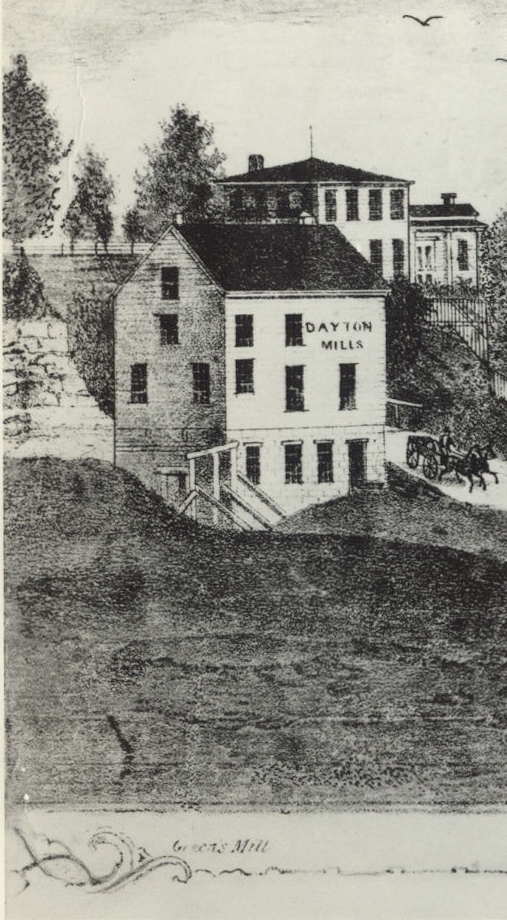
Green's Mill with house behind

In addition to the population census, in 1880 the census also collected information on grist mills, on Special Schedule of Manufactures #7, which included only mills producing more than $500 in goods. The mill in Dayton was operated by David Green’s sons. It was the only grist mill of that size in Dayton Township. From the enumeration we learn the following:

The mill was operated by D. Green and Sons, who had invested $10,000 in the business. The greatest number of hands employed at any one time was two. The average number was also two, described as 2 males over 16. These would be David’s sons.

The ordinary working day was 10 hours long, year round. The average day’s wages for skilled workers was $2.50, for unskilled, $1.00. The total amount paid in wages for the year was $110. The mill was in operation on half time for 6 months and idle for 6 months.

They had four runs of stone, which could produce a maximum of 550 bushels per day. Eighty percent of their business was grinding for customers who brought their grain to the mill. The miller retained a portion of the output as a toll for his work. For the other 20 percent the Greens purchased grain and sold the resulting products in their store.

The mill was located on the Fox river, which flows into the Illinois river. The height of the fall of water was 18 feet. They had five wheels producing 120 horsepower.

Products for the year: 80 barrels of wheat flour; no rye flour; 500 pounds of buckwheat flour; no barley meal; 6000 pounds of feed; no hominy; total value of all products, $1500.

from November 22, 1884 edition

News From 1900

Dayton

The pile driver of the C., B. & Q. R. R. has been busy the past few days repairing the Q bridge here.

The water in the feeder is now in a condition to furnish all the power necessary.

James O’Meara has some of the finest potatoes in this section. Jim is a hustler, and knows a good thing when he sees it.

The rain has ruined the oats in many places in this vicinity, and farmers are out of pocket.

E. McClary, our genial store-keeper, is improving his lawn by laying a new tile sidewalk around his house.

Walter Breese and George Timmons leave on Monday morning for Chicago. If they are successful in their new undertaking they will make Chicago their future home.

The river on Monday was the highest this season.

Thomas Nagle has purchased from Mrs. Martha Bagley the house adjoining his own lot, and will move it and convert it to a barn for his own use.

Mrs. Hudson and son, who have been visiting Mr. and Mrs. John Channel, returned to Chicago on Monday.

H. C. Tueley has gone to Indianapolis to spend a few days.

E. Emmons and family intend moving, and will make Marseilles their future home.

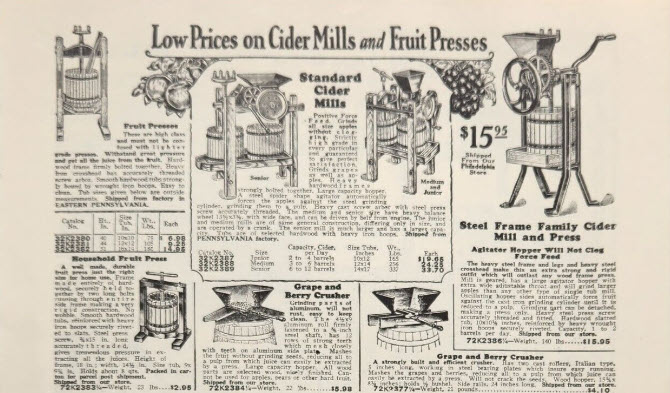
It was proven on Saturday last that the hydraulic cider press here can turn out 2,000 gallons per day.

About forty persons from here attended the old settler’s picnic and Pawnee Bill’s aggregation.

Munroe Durkee, of Wedron, was a caller here this week.

The Dayton Republican Club expect a good turn-out at their meeting on Tuesday evening next.

Emory Waller has been on the sick list for the past week/

The war whoop of the juvenile Indians will soon cease to be heard on our streets, as next week school commences and they will then speak their little piece to their new teacher.

Etta Barnes visited Mr. and Mrs. E. McClary on Tuesday.

Commissioner Jas. H. Timmons is having the hill graveled just west of the feeder bridge. That’s right, Jim, keep on with your good work, and may your shadow never grow less.

Only one lone fisherman could be seen along the banks of the muddy Fox the past week. What a change from a few years ago.

Threshing has been going on at a lively rate for the past two days.

One of our enterprising young men is to start a tonsorial parlor in the near future. It will fill a long felt want. We wish him success in his new undertaking.

The rain causes lots of work on the section for the men employed by the Q. road.

Miles Masters is still very sick and will be unable to leave his bed for some time.1


  1. The Ottawa Free Trader, August 30, 1900, p. 4, col. 5

Civil War Draft Registration List of Young Men From Dayton

Unidentified soldier in Union uniform

Unidentified soldier in Union uniform

Enrollment Record of Names Between the Ages of 17 and 20 Years
in the 6th Congressional Dist., State of Illinois.
Sub Dist #19
Residence: Dayton

Name                                    Age        Occupation         Birth date                            Birth place

Ames, James                      18           Farmer                  3 May 1846                        N. Y.
Buckalen, John S.              17           Farmer                  4 Feb 1847                          Penn
Bidgood, Chas W.             18           Farmer                  30 Aug 1848                       Ohio
Brown, Perry                     18           Farmer                  28 Oct 1848                        N. Y.
Conley, William                  18           Farmer                  15 Aug 1846                       N. Y.
Carlon, James M.               17           Farmer                  24 Jun 1847                        Ireland
Carton, John Thomas        19           Farmer                  24 Dec 1845                       Ireland
Calloway, Alonzo               19           Farmer                  29 Apr 1845                       Illinois
Collins, DeKalb                   17           Farmer                  10 Jun 1847                        Illinois
Curtis, Wm H.                     19           Farmer                  6 Mar 1845                         Illinois
Clark, George L.                 18           Farmer                  25 Oct 1845                        Ohio
Deweese, John                   19           Farmer                  29 Dec 1845                        Penn
Donlevy, Francis                 18          Student                  19 Jul 1846                         Mass
Donahue, Matthew            17           Farmer                   10 May 1847                     Ireland
Feely, James                       17           Farmer                  Oct 1846                              Ills.
Grove, David                      18           Farmer                  14 Apr 1846                       Ohio
Greenless, Wm A.              17           Farmer                  16 Nov 1846                       N. Y.
Hinkey, John                       18           Farmer                  1 Oct 1846                          Germany
Hays, Jesse                          18           Farmer                  Nov 1845                             Ills
Kain, Simeon C.                  17           Farmer                  8 Jun 1847                          Penn.
Marvin, George                 19           Farmer                  16 Aug 1845                       Penn
Nelson, Lewis                    18           Farmer                  Dec 1846                             Norway
Parr, Francis M.                  19           Farmer                  10 Jun 1845                        Ills
Ruhl, Peter                          18           Farmer                  1 May 1846                        Penn
Smith, George                    18           Farmer                  30 Aug 1845                       Ills
White, Matthew                  17           Laborer                 4 Mar 1847                         Ireland
Yeager, Francis                   17          Farmer                  10 June 1847                     Ills
Miller, Gottzeni                  17           Farmer                  18 Apr 1847                       France


These records are found in the Ancestry.com database U.S., Civil War Draft Registrations Records, 1863-1865, Illinois, 6th Congressional District, vol 5 of 5, image #36.

Jesse Green’s 73rd Birthday


Yesterday was the seventy-third anniversary of the birthday of Jesse Green of Dayton, and to properly celebrate that event his relations from far and near gathered to wish the old gentleman and his estimable wife a happy New Year and many pleasant returns of the day and consequent similar gatherings. Including the relations in Dayton and from abroad, the residence of Mr. Green was crowded but all present enjoyed themselves to the fullest extent. After all the guests had assembled, Thomas E. MacKinlay in behalf of the company, presented Mr. Green with a very handsome easy chair and Mrs. Green with a table. Mr. Green was taken completely by surprise, but managed to express his thanks. An elegant dinner was served, and a fine time was had by all present.

Those from abroad were Attorney General McCartney and wife of Hutchison, Kan.; Ed. Jackson, Cincinnati; Joseph Jackson, Millington; L. C. Robinson and wife, Rutland; N. M. Green and wife, Serena; Kent Green, Chicago; Mrs. Craig, Jacksonville; Mrs. John Crum, Mrs. Joseph Harris and Mrs. L. Matlock, Misses Ray Harris and Mertie Crum, Yorkville, and T. E. MacKinlay and wife, C. B. Hess and wife, H. B. Williams and wife, T. H. Green and wife, W. N. Bagley and wife. Will and Don MacKinlay, Ed. Hess and Theodore Strawn, of Ottawa.1


  1. The above unidentified clipping, found among other Green papers, can be dated to 22 Dec 1890, as Jesse Green was born 21 Dec 1817. Assuming it came from an Ottawa newspaper, it probably appeared in the Ottawa Free Trader. The Fair Dealer did not begin publication until 1901. The Free Trader microfilm is missing the issues for this period, so the paper cannot be firmly identified.

A Thriving Dayton Business

On July 12, 1879, The Ottawa Free Trader had this to say about the paper mill at Dayton:

The paper mill of Williams & Co., situated at the lower end of the manufacturing portion of the town, is one of the best in the state. Their products are so favorably known that running night and day the year round they are unable to supply the demand.

In the 1880 census, twelve people were listed as associated with the paper mill –
owner H. B. Williams, age 40
Arthur Dunavan, 12
Mary Coleman, 15
William Ryan, 17
Emma Geduldig, 17
Frank Benoit, 19
William Rust, 24
James Lanegan, 25
George Smith, 30
John H. Lyle, 34
Charles Burch, 34
John G. Dunavan, 42

For comparison, in the same census the paper mill at Valparaiso, Indiana, where Charles Burch received his training, had a staff of 7, all male.

There should have been one more worker at the Dayton mill, 15 year old Fred Green, but 3 days before the official census day, he was seriously injured through being caught in the machinery. His left arm had to be amputated and he lost the first joint of two fingers on his right hand. Luckily, he survived and went on to an interesting life, including such experiences as directing brick makers in the Rocky mountains, suffering malaria fever in the Louisiana bayous and superintending several hundred laborers in ceramics work at Knoxville, Tenn.

The Time of the Big Snow

snowdrifts

Since there are no pictures of the 1830 deep snow, here is a newer one.

THE “TIME OF THE BIG SNOW”

Sixty five Years Ago Great Suffering Was Caused by the “Beautiful”

Old settlers who were little boys and girls in the winter of 1830-’31 tell of the “big snow” with as great emphasis as does the old time Irishman of the “big wind” that is popularly, though erroneously, supposed to have assisted St. Patrick to “shoo” the snakes and frogs off Irish soil. An old settler says of the “time of the big snow:’

“About Christmas time, 1830, and continuing at short intervals from that date until late in January following, a snow storm raged in Central and Northern Illinois which the settlers called the “Deep Snow.” No such snow had fallen before that time within the memory of the white settlers and no such snow has fallen since. It formed an epoch in the history of Illinois, and men were accustomed to refer to it as fixing the time for occurrences which took place long afterward. Old settlers even now occasionally refer to it. The snow began falling after noon on the day before Christmas. Prior to that time it had rained for a considerable time, and the ground was saturated with moisture. The corn had little of it been gathered; the cattle and hogs had until that time managed to get most of their feed in the woods. The corn meal, then the chief food of the settlers, was getting low, but not low enough to cause any particular uneasiness. Fuel was plenty in the woods but little was at the houses. The settlers, accustomed to the open winters of preceding years, saw nothing to cause alarm, either in their exposed condition, or in the lack of fuel and provisions.

“The storm continued with slight intermission until it was, on a level, about three feet deep all through this part of the country.

“After a few days of snow, the rain fell enough to wet the top of the snow, which then froze, forming a crust which was strong enough to bear up a wolf or a dog, but was not strong enough to bear up a horse, and in places was not strong enough to bear up a man. The deer were unable to run on the snow, as their sharp hoofs would cut through and the animal would then be wallowing helplessly in three feet of snow, unable to get out. The consequence was the wolves destroyed multitudes of them. The deer were almost all of them exterminated in that way. Perhaps the worst consequences were felt by the early settlers. Their corn was not much of it harvested, and it was impossible to harvest it then, or at least, not enough could be harvested to feed cattle or hogs.

“A man could by hard work gather enough to feed himself and family, but the question of supplying any fire wood, to cook or keep warm, became serious.”1


  1. The Ottawa Free Trader, December 27, 1895, p. 3, col. 3

One Hundred and One Years Ago Today in Dayton

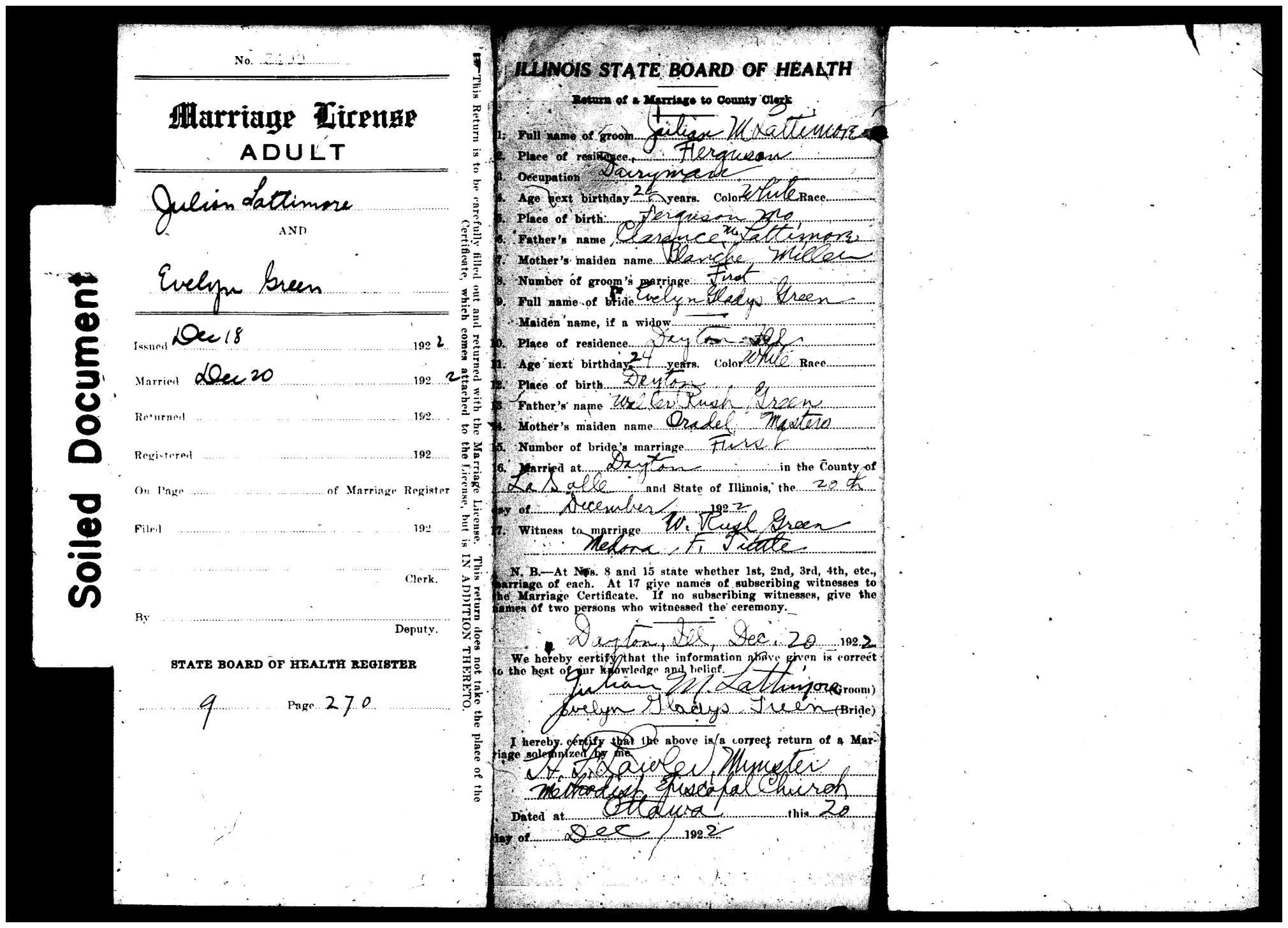
Green-Lattimore

            A large number of Ottawans went to Dayton today to attend the wedding of Miss Evelyn Gladys Green, only daughter of Mr. and Mrs. Rush Green, and Julian M. Lattimore of Ferguson, Mo., which occurred at 1:30 o’clock this afternoon at the Green residence near Dayton. Eighty guests were in attendance. The Christmas idea was carried out in the decorations, Christmas greens and red being used in very effective manner.

The wedding service was read in the living room by Rev. H. P. Lawler, pastor of the First Methodist church.

Miss Mildred Masters of Dayton acted as the maid of honor, and W. R. Cornell of Cottonplant, Miss., served as Mr. Lattimore’s best man.

The bride wore a gown of white crepe de chine, made over white satin and a long tulle veil, which was held in place with orange blossoms. She carried a formal bridal bouquet of white sweet peas.

Miss Masters also wore a frock of white crepe de chine and carried white sweet peas.

At the close of the wedding service a two-course wedding dinner was served in the dining room. In keeping with the Christmas season, red and green decorations were used on the tables.

Mr. Lattimore and his bride left this afternoon for a honeymoon trip, the destination of which they are keeping a secret from their friends.

They will make their future home in Jackson, Miss.

The bride has a large circle of friends both here and in Dayton. She attended the Ottawa High school and was graduated from there in the class of 1919.

The groom is the son of Mr. and Mrs. C. M. Lattimore of Ferguson, Mo. He was raised in that city and is a graduate of the University of Missouri. Since finishing school he has been making his home in Jackson, Miss., where he is engaged as a dairy herdsman.

Among the guests from a distance also attending the wedding were Mr. and Mrs. A. E. Green of Peoria and Mr. and Mrs. W. A. Holmes of Chicago.1


  1. The Ottawa Free Trader, December 20, 1922, p. 4, col. 1

A Family Reunion at Christmas

Mr. and Mrs. Green came to Dayton from Licking county, Ohio, in 1829. Mrs. Green died in 1886 at the advanced age of 93 years, having been preceed[ed] by her husband some six years. Up to the last Grandma Green could delight the young members of her family with her accounts of the Black Hawk war and many thrilling incidents and personal experiences in her life as an early settler.

Yearly family reunions have been the custom for some time and have been continue[d] since the death of the old people. Many of their descendants have scattered, but Christmas cheer and the good things of the earth are bountifully dispensed at these family reunions. Those present at the reunion on Wednesday were Mrs. O. W. Trumbo and daughter and Messrs. Jesse and Isaac Green, sons of the deceased, with their children, grandchildren and a few other relatives, exceeding fifty in number. Three other daughters – Mrs. Albert Dunavan, Mrs. Wm. Dunavan, and Mrs. Geo. Dunavan – are living in the far West.

from The Ottawa Free Trader, January 3, 1891, p. 3, col. 4.