Bread and Strawberries – and FISH!

From Dayton

Dayton Ill., April 28, 1887. – The commissioners of Rutland are busy at work on the hill leading to the bridge, and will put the road in first class order.

Mr. T. H. Green is graveling the approach on the west end of the new bridge.

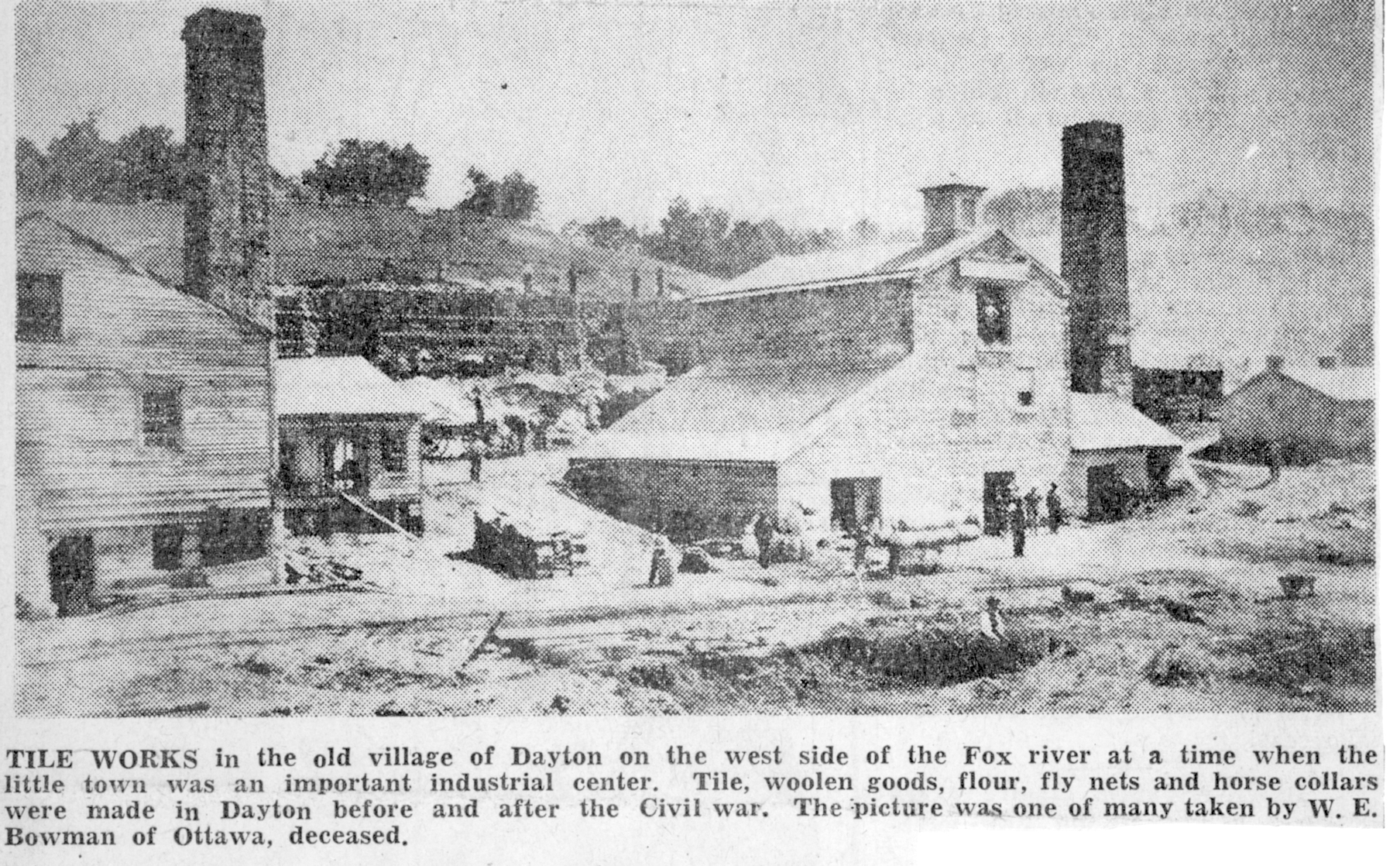
The tile works are having a good trade, and are shipping lots of tile.

A large number of game fish have been caught this week. A good rain to raise the river and start the fish northwest, would greatly improve the sport.

One of the proprietors of the “Short System” Roller Mills took samples of their flour to your city one day this week, and showed it alongside of all the long system mills flour in the marker, and the short system flour stood at the head of the list for whiteness. The landlady of the Dayton Hotel baked some of the short system patent flour last week, and says she never had a flour in the house that baked as light and white. Tally two for the short system!

Mr. Joseph Green now has an acre and a quarter of strawberry plants in his garden across the river.

The old woolen factory property is lying idle this spring. It is to be hoped that something may be done with it before long.

Mr. Wm. Rhodes who was so unfortunate as to lose a limb while working on a railroad out west, has returned home, and will study telegraphing with Mr. Ballard [?] at Ottawa.

Our town is receiving considerable benefit from the new bridge in the way of trade.

There is a good opening here now for a good blacksmith.

Occasional1


  1. The Ottawa Free Trader, April 30, 1887, p. 8, col. 3.

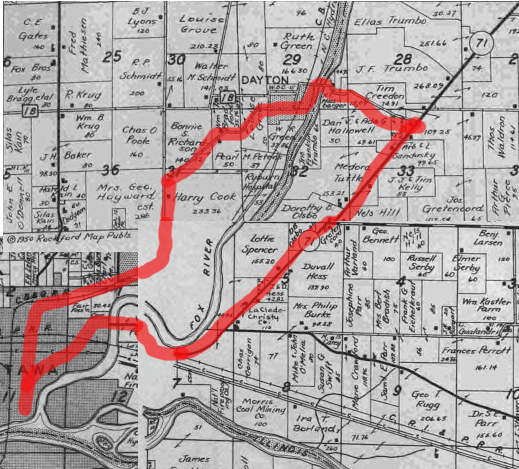
Dayton Dam and Fox River Feeder

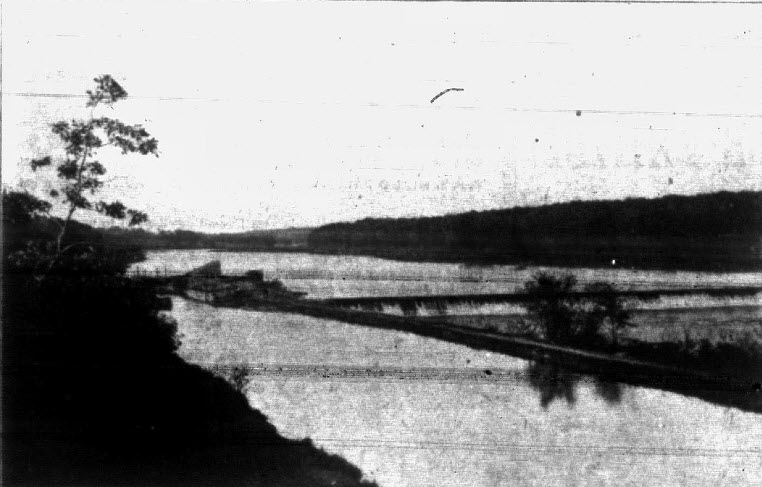
Looking up the river toward the dam, with the feeder in the foreground

from the Ottawa Daily Republican Times, April 9, 1904:

The recent floods have overthrown the work of years, wrought destruction to property which, in all probability will never be replaced. This is undoubtedly the fate of the Fox river feeder of the Illinois and Michigan canal and the dam across the Fox river at Dayton. The recent decision of the Supreme Court seems to emphasize the fact that the usefulness of the canal is well nigh spent. The scant water which has flowed through the feeder during the summer months of each year for several years past has been the means of calling attention to the diminishing value of the Fox river as a source of water power for both Dayton and Ottawa.

With the destruction of the dam there arises thoughts of the days which have long since gone. But few now live who can remember the building of the canal feeder and the Dayton dam. Many interesting facts center around those events and a few reminiscences may be interesting, if not instructive.

Going back to the first settlement of the county it is found that one of the pioneers was John Green, father of Jesse Green, now of Ottawa, who first came in September, 1829, and finally located where Dayton now stands in December of that same year. He owned over a thousand acres of land on the west bank of Fox river, extending up and down the stream for over a mile and a half. Before the state dam was built (which was commenced in 1837) a dam was built a part of the way across the Fox river at a point about a quarter of a mile below the state dam by Mr. Green. It extended from the west bank of the Fox to an island which has long since disappeared under the influence of the floods and ice. This first dam was constructed soon after Mr. Green took up his residence at that place about 1830 or 1831. First one mill, then a second and third were built by the Greens, the last one furnishing power for six runs of burrs, or seventy-two horsepower. This first dam was used until the state dam was completed in 1838.

In those days, according to the testimony of Jesse Green given in a recent law suit, the Fox river had about three times as much water as it has had in later years. When the state took up the question of building a feeder for the canal and a dam across the river at Dayton, Mr. Green entered into an agreement whereby he was to receive power to operate his mills from the state.

It may be a matter of surprise to know that for some time after the completion of the feeder, canal boats, on several occasions, went up to Dayton, taking cargoes of grain from that point to St. Louis. This boating did not last many years, as by 1864 the feeder had only about three feet of water.

The survey of the feeder was made by William Jerome, civil engineer in charge of the western division of the canal, in 1837, and the work of construction was commenced in December of the same year. Its length is about four and a half miles. The channel was four feet deep and sixty feet wide for 1,200 feet north of the main canal, and from that point to the Dayton dam it was forty feet wide. At the time of the construction of the feeder and the hydraulic basin at Ottawa it was estimated that the water power which would be created would be sufficient to drive at least “40 pairs of millstones of four and a half feet in diameter.” It was thought that a connection might be made with the Illinois river at this point by means of a short canal and a system of lockage.

The following table was given as an estimate of the cost of the feeder and dam, when construction was about to be commenced:
218,992 yards of earth excavation ………………..$50,340.32
23,000 yards of rock excavation …………………….17,250.00
131,215 yards of embankment ………………………26,253.00
1,470 slope wall ……………………………………………..2,205.00
Dam across Fox …………………………………………….14,000.00
Guard lock …………………………………………………….12,000.00
Road bridge …………………………………………………….2,800.00
Two culverts ……………………………………………………4,300.00
Contingencies, etc. ………………………………………….6,457.41
Total ………………………………………………………..$135,605.73

In the annual report of  W. F. Thornton and Jacob Fry, Canal Commissioners, to Hon. Thomas Carlin, Governor of Illinois, in December 1838 the following language was used in regard to the construction of the feeder. “The judicious improvements, ordered at the last session of the Legislature cannot fail to advance the prosperity of Ottawa to a high degree. Strengthened and cultivated as her natural advantages now are, it is admitted by all intelligent observers that she must soon become an important manufacturing city, creating a vast amount of business for the canal, diffusing incalculable benefits through an extensive scope of country, and remunerating the state, by increased value of property. more than three-fold the amount of the additional expenditures.” The expectations of these men were realized only in part. And now, after all the advantages which the state derived from an increase in values to its then marketable lands, the economists of the state have killed the fowl which laid the golden egg.

In another report, made in 1830, when the building of the canal was first considered, the Commissioners said, in speaking of the proposed survey for a canal: “The town of Ottawa, at the mouth of Fox river of the Illinois, is advantageously situated in the heart of the most beautiful, fertile and healthy region of the country, and, as connected with the canal, deserves the legislative care of the state.”

But all these things have gone. Neglected by the state the dam became weakened and gave way before the crush of ice. Sand was washed into the entrance of the guard lock of the feeder and effectually choked that source of water to the canal and hydraulic basin.

The history of the efforts made by the canal authorities to obtain the appropriation voted by the Legislature at its last session, the injunction suit instituted at the instance of Chicago parties, the decision of the Supreme Court making perpetual that injunction and the very late order denying the prayer of the Canal Commissioners for a rehearing, all are recent events. They are disheartening facts and may be taken as an indication that the dam and its feeder for the canal will never again be used for valuable commercial purposes. They will soon become only a memory, then a few lines or a page in history, and will then be forgotten. It is, in truth, to be thus?

A Well-Stocked Linen Closet – 1873 Style

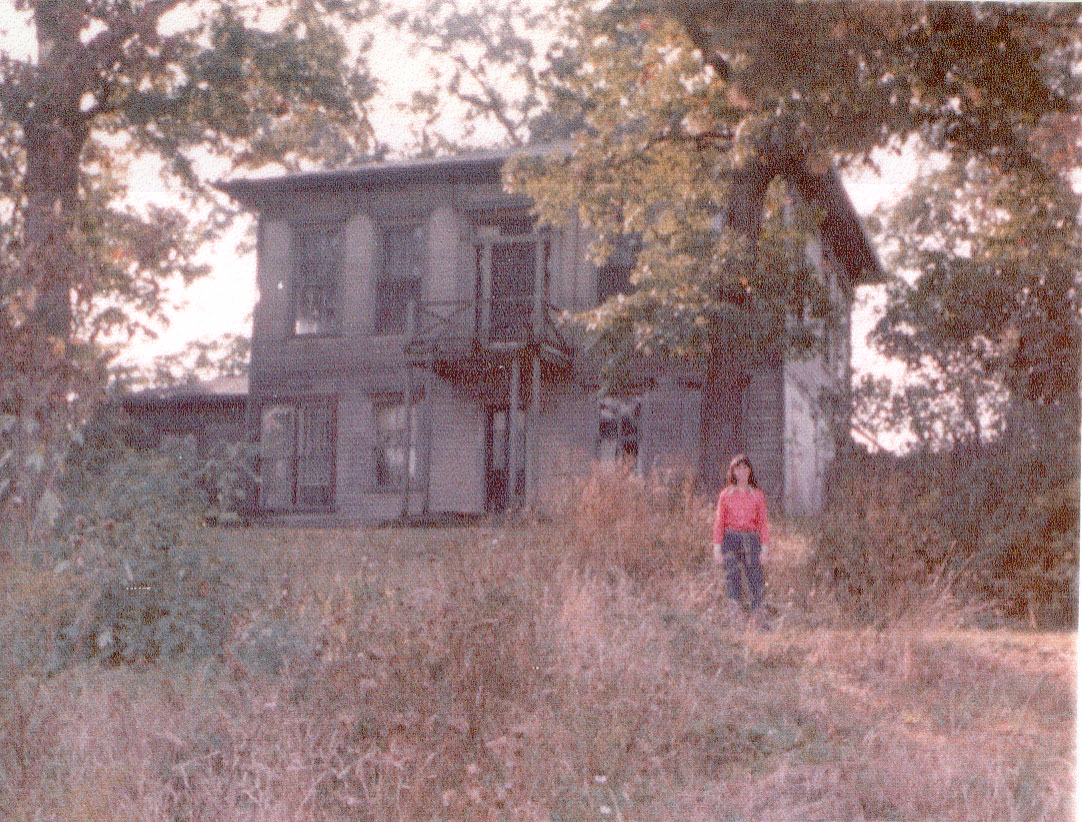
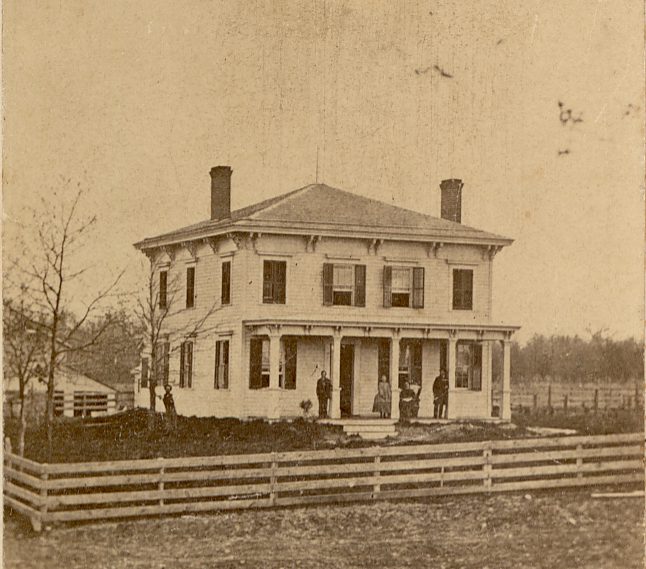
The Elizabeth Trumbo house

Elizabeth Trumbo house

When Elizabeth Trumbo died in 1873 she had an extensive collection of household textiles, suggesting a well-furnished home with an emphasis on comfort and hospitality. The variety of bedding—feather beds, wool and corn husk mattresses, and multiple quilts and coverlids—indicates a concern for warmth and comfort, reflecting the seasonal needs of the time.

Bedding Items

4 Feather Beds – Large sacks filled with feathers, used as mattresses or mattress toppers. These were considered a luxury and provided warmth and softness.

1 Spring Mattress – A more modern mattress for the time, likely featuring a metal spring frame for added support.

1 Woolen Mattress – A mattress stuffed with wool, offering warmth and softness but firmer than a feather bed.

3 Corn Husk Mattresses – Mattresses filled with dried corn husks, which were inexpensive but not as comfortable as feather or woolen options. These were often used by servants or in guest quarters.

12 Small Pillows – Smaller pillows, possibly decorative or used for neck support.

6 Pairs of Woolen Sheets – Woolen sheets provided warmth in colder months, an alternative to cotton or linen.

18 Cotton Sheets – Lighter, breathable sheets for summer months, likely made of muslin or homespun fabric.

29 Pillow Slips – Pillowcases to cover and protect pillows from dirt and oils.

Bed Coverings

5 Coverlids – Woven or quilted bed coverings, often decorative and used as a top layer on a bed.

5 Comforters – Thick, stuffed blankets used for warmth, usually filled with wool or cotton batting.

3 Quilts – Layered bed coverings stitched together, providing warmth and decoration. Quilts often had intricate patterns and could be handmade.

2 Counterpanes – A decorative bedspread, usually lighter than a quilt, used for covering the bed during the daytime.

Household Linens

6 Table Spreads – Decorative cloths used to cover tables, protecting them from spills and adding an ornamental touch.

15 Towels – Likely made of linen or cotton, used for drying hands and face, as well as general household cleaning.

1 Chair Tidy – A small decorative cloth placed over the back or arms of a chair to protect it from hair oils and dirt.

This concludes our look at Elizabeth Trumbo’s home at her death. We have previously considered her stable, kitchen, and furniture, finishing here with her linen closet. It was a comfortable family home and probably held many family gatherings of relatives and neighbors.

A Resurrection at Dayton

A General Revival of Business in Our Northern Suburb
C. B. Hess Practices What He Preaches
The Dayton Tile Factory Will Resume Operations Next Week

The little town of Dayton has again struck its gait. The grist mill is running at full blast, the collar factory has its hands full, the paper mills are behind in orders, and now comes C. B. Hess, one of Ottawa’s most enterprising citizens and to-day leases the brick and tile works for a year commencing Feb. 1st, with an option for further time and will open up on Monday next full blast with forty hands, the works to run night and day. The firm name will be Hess, Williams & Hess, and Ed J. Hess, junior partner, will have full charge.

These works will put out paving brick, fire brick and drain tile, and will be run in a measure in connection with the Ottawa factory. The capacity will be 50,000 brick or 10 car loads, and 200 tons of clay will be used every day. The works have six kilns, with every facility for increasing the capacity if found practicable. The water-power used is of 200 hundred [sic] horse power. The firm will build a tramway across Fox river to its beds of fire clay, which are 7 foot veins, while the common clay will be taken from a 30 foot band just across the feeder from the works. Probably an inclined railway will be put in from the works to the “Q.” tracks to increase the shipping facilities.

Hitherto the difficulty at these works has been in getting the clay properly united, but Mr. Hess has been experimenting with it for the past six weeks and is satisfied that he has at last found the right thing.

These works will make their drain tile for the local trade, but the paving tile and fire brick will, most of it, find its way to Chicago and Peoria.

Mr. Hess says he intends to make this a “go,” and we have no doubt but he will.1


  1. The Ottawa Republican Times, January 29, 1891, p. 8.

On This Day in 1887


iron bridge at Dayton 1886

From Dayton

Dayton, Ill, April 1st, 1887. – Our bridge is finished at last and open for public travel. It is a very fine three span iron bridge, the neatest one on the river, and is a fine addition to our village. Of course every one will use it now that it is constructed, and it was noticed that about one of the first to use it was one who had fought the hardest.

Our schools opened again Monday after a week’s vacation, with the same teacher at the helm.

The tile works are doing a rushing business, having shipped five car loads last week.

The Horse Collar works are also doing a fine business, shipping lots of collars every day. They are working day and night, and are about seventy dozen behind orders.

Mr. James Timmons, our genial landlord, is putting in a fine new maple floor in his office, also a new floor in the kitchen.

Our Sugar camp under the management of Misses Joseph and Win Green, has been turning out a lot of excellent maple syrup.

Mr. Basil Green, our worthy supervisor, has announced himself as a candidate for re-election.

The Roller Mill is about fitted up and will be running next week. It has the latest improved machinery for running on the short system and the product will no doubt be as fine as any on the market.

Farmers should take their wheat where they can get it ground into the very best flour and receive a large yield.

The Sunday school will hold an Easter Concert on Sunday evening, April 10th. A fine programme is being arranged and everyone should attend.

Occasional1


  1. The [Ottawa, IL] Free Trader, April 2, 1887, p. 4, col. 6

Jennie Cullen’s Family

Cullen, Jennie - death certificate

Two-year-old Jennie Cullen died in Dayton February 21, 1881 and is buried in the Dayton Cemetery. She is not related to anyone in the cemetery. The Cullen family lived in the area for only a few years, but luckily Jennie appeared in the 1880 census in Ottawa. From that entry we discover that her parents were Thomas and Emma Cullen and she had two older sisters, Josie and Hattie. Following these facts led to this account of the Cullen family.

Thomas Cullen was the son of Patrick Cullen and Bridget Finnell, immigrants from Ireland. He was born in New York in October 1852 and married Emma Schuyler in New York in 1874.  In late 1879 or early 1880 they moved from New York to Ottawa, Illinois.

In 1880 Thomas gave his occupation as “working in  glass factory”. This was probably the Ottawa Glass Company, a plate glass company, which opened on April 1, 1868.  In January 1880, the Ottawa Free Trader reported that “The Ottawa Glass Co has 140 hands, 20 are blowers.” At this time there was also a bottle factory in Streator, another place Patrick may have worked, as his son Frank was born in Streator.

A number of family members worked in the glass industry. By 1900 the family has moved to Covington, PA, where Thomas is now a glass gatherer. His 18 year old son Frank is working as a glass cutter, and daughter Josephine is married to a glass blower.

In 1910 the family is living in Roulette, PA, where Thomas and son William are both glass workers, probably at the Fairchance Glass Works.  Son Frank is working as a glass cutter in Putnam, PA.

In 1920, Thomas was retired and managing a pool hall, but the family still has glass associations. Daughter Hattie’s husband, Ezra S. Cochran, is a glass blower for a window glass factory in Putnam, PA.

Thomas and Emma had nine children:
Josephine (1875-1918) married Edward Cauffeld
Harriet (1876-1928) married Ezra S. Cochran
Jennie (1879-1881)
Frank (1882-1946) married Grace Sullivan
Carrie (1886-1956) married 1st William Sheldon; 2nd Oren Verne Tippen
William Roy (1887-1940) married Edith May Hutchinson
Margaret Agnes (1889-1967) married Hollis A. Clark
James Andrew (1891-1962) married Ruth Getman
Mary (1895-1942) married Gordon Legacy

Emma Schuyler Cullen died in Roulette, PA, on June 1, 1911. Thomas Cullen died April 22, 1925 in Putnam, PA, where he was living with his daughter, Harriet Cochran. Thomas and Emma are buried in Saint Mary’s Roman Catholic Cemetery in Sartwell, PA.

Elections, Music, and Fish

DAYTON ITEMS

During the past few weeks the river has been quite high, and, as a consequence, a goodly number of game fish have no doubt ascended the river. They were caught in large numbers on Saturday and (we are sorry to say) on Sunday last. One fisherman reports having caught a fine string of twenty-two bass and pickerel.

At the school election a week ago last Saturday the votes were somewhat mixed, some, according to law, stating for long and short term, and others merely containing two names. The judges decided that the party receiving the greatest number of votes, whether for long or short term, or no term, was elected, but the township treasurer decides that the persons who received the greatest number of designated votes were legally chosen. According to this decision the board of directors for the following year will consist of the following members: Joseph Barends, H. B. Williams and John Green. The vote on issuing bonds to the amount of $2,500 for building a school house was carried almost unanimously, there being only two opposite votes.

Co. Supt. Williams visited our schools last Friday.

Mr. C. B. Hess and family will commence moving to the city this week. We are sorry to lose such good citizens, but our loss is Ottawa’s gain. “May they live long and prosper.”

Little Willie Hull, son of Mr. Geo. V. Hull, of Ottawa, spent Sunday recreating with Chas. Green and other friends in Dayton.

Mr. and Mrs. Theo. Gibson, of Ottawa, spent the Sabbath at his brother’s, Mr. Geo. W. Gibson.

The Musical Union are procuring some new books and expect to hold some interesting meetings during the season. On account of the unavoidable absence of the leader, Mr. Chas. Green, no meetings have been held for two weeks. A dramatic entertainment for the benefit of the Union is being prepared, and will take place in due time.

Mr. John F. Wright will depart this week for a month’s visit at his old home in Braidwood.

Ex Uno1


  1. The Ottawa Republican, May 4, 1882, p. 4.

Dayton in 1858-59

In 1858 the Chicago publisher, John C. W. Bailey, decided to publish a directory of La Salle County. In his introduction to the work, he explains that he had no material from any previous publication to aid him and that, therefore, it took a long time to collect the information. He states that in the farming districts he relied on the postmaster for a list of the persons in their district. Because of this the lists are sometimes incomplete and at other times duplicate other lists. For instance, the townships of Dayton and Rutland are closely connected, both by residence and relationships. In many cases names appear on both lists, so caution is needed. Also, the lists are certainly incomplete, so lack of a name does not imply lack of residence.

Here are the pages that refer to Dayton township.

DAYTON
TOWN 34, range 3
The Post Office Dayton. O. W. Trumbo, Post Master

The village of Dayton, in the township of the same name, is situated on the west bank of the Fox River, four miles above Ottawa, and is destined to be one of the greatest manufacturing places in the west. The water is drawn from the Fox River Feeder, under a twenty foot head; there is sufficient water unoccupied to drive fifty run of burrs. It contains two large flouring mills, one woolen factory, one wool carding establishment, one machine shop, one cloth store, one saw mill and one tavern, all owned by John Green, who located here in 1829 as an extensive farmer and stock grower. He possesses some of the best blood stock, both Durham and Spanish.

Two school houses and churches are within 1 1/2 miles of this place, also two miles distant on the east bank of the river, is the largest white sulphur spring in the State, and is a great place of public resort; the water contains great medical qualities, and probably will become the principal watering place in the west. It is also owned by John Green, of this place.

Col. Wells Wait, school commissioner for La Salle county; resides at Dayton.
Office, in the Sheriff’s room, Ottawa city.

John Green, principal landed proprietor.      Andrew Thompson, blacksmith.

FARMERS

Albert, Thomas B, S W qr. Sec. 1.

Bagley John
Bennett Enoch
Black Samuel
Bly Frederick A.
Breese David K.
Breese Silas
Brisco, Patrick, S W qr. Sec. 35
Brown Enos, N W qr. Sec. 2.
Brown Silvester, S W qr. Sec. 3.
Brownfield K., S W qr. Sec. 3.
Burke Daniel, N E qr. Sec. 9

Carton Thomas, N E qr. Sec. 18.
Carpenter George W.
Chapman Samuel, S E qr. Sec. 4.
Clark W. O., N E qr. Sec. 2.
Connelly John G.
Conway Michael, S E qr. Sec. 9.
Cowper Mary, S W qr. Sec. 20.
Curyea Cincinatti
Curyea Henry
Curyea John H.

Daniels Aaron
Delevan E. C., N E qr. Sec. 21.
Dixon James, N W qr. Sec. 15.
Dobbins John, N W qr. Sec. 3.
Dunovan J. A.
Dunovan George M.
Dunovan W. L.

Erwin Wm., N E qr. Sec. 34.

Fisher Charles A., N W qr. Sec. 24.
Fielding John, S E qr. Sec. 33.

Gedney H. E., S E qr. Sec. 30.
Groove Davis
Groove Joseph

Hall Joseph
Harrington Robert
Hess Henry H.
Hess, Levi, N W qr. Sec. 12.
Hite David
Howard Humphrey, S E qr. Sec. 2.
Howland Ezekial, S E qr. Sec. 6.

Jacobs Peter

Kenny Christopher, N W qr. Sec. 18.
Kennedy Francis, S E qr. Sec. 33.
Kleiber Joseph

Lamb John F.
Laning Jacob, S E qr. Sec. 21.
Larkin Martin
Lawrence Daniel G.
Leland Lorenzo, S E qr. Sec. 21.
Lowell Calvin
Lyghthall Joseph

McCarthy Timothy, N E qr. Sec. 5.
McNeal William
Miller Edmund, N W qr. Sec. 13.
Miller John
Morgan Rees
Montgomery John H., S E qr. Sec. 2.
Monroe James, S W qr. Sec. 9.

O’Donnell Edward, S W qr. Sec. 4.
O’Donnell John, S E qr. Sec. 3

Pakenham Joseph, N E qr. Sec. 35.
Parr Thomas, N W qr. Sec. 1.
Pembroke Richard
Pennell Dwight
Pickings James, S E qr. Sec. 19.
Platt Joseph, N E qr. Sec. 5.

Reddick Hon. William
Reed Henry J.
Reigart Wm. H.
Rhodes Samuel
Robson Thomas, N E qr. Sec. 14.
Rowen James
Rumery William
Russell John

Sage Seth S., S W qr. Sec. 12.
Scovill Palmer F.
Sizer Randolph, N E qr. Sec. 35.
Stodden Jonathan

Thompson G. L., S W qr. Sec. 13.
Thorne Isaac
Thorne Richard, S W qr. Sec. 31.
Trumbo Elias
Trumbo Mathias
Trumbo Moab P.
Turner Benjamin

Wait Wells
Webb B. E., N E qr. Sec. 8.
White James
Wightman James D.
Wright Samuel
Wolsey Nathan. N E qr. Sec. 10
Woodlock Patrick, S W qr. Sec. 24.

What’s Going on in Dayton?

Dayton Items

Our public schools are again in session, with Miss Cora Childs still in charge as principal and Miss Jennie Crane, of Ottawa, as assistant.

Misses Maud Green, Jessie Trumbo and Carrie Barnes are attending the Ottawa high school. Apparently they did not attend the full four years, as none of them appear in the lists of graduates in 1884-1888.

Mr. Joseph Green is kept busy at his sugar camp across the river. His maple syrup is excellent and in great demand.

H. B. Williams, Esq., and wife, of Ottawa, were in town last Sabbath.

Mr. Isaac Green has had a force of men clearing off the woods, brush, etc., across the river. It will make a fine sheep pasture.

Mr. Geo. W. Makinson came near having his house burned down last week from a defective flue. He talks now of having it insured with Mr. John Green, who is agent for the Phoenix and Aetna at this place.

The tile works got their first kiln of the season ready to burn last week, but were obliged to wait for coal. They are turning out a fine quality of tile, which is meeting with a ready demand.

The fact that caused the election of Mr. Beach as supervisor over Mr. Roades, we understand, was the removal from the town of a number of the latter’s supporters. The contest was close.

And now why can’t we build a thing that is greatly needed in our village, as well as the whole neighborhood, viz: a bridge across the river here. Nearly five thousand dollars have been spent for bridges, etc., in the north part of town during the past year or two, and wouldn’t it be the fair thing for about half the above amount to be invested in a bridge here. Eleven or twelve thousand dollars ought to put up a good, substantial iron bridge, and from twenty-five hundred to three thousand dollars from each town with one-half from the county will make up the above amount. A bridge here would greatly increase the value of property in the village and in consequence raise the assessment. This, of course, would materially lighten the taxes in the other part of the township. In fact, a bridge would be a great advantage in more ways than one, and we think has become a public necessity and should be built at once. The railroad bond case has been settled and most of the money raised to pay the lawyers, and now what sort of an excuse can we find to vote against investing a few hundred dollars in a much-needed bridge?

Occasional1


  1. Ottawa Republican, April 11, 1884, p. 5

Elvira G, wife of C. F. Ford

photo of Ford, Elvira G - tombstone

Elvira Ford is another example of an isolated burial in the cemetery. There are no other Fords and no indication that she is related to any of the others. She arrived in Dayton with her husband by June of 1850 and appeared in the census in Dayton with her husband and daughter, but died shortly thereafter.

Elvira was born about 1826 in New Hampshire, the daughter of Solomon and Jane (Willoughby) Hall. On April 13, 1846 she married Calvin F. Ford in Lowell, Massachusetts. He was born September 25, 1820, in Maine, the son of Isaac and Charlotte (Heselton) Ford. Elvira and Calvin had one child, Mary Jane, born June 30, 1847, in Maine.

They came to Dayton by 1850, where Calvin was working as a miller, At that time he owned no land.  Apparently Calvin wrote home to tell of opportunities in the west. William Crompton, who was married to Calvin’s sister, moved to Freedom township, La Salle county, with his wife and family.

Elvira died January 9, 1852, in Dayton and was buried in the Dayton cemetery.

On November 11, 1852, Calvin married Martha Crompton, the sister of William Crompton. Martha was born December 7, 1805, in Industry, Maine, the daughter of Samuel and Martha Crompton. Martha was unmarried and had been living with her sister’s family in New Sharon, Maine in 1850. When her brother William moved to Illinois, Martha came with him.

In the early 1850s Calvin, Martha, and Mary Jane moved to Union township, Black Hawk county, Iowa. By 1860 he owned land worth $5000.

Martha died on June 29, 1863 and on May 12, 1864, Calvin married Lois Maria Gilkey.

By 1870 Calvin, Lois, and Mary Jane had moved into Cedar Rapids, where Calvin was selling agricultural implements. His real estate was valued at $2500. In 1880 the family was back in Union township, where Calvin died on October 23. He was buried in the neighboring Gerholdt Cemetery.

In 1882, at age 35, Mary Jane Ford married Frank A. Butler. They had one child, Fred, born in 1884. Mary Jane (Jennie) died August 15, 1925, and is also buried in the Gerholdt Cemetery.

Elizabeth Trumbo’s furniture

Continuing our description of Elizabeth Trumbo’s household goods, we’ve already looked at her stable and her kitchen. We turn now to the inventory of her furniture from her probate file. Unfortunately, there are no pictures of her actual furniture, so I have attempted to find examples that convey the idea, if not the actual item.

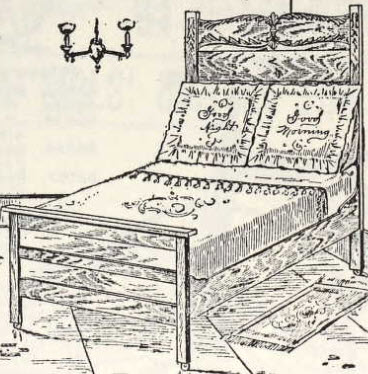
cottage bedstead

4 cottage bedsteads – A cottage bedstead was a wooden frame that supported a mattress and bedding.  The bedstead was often decorated with floral designs, curves, and scrolls. 

common bedstead

1 common bedstead – often made from iron or brass. Considered healthier as there were no crevices to hide dust, dirt, or bedbugs.

bureau / dresser

2 small bureaus
1 large bureau

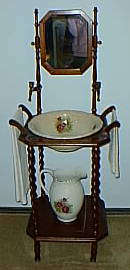
washstand

1 washstand – a piece of furniture to hold a wash basin and pitcher, used before the advent of modern plumbing

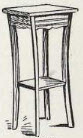
1 stand – small table, possibly for holding a plant

cane seated rocking chair

1 set cane seated chairs
2 cane seated chairs
2 cane seated rocking chairs

flag seat chair

1 set flag bottomed chairs
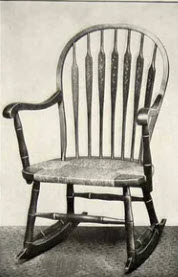
1 common rocking chair – wooden


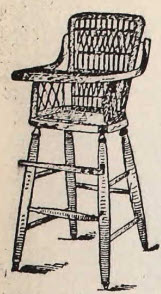
1 high-chair


1 extension table – with extra leaves to make it longer

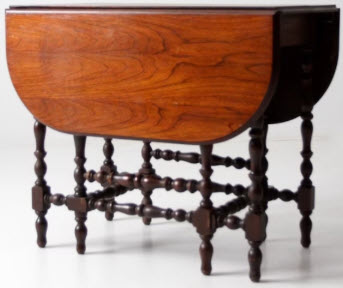
drop-leaf table

2 fall-leaf tables

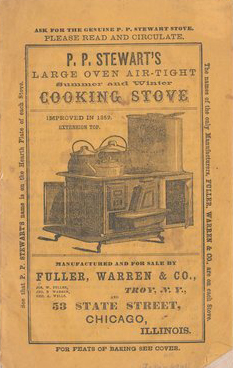
P. P. Stewart’s Large Oven Air-Tight Summer and Winter Cooking Stove

1 Stewart Cooking Stove and fixtures

available from the Sears catalog


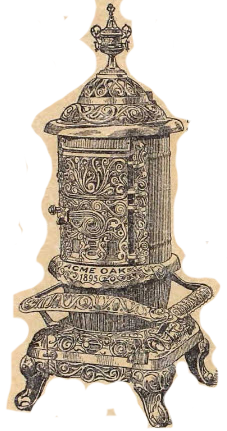
1 Parlor stove  – burned wood or coal. The parlor would be the only room in the house other than the kitchen that was heated.

More elegant, but of the right type

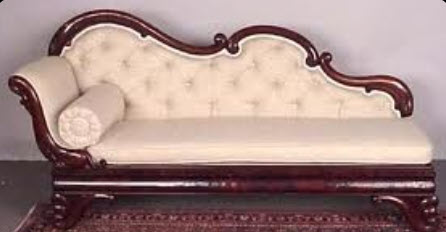
1 lounge and mattress

We’re nearly done with Elizabeth’s household inventory. All that remains is the contents of her linen closet. Watch this space.

An Evening with Longfellow


Rural Happenings
[Mislaid last week]

Dayton, Feb. 2. – Mr. James Dunavan, of Livingston county, was visiting among relatives and friends in Dayton last week.

S. W. Williams, Esq, of Ottawa, was in town last Monday. According to report he will soon commence building a paper mill in Streator.

Mr. George W. Green and family have been suffering from diphtheria, but have now completely recovered.

Rev. A. H. Laing, of Joliet, preached to a fair congregation last Saturday evening. On account of the cold weather and bad roads services were not held at Wedron on Sunday morning.

The Historical club met at the residence of A. F. Dunavan, Esq, on Friday evening. The study of Egypt was continued.

Our public schools are progressing finely under the instruction of Mr. N. Clawson, principal; and Miss Dessie Root, assistant.

The Musical Union are preparing a series of three entertainments, to be entitled “Evenings with the Poets.” The first of these, “An Evening with Longfellow,” will take place at the school house Saturday evening, Feb. 11th, and will consist of selections from the poet, comic dialogue, music, etc., the whole forming a very pleasant evening’s entertainment. The remaining entertainments in the course will follow about two weeks apart, and the committee who have charge of them desire to state to the public that they are endeavoring to give good satisfaction, and hope they will receive the generous patronage of the public. The admission has been placed at the low sum of 10 cents, or 25 cents for the course of three. Proceeds for the benefit of the Musical Union.

Occasional1


  1. The Ottawa Free Trader, February 11, 1882, p. 8, col. 2.

Death Parts, Then Reunites, Dayton Couple


MRS. BROWN, 91, DAYTON RESIDENT PASSES AWAY

As the larger part of the world celebrated the advent of a new year at 1 o’clock yesterday morning death ended the career of Mrs. Katherine Hess Brown, aged 91, wife of William Morrell Brown and a well known Dayton resident. A fall four years ago greatly impaired Mrs. Brown’s health and had since made is necessary for her to go about in a wheel chair but her final illness dates to a cold she contracted the day after Christmas.

Funeral services are to be held tomorrow afternoon at 2 o’clock from the family home in Dayton and burial will be made in the Ottawa Avenue cemetery.

Mrs. Brown was one of the oldest residents in this part of the country and was greatly beloved by all who knew her. She was born July 1, 1837 in Rockingham county, Virginia but came to La Salle county with her parents in 1850. Her girlhood was spent on the farm north of Ottawa which is commonly known as the “Ells farm”.

Her marriage to William M. Brown took place on May 10, 1871. The family resided for many years on a farm near Dayton township after which they moved into Ottawa and resided here for two years. Twenty years ago they moved to Dayton where they have since resided.

Mrs. Brown is survived by her husband and two sons, Wells Brown of Ottawa and Frank A. Brown of Dayton.1

DEATH PARTS, THEN REUNITES DAYTON COUPLE

Death, which separated Mr. and Mrs. William Morrell Brown on New Year’s, when Mrs. Brown died at her home in Dayton, joined the couple this morning, when Mr. Brown, aged 91, died after an illness of a few days duration.

Mr. and Mrs. Brown had been married fifty-eight years, and both were 91 years of age at their deaths.

Funeral services will be held at 2 o’clock tomorrow afternoon at Gladfelter’s chapel. Ottawa Commandery of the Masons will be in charge. Rev. George C. Fetter, pastor of First Baptist church, will preach the sermon. Interment will be in Ottawa Avenue cemetery.

Mr. Brown was born May 22, 1837, in the east, and came to Dayton when a young man. He was united in marriage with Miss Katherine Hess May 10, 1871. Following their marriage, they made their home on a farm near Dayton for a quarter of a century, when they retired from farming life and moved to Ottawa. For five years they resided there and then moved to Dayton, where they made their home.

Mrs. Brown died at 1 o’clock New Year’s morning and the next day Mr. Brown became unconscious and died without regaining consciousness. He had not been ill, but it is thought that the shock of his wife’s death was too great for him.

He is survived by two sons, Wells Brown of Ottawa and Frank Brown of Dayton. A third son, Lester, died 25 years ago. Two grandchildren, Everett and Stanley Brown and two great-grandchildren, Edward and Mary Katherine Brown and two sisters, survive.2

Although both obituaries list their marriage date as 1871, they were actually married in Livingston county, Illinois on May 10, 1870.


  1. Ottawa Daily Republican Times,  January 2, 1929, p. 2.
  2. ibid, January 14, 1929, p. 7.

Photos courtesy of Rand James.

Drain Tile and Brick Works and Circus, Oh My!

Dayton Items

There is no particular excitement over anything in our little town at present, except over Lehmann’s circus, which is billed for here tomorrow. Of course every one will attend and drop their quarter to assist the showmen in paying their expenses.

I was not able find any information on Lehmann’s circus, not even an ad in The Free Trader. A Google search turned up nothing. Mr. Lehmann’s circus must have been a very small one, which of course it would have been if it came to Dayton.

Mr. Chas. Burch, the superintendent of the Paper Mill, and Miss Carrie Larson, of Rutland, were married at Ottawa last week.

Mrs. Jesse Green returned from a five or six weeks visit at New Orleans and vicinity.

The tile works are having a very heavy trade this fall. They are manufacturing the best tile in the market and the famers in this vicinity say they have tried all other kinds, but like the Dayton tile best. Four carloads were ordered Monday and one more today.

Mr. Joseph Green is fixing up a piece of land across the river where he is raising small fruit and “garden truck.”

The brick works have turned out a few good brick, but are not in good running order yet.

“Harry” Green is agent for A. J. Van Liew’s Nursery of New York. He is canvassing throughout the county.

Our schools are running successfully under the instruction of Misses Crane and Miller, of Ottawa.

Farmers about here report a good corn crop, tiled lands especially giving a heavy yield. One or two farmers who tiled quite extensively last year say they will more than pay for them on the increased yield of this season.

OCCASIONAL1


  1. The Ottawa Republican, October 2, 1885, p. 5.

A well-equipped kitchen

Having inspected the contents of Elizabeth Trumbo’s stable here, we move to the kitchen, again as itemized in her probate file.


Although the contents of her kitchen were probably not as elegant as that pictured above, she was well supplied with these necessary items:

15 tea plates
6   butter plates
12 dinner plates
2   large platters
1   potato dish
6   table spoons
15 tea spoons
1   butter knife
6   knives and forks
1   carving knife
1   teapot
1   cream jug
1   water pitcher
6   cups and saucers
1   lot glass ware

in addition, the larder contained

20 glass fruit jars
7   earthen jars
14 jars of fruit (glass)
1   2 gal jar of sugar (earthen)
1   2 gal jar of apple butter

The 14 jars of fruit would clearly be augmented by filling the 20 empty jars as the season progressed. The seven empty earthen jars could have held pickles, salted or smoked meat, jams and jellies, or sauces or soups. The jars kept the food cool and could be sealed with wax or cloth.


image, CC BY-SA 3.0, via Wikimedia Commons

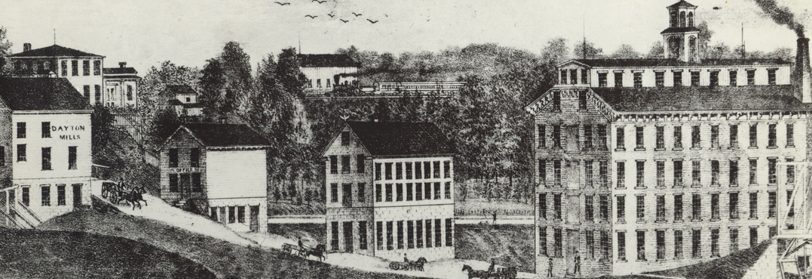
The Woolen Mill in 1870

Large stone building

The Dayton Woolen Mills

La Salle County, and Dayton especially may refer with just pride to the factory of J. Green & Co., as turning out a quality of woolen goods, cassimeres, doeskins, flannels, etc., that is not excelled anywhere in the west. Although this firm has made no attempt to push the goods upon the market by puffing in the newspapers, depending entirely on the quality of the articles to effect sales, yet the Dayton goods are widely known, and the dry goods merchant need only, as many of them do, offer the article with the single remark, “Dayton goods,” to call the attention of the purchaser to the beautiful texture and finish of the cloths manufactured in this establishment.

The rapid strides made in the west, within the past ten years, is producing a superior article of woolen goods, is admitted even by the older establishments of the East, and no man, at this day, need look for any finer article than is made at home, as he surely cannot find a better. To show the public appreciation of the Dayton goods, it need only be dais that the agent of the firm recently took orders in the city of Davenport, in one day, for goods to the amount of $1500, and the sale is all the more important when it is considered that that city has mills of its own.

The present factory building is of stone, built in the most substantial manner, situated on the right bank of the Fox river just above the bridge. Its dimensions are 50 by 100 feet in the clear, and four stories high, besides the attic. It was built in 1864, when the old mill was found to be too small for the increase of the business. Entering on the lower floor, the wool is seen on the left hand, the dressing machines on the right, and the fulling and carding apparatus at the opposite end, while an addition beyond contains the steam works used in heating the building and furnishing the necessary hot water used in the various processes of manufacture.

The machinery is driven by a turbine wheel placed under this floor, and propelled by the water from the feeder that flows past the mill/ The floors above are used for carding, weaving and spinning, there being two sets of carding machines of three in each set, making nine in all, besides a machine that turns out the rolls that feed the housewife’s spinning wheel. The third floor contains fourteen looms in all, eleven of them for double fold, and three making cloth of treble width; these wide machines being a great saving over the loom making cloth, but one yard wide, since both require the same attendance. These looms, when in full blast, make a music peculiarly their own, the nail machine being the only contrivance that beats it in racket.

Of spinning machines there are six, four of them having 2540, and two running 216, spindles each, making an aggregate of 1,392 spindles, tended by six men. Just think how many women it would take with the old family concern to twist all this yarn, that is done so easily by these six men. And these machines can be set so as to make yarn coarse or fine, nor can they fail in spinning it absolutely even throughout. About fifty hands are employed, a dozen of them being females, the rest men and boys.

The factory will consume this year about 120,000 lbs of wool. The carding machine is supplied with teasels, imported from the State of New York, which seems to be unnecessary, as they might be produced here, and the transportation saved to the company or put into the pockets of our farmers. Why has this not been done?

The sales of the firm show that manufacturing efforts in the West are appreciated. Still the mill is not run up to its full capacity.1


  1. Ottawa Republican, Thursday, August 18, 1870, p. 2.

More Christmas Festivities

Thanksgiving dinner

Dayton

Miss Theresa Fullerton is staying at Mrs. Thomas Meagher’s.

Mr. Vet Canfield unloaded a new buggy at the Dayton depot this week.

Miss Anna Fleming is home for a short vacation. She spent Christmas at Kankakee.

Mrs. Edward McCleary has a beautiful new piano, the Christmas gift of Mr. McCleary

Mr. John Pyatt, who was home with his family Christmas week, returned to his work in Chicago Sunday.

Mrs. Edward McCleary gave a family dinner in honor of her sister, Mr. and Mrs. Winn Green, of Joliet.

Mr. and Mrs. Winn Green and little daughter, of Joliet, are visiting Mrs. Green’s parents, Mr. and Mrs. Joseph Barnes.

Mr. Clarence Doran, who has sold his farm to Mrs. Gray, of Ottawa, and who vacates soon, held a sale Monday, December 30th.

Mr. Lyle Green had the shredding machine at work at his place several days last week. The machine goes to Rush Green’s next.

Mrs. John Pyatt entertained at dinner Sunday. Her guests were Mr. and Mrs. John Breese and Mr. and Mrs. Hoxie and son Charles.

Mr. and Mrs. Edward McCleary were entertained by Mrs. McCleary’s parents, Mr. and Mrs. J. Barnes, Christmas day at the family reunion.

Mr. and Mrs. J. McBrearty entertained their daughter and husband, Mr. and Mrs. Ed Emmons, and daughter Margaret, of Marseilles, at Christmas dinner.

There were nearly 24 hours of heavy rain Sunday and Monday. Roads are in a fearful condition, putting the coal diggers and haulers out of commission for the present.

Mr. and Mrs. Will Breese, of Aurora, and little daughter Marian took dinner Christmas day with Mrs. B’s parents, Mr. and Mrs. John Breese. They only stayed between trains.

Mrs. Lowell Hoxie and son Charles came up Saturday evening to visit her parents, Mr. and Mrs. Breese. They stayed until the noon train. Mr. Hoxie drove up for a few hours Sunday.

The Dayton school gave a delightful entertainment Christmas eve. A fine program by the pupils and a fine Christmas tree was presented. School closed for the remainder of the week, reopening on Monday.1


  1. Ottawa Daily Republican Times, 3 Jan 1908, p4

Happy New Year’s at Dayton


The Green Family and Connections Hold a Reunion at Jesse Green’s Residence

The reunion of the Green family and connections at the residence of Mr. and Mrs. Jesse Green, Dayton, on New Year’s was a much larger affair than was expected by Mr. Green. The occasion was the 73rd anniversary of his birth. It was not until the guests had begun to arrive that an inkling of what was intended entered his mind. His amiable better half understood more fully than he did what was to be, and made her preparations accordingly. She had eatables cooked in large quantities and great variety, and, when the hunger of all had been appeased, it was found that fully seventy-five persons — men, women and children — had sat at the table. A conspicuous object on the table was a large frosted cake, with the date of Mr. Green’s birth in raised letters and figures.

After dinner Mr. Thos. W. MacKinlay, on behalf of the relatives, presented Mr. Green an easy chair and Mrs. Green a table as tokens of their affection and esteem.

The following gentlemen were present with their wives: Ex-Attorney-General McCartney, now of Hutchinson, Kansas; L. C. Robinson, Rutland; Jos. Jackson, Millington; Frank Allen, Galesburg; Harry Green, T. E. MacKinlay, C. B. Hess, H. B. Williams, Wm. Bagly, Ottawa; O. W. Trumbo, Isaac Green, Dayton; also Mesdames J. Harris, J. Crum, Lavina Matlock, Yorkville, Craig, Jacksonville, and Bagley, Ottawa, Ray Harris and Myrtie Crum, Yorkville, Ella, Maud and Barbara Green, Dayton; and Messrs Ed. Jackson, Cincinnati, Kent Green, Chicgo, E. J. Hess, Harry Robinson, Theodore Strawn, W. E. and Don MacKinlay, Ottawa, and Basil and James Green, Dayton. The children numbered about fifteen.

The reunion will not be forgotten soon by any one of the fortunate guests of Mr. and Mrs. Green. May they continue to enjoy the evening of their lives and live to celebrate the 80th anniversary on a scale equally large and enjoyable.1


  1. The Ottawa [Illinois] Republican Times, January 8, 1891, p. 3.

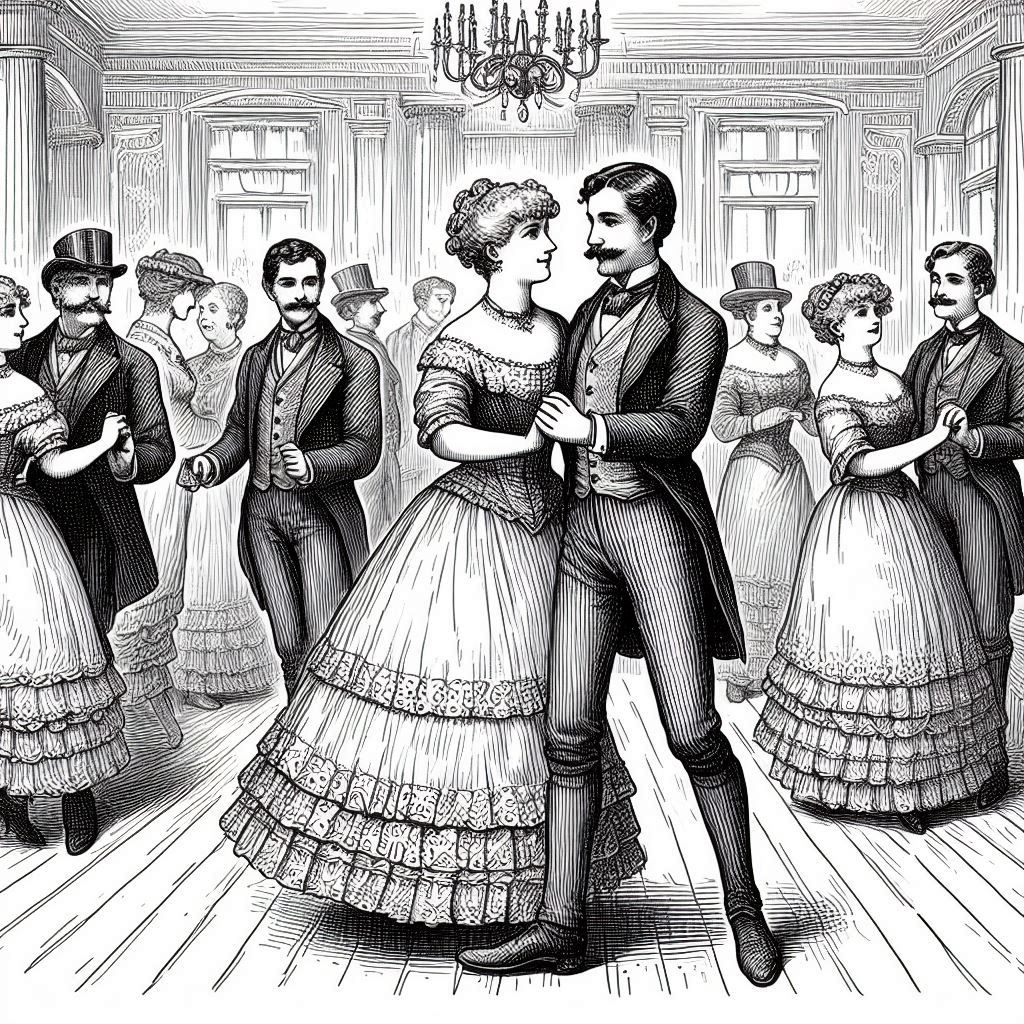
A Christmas Night Dance

Christmas greetings

Dayton

Fred Green left this morning for San Francisco, and will be absent about two weeks.

Miss Jennie Barends has entirely recovered from her recent illness.

Wm. Fleming left on Monday morning for De Kalb, where he will stay for a few days.

Mrs. Jas. H. Timmons furnished the supper for the patrons of the Christmas dance held at Woodman hall.

E. McClary and wife dined on Christmas day with Mr. and Mrs. Jos. Barends.

Christmas passed off quietly in our little burg.

Leroy McBraerty, operator at Ladd, spent Christmas with his parents.

The dance given by the Dayton orchestra on Christmas night was well attended, about 100 persons being present. Messrs. Breese, Hoxie, Warner, Breese and McGrogan furnished some very good music, and every one had a royal good time. Supper was served by Mrs. Jas. H. Timmons.

Winn Green and wife, of Joliet, spent Christmas at the home of Mr. and Mrs. Joseph Barends.

Miss Nellie McGrogan and Leroy Luce were married last week Wednesday at Ottawa by Squire Larkin. May you both live long and prosper.

Ellis Breese has just purchased a number of fine sheep from Jay Shaver, and expects to engage in sheep raising on a large scale, having fenced in 22 acres of fine grazing land on the river bottom.

George Wolf and wife entertained a number of friends at dinner on Christmas day.

George Galloway and wife were visiting in Ottawa on Tuesday.

John Rhoades and family were visitors at Mr. and Mrs. John Benoits.

Miss Drennan is visiting friends in Chicago for a few days.1


  1. The Ottawa Republican-Times, January 3, 1901, p. 6, col. 4

January 1891 -The State of the Village


A RESURRECTION
At Dayton! — A General Revival of Business in Our Northern Suburb
C. B. Hess Practices What he Preaches — The Dayton Tile Factory Will Resume Operations Next Week

The little town of Dayton has again struck its gait. The grist mill is running at full blast, the collar factory has its hands full, the paper mills are behind in orders, and now comes C. B. Hess, one of Ottawa’s most enterprising citizens and to-day leases the brick and tile works for a year commencing Feb. 1st, with an option for further time and will open up on Monday next full blast with forty hands, the works to run night and day. The firm name will be Hess, Williams & Hess, and Ed. J. Hess, junior partner, will have full charge.

These works will put out paving brick, fire brick and drain tile, and will be run in a measure in connection with the Ottawa factory. The capacity will be 50,000 brick, or 10 car loads, and 200 tons of clay will be used every day. The works have six kilns, with every facility for increasing the capacity if found practicable. The water power used is of 200 hundred [sic] horse power. The firm will build a tramway across Fox river to its beds of fire clay, which are 7 foot veins, while the common clay will be taken from a 30 foot bank just across the feeder from the works. Probably an inclined railway will be put in from the works to the “Q.” tracks to increase the shipping facilities.

Hitherto the difficulty at these works has been in getting the clay properly united, but Mr. Hess has been experimenting with it for the past six weeks and is satisfied that he has at last found the right thing.

These works will make their drain tile for the local trade, but the paving tile and fire brick will, most of it, find its was to Chicago and Peoria.

Mr. Hess says he intends to make the a “go,” and we have no doubt but he will.1

C. B. Hess was a member of the large Green clan. He was married to Clara “Callie” Green, the daughter of Jesse Green and Isabella Trumbo.


  1. Ottawa Republican Times, January 29, 1891, p. 8.