News of a Crime Spree – 108 Years Ago Today

1917 Oakland 5-passenger

TWO MORE AUTOS ARE STOLEN; ONE MACHINE RETURNED

LYLE GREEN, DAYTON DAIRYMAN LOSES CAR – FORD OWNED BY MILLINGTON MAN FOUND ON CENTER OTTAWA STREET – POLICE HAVE CLEWS

BULLETIN
Mr. Green’s machine was found a little before noon today near the Grand Ridge Cemetery, five miles south of Ottawa, where it had been abandoned by the thieves, after the tank became exhausted of gasoline. Mr. Petty recognized the car as belonging to Mr. Green and drove it into Ottawa. He turned it over to Sheriff Davis who in turn notified the owner of the recovery of his property.

Auto thieves, apparently of the juvenile variety, plied their game in Ottawa Saturday and Sunday evening when two machines were stolen from the loop district. One of the cars taken was owned by Lyle Green of Dayton. The Green car was an Oakland five passenger. No trace of the machine has been found. The other car was the property of George Wilson, of Millington and was recovered by the police last evening.

Police today say they have a line on the youths wanted for the theft, but refused to divulge any of their names. Information which will prove of much value, has been furnished the police and arrests of the youths, it is believed, will put an end to a crime wave that has been sweeping over the city the past few weeks.

Theft Saturday Night

The Wilson Ford was taken Saturday evening between 10 and 12 o’clock. Early Sunday morning a machine was abandoned in front of the residence of Bert Rose on Post street at 5 o’clock and the police were notified that a car had been left there. It was taken to the station and is being held there pending the arrival of Mr. Wilson from Millington to claim his property.

Take Dairyman’s Car

Lyle Green, Dayton dairyman, lost his Oakland car Sunday evening when he stopped in Geiger’s bakery. The machine was taken about 8:30 o’clock, a few minutes after Mr. Green went into the confectionery store. It is apparent the thieves were watching for Mr. Green to leave his car. Thus far no trace of the missing machine has been found.

Give Police Clew

That four Ottawa youths have keys that will start any machine in the city was learned today by Chief of Police Eurich. Whether or not the police have the names or identity of the youths, could not be learned.

Hundreds of cars are parked on the streets here at night and it is practically impossible for the police to know when the theft of a machine is being committed. Owners of cars are asked to take extra precautions to put an end to the trouble.1

Ford touring car

2 AUTOS STOLEN HERE ARE FOUND
Two “Joyriders” Run Cars Until Gasoline Gives Out

Ottawa’s bold gang of automobile joyriders kept the police busy over Saturday night and Sunday by stealing two machines, riding both until they ran out of gasoline, ending their hilarious sport each time by abandoning the cars, the first one on Post street and the second in Summit View cemetery in South Ottawa. Neither machine was damaged by the joyriders. Both were returned to their owners today.

Several suspects are under surveillance by the police and Sheriff’s office as the perpetrators of the theft of these cars and other machines from the streets of this city this summer for a little impromptu ride around the nearby country. It is also hinted by authorities that a couple of girls have participated in these rides with stolen machines.

Deserted on Street

George Wilson, of Millington, Ill., was the first to report his machine stolen to the police. Wilson came to Ottawa with a party of friends Saturday evening. He parked his car in front of the Orpheum theater about 10 o’clock. When he returned for it at midnight the machine was gone. The police searched diligently for the auto, which was a Ford touring car, throughout the night, but no trace of the machine was found.

All day Sunday persons residing in the vicinity of Post and Superior streets wondered at the deserted Ford car standing along the curb. Last evening Bert Rose reported the abandoned car at the police headquarters. The machine turned out to be Wilson’s, and was hauled to the police station. The owner said there was about enough gasoline to drive the car 30 miles when he left it. The gasoline tank was empty when the Ford was found.

Found By Garage Man

The second car taken was a five-passenger Oakland, and was owned by Lyle Green, prominent dairy farmer at Dayton, Ill. Green’s machine was apparently taken by the same band and stolen about 8:30 Sunday evening from the side of Geiger’s bakery on Jefferson street. At the time the car was pilfered Green was inside the bakery making a purchase.

When he found his car missing he reported the matter to the police, and a search was instigated for the stolen auto. No trace of it was found, although the police scoured the city from one end to the other in the police patrol.

George Petty, garage man, found Green’s car abandoned in Summit View cemetery at 11 o’clock this morning. He reported his find to the police, and the car proved to belong to the Dayton farmer.

The gasoline tank was dry in Green’s automobile, as had been the case with the other stolen machine.2


  1. Free Trader, July 30, 1917, p. 1, col. 2.
  2. Daily Republican Times, July 30, 1917, p.1, col 6.

Re-Rebuttal

For background read part 1 and part 2 of this discussion.

In a former letter I exposed the action of a board of trustees of a certain church. That letter was answered, or rather an attempt was made to answer it, by one of the trustees. Now I owe it to the public, to myself, and to the editor, as a local correspondent of the Free Trader, to say a final word in regard to this matter. The parties to whom I owe my information are prominent and responsible men in the town. Among them I may mention Supervisor Beach, Messrs. Henderson, Brower, Hess, Debolt and others. If Wm. A. Greenlees desires satisfaction, let him go to these men, for from them I obtained my facts and information. They stand willing, every one, to substantiate everything said on this subject. That the public may not be deceived about the affair, these parties have sent me for publication the following statements:

First. – We are prepared to prove by prominent members and trustees of the church, and by the pastor in charge at the time the church was built, who circulated the petition for aid in its erection, that it was especially understood that it was to be used by other denominations when not conflicting with M. E. appointments, and two trustees were appointed to represent the outside interests. By this means some nineteen hundred dollars were raised outside of its members, and members gave on the above condition. The word “ORthoDOX” was not made use of at the time.

Second. – Wm. A. Greenlees, as trustee, also started out with a subscription paper stating that none but Methodists should use the house. But we have not heard that he succeeded in raising a dollar on those terms. And his own subscription and labor for it do not prove him to be so much more magnanimous than his neighbors, against whom he would bar its doors.

Third. – The present acting trustees seem to be fifty years behind the times in regard to religious liberty, as the following communication from one of them would show:
Serena, March 29, ’79
A. S. Henderson – Sir: I have Been wanting to see you for some time, But have not had time. So I’ll write you and aske you if you heled out the ida thet any and all denomenations could preach in the new M. E. Church when the subscription paper was precented, or did you say ORthoDOX” Now Mr. Henderson if the Unaverseles come under the head of ORthoDOX, then I am with you and will not hesetate to say the church shal be had, but if not you have no right to make the demand you have for I can tell you thet it was expresley understood that the church could be had when not used and it was all so understood it should be to some ORthoDOX denomenations. If I am right you went to far in saying we got money under fals pretence.
plese Answer this
yours Respectfully
Peter Jacobs.

(Mr. Henderson enclosed the above letter in this statement, sent us by the parties above mentioned, and we have it in our possession at the present time.) The statement continues: “If Wm. A. Greenlees had heeded the advice of King Solomon, which he quoted, we think he would never have written his article of April 10, and we would recommend his perusal of other quotations from the same source: “The eyes of the Lord preserve knowledge, and He overthroweth the words of the transgressor.” “Be not a witness against they neighbor without cause; and deceive not with thy lips.”

Occasional1

So there!


  1. Ottawa Free Trader, May 3, 1879, p. 2, cols. 2-3

A Rebuttal

This rebuttal is in response to this letter.

DAYTON, April 10. – In last weeks’ Free Trader I noticed a communication from Dayton signed “O. C.” purporting to give an explanation of a little difficulty which occurred at the church in West Serena. His informant has either stated a malicious falsehood or has undertaken to explain a matter without understanding the facts of the case.

In the first place, there is no such thing as a “union church” in West Serena, neither has any one ever contributed money to erect one, nor has any member of a Universalist church contributed money to build a church in West Serena to my knowledge. If there has, will your correspondent please give the names. It is true that the people generally contributed liberally to build a church, but it was certainly with an understanding that it was to be a Methodist church and there was no chance for deception with any one who read the subscription paper, nor were the men who signed the preamble and resolution demanding the use of the house for Mrs. Gibb deceived in the least, as their own resolution shows. Furthermore, their own lady minister requested them not to apply for the use of the church and announced her appointment for that day at the new schoolhouse in Dist. No. 1.

Secondly, our minister has not, on any public occasion, said one word against Mrs. Gibb to my knowledge. What was said publicly was by the presiding elder.

Thirdly, there has no christian denomination been refused the use of the house, nor will there be if it does not conflict with regular appointments. Fourthly, as regards these “conscientious swindlers” who deceived their neighbors when money was wanted to build a church, I may state that Mr. Hall was not a member of the board at the time the church was built; therefore no blame can attach to him. As regards the other two, we challenge your correspondent or any one to show that we used deception to raise money to build the church or made one promise that has not been faithfully kept. We do not deny that the promise was made that the church should be free to other orthodox denominations when not conflicting with the M. E. appointments and this promise will be kept. Had your correspondent read what wise men had said in sacred writ instead of Shakespeare, he would not have troubled you to publish such a slanderous article, nor would he have troubled those of your readers who love truth rather than slander, for Solomon says, “Lying lips are an abomination to the Lord, but they that deal truly are his delight.”
WM. A. GREENLEES.1

It’s not over yet – see next week for the final installment.


  1. Ottawa Free Trader, April 12, 1879, p. 8, col. 2

The Principles of Christianity and an Explanation

A case of – what shall we call it – stubborn selfishness (?) occurred last Sabbath not far from this place. A church was solicited by parties who had paid liberally towards its erection, as a Union church, for preaching in it by our lady minister, Mrs. Gibb. The idea was hooted at and members of the congregation who were in favor of it were not allowed to speak. Certainly there could have been no gallantry among the gentlemen of the congregation or they would not have so violently opposed the lady’s speaking. Query: Is their action based on the principles of Christianity.1

As it happened, that question was answered soon after:

In our last letter (of March 19) we raised the Query, “Is their action based on the principles of Christianity?” We now have an answer, but that the reader may better understand the whole matter we will endeavor to explain:

When the “Union” church was erected at West Serena, the Universalists and people of no church, contributed liberally with the expressed promise that when not in use by the Methodist Episcopal people, the church should be free to any other Christian denomination or people, (the Mormons, I believe, excepted.) Up to this date no denomination but the M. E. has had any control or use of the house.

The Universalist denomination have been holding meetings at the school-house in Wedron during the past winter, but the United Brethren of that place wishing to hold a quarterly meeting at the regular appointment, Rev. Mrs. Gibb, pastor of the Universalist church at Sheridan, and congregations at Wedron and Dayton, very properly, in the true Christian spirit, gave way to accommodate them. It then became necessary to find another place to hold their meetings, and it was suggested that the West Serena church would be the place provided it could be obtained for a single service. Messrs. Debolt and Henderson made the request, but were flatly denied by the minister and people generally and the minister took occasion to use very harsh and unbecoming language toward Rev. Mrs. Gibb.

Messrs. Brower, Hess and others having contributed very liberally to the building, with the above named stipulation as to the use of the same, after being refused applied in writing to the Trustees for a compliance with the agreement or a return of the money which they had contributed under the agreement.

To this the Trustees, Messrs. Peter Jacobs, James Hall and Wm. A. Greenlees, replied over their own signatures: “We, as Trustees of the Methodist Episcopal church of West Serena, feel that we cannot conscientiously comply with your request.”

So it is altogether a matter of conscience. A case of official conscience! These men of very tender conscience found no difficulty in deceiving their neighbors when money was wanted for the church, but find this meddler conscience, which Shakespeare says “makes cowards of us all,” an impediment to common honesty when there is an opportunity to redeem a promise.

No their action is not based on Christianity, but is of that character of pious fraud that is giving strength to infidelity by exhibiting the hypocrisy of so much that professes to be so pure and Christlike. No use for skeptics to invite Ingersoll to West Serena. These trustees and their minister will drive men further from the cause they so luminously misrepresent, than Bob can persuade them.2

As you might expect, this response did not go unnoticed. Tune in next week for the next installment.


  1. Ottawa Free Trader, March 29, 1879, p. 2, col. 4
  2. Ottawa Free Trader, April 5, 1879, p. 4, col. 6

Alternatives to Cash

In the 1840s cash was relatively scarce, and much of the local economy still operated on barter and informal credit systems, as shown by this advertisement from the Greens’ woolen factory.

Wheat Wanted

The subscribers would say to those indebted to them, either by note or book account, that they will receive wheat in payment for their dues, if delivered soon at John Green’s Mills, Dayton, for which the highest market prices will be given.

They have an assortment of good grey, brown and black fulled clothes; satinette; jeans; tweeds; red, white and pressed flannels, of a superior quality, which they are offering at prices that will make it an object for persons desirous of encouraging domestic manufactures to give us a call, and examine the goods we are now making.

The highest price will be allowed for wheat, in exchange for our cloths.

J. & D. GREEN
Dayton Factory, Aug. 15


  1. The Ottawa Free Trader, August 15, 1845, p. 3, col. 1

Give Credit Where Credit is Due

Richard Veale, of Dayton, while chopping wood in the timber last Monday about two miles from his house, felled a tree which partially lodged, and not being a very large one, and having fallen in such a manner as to need moving, he took hold of it at the butt end to slide it around, when it slipped and caught his left hand, crushing the inner half to a pulp and breaking the bones of the little finger. He started home, and while on his way the hand was frozen.

Arriving at Dayton, he took a train and came to Ottawa and Dr. Hatheway dressed the wound, having to remove the broken bones from the hand. Mr. Veale is a poor hard-working man and has a sick family at present, and will be laid up for several weeks to come. He was here again yesterday and Dr. Hatheway examined the wound and says it is doing as well as it possible can for so serious an injury.1

The FREE TRADER, the other day, in speaking of an injury done to the hand of Mr. Veale, of Dayton, gave the name of a certain physician as healing it, which was wrong. As Dr. Downs was the actual attending physician, Mr. Veale thinks he ought to have the credit for the successful treatment of a hand which was very badly crushed, but which is now, under Dr. Downs’ treatment, getting well as fast as any reasonable man ought to expect.2


  1. Ottawa Free Trader, January 24, 1890, p, 3.
  2. Ibid, January 28, 1890, p. 1.

Baby Claire and Friends

This picture was taken when the house was no longer occupied. The house was built into the side of the hill. The upper yard refers to the large flat area at the top of the hill at the back of the house.  The front yard sloped steeply to the street.

A pretty sight was presented at the residence of O. W. Trumbo, in Dayton township, last Thursday. The beautiful grounds which overlook the town were the scene of a novel and pleasing affair. Clare [sic] Van Ettan, 15 months old, son of Mr. and Mrs. Will Van Ettan, was master of the occasion, and with the aid of seventeen of his baby friends managed to make the woods echo and re-echo with their joyous shouts of glee. All the little ones were about the same age, none being older than nineteen  months, and, with one or two exceptions, all were cousins. The picnic dinner was served in the upper yard and each baby, accompanied by its mother, took a seat on the lawn and, it is needless to say, the sight was indeed laughable and pleasant. There were also present about twenty older children, friends of Baby Clare.

Claire and younger brother Walcott Van Etten

The ladies present, whose babies were honored guests, were: Mrs. M. Peddicord, Mrs. Will Newell, Mrs. N. M. Green, Mrs. T. E. MacKinlay, Mrs. J. G. Gay, Mrs. John Parr, Mrs. Charles Shaver, Mrs. Ed Vernon, Mrs. W. N. Bagley, Mrs. H. B. Williams, Mrs. Frank Shaver, Mrs. Frank Trumbo, Mrs. Will Van Ettan, Mrs. John Gibson (Denver, Col.), Mrs. Wm. Martell (Syracuse, N. Y.), Mrs. T. H. Green (Morris, Ill.) The same babies held a party one year ago and it is the intention of the parents to have them assemble annually whenever possible.1

I’ve ben able to identify these baby guests:
Lulu, daughter of Newton M. and Ella (Pool) Green
Harold, son of John and Lucy (Milliken) Parr
Ida Mae, daughter of Charles and Nellie (Watson) Shaver
Sadie, daughter of Edward and Adelaide (Benoit) Vernon
Jesse, son of William N. and Cynthia (Smith) Bagley
Frank, son of Hosea B. & Cora (Green) Williams
Claire, son of Wilmot and Jessie (Trumbo) Van Etten
Frederic, son of John T. and Josephine (Green) Gibson
Albert, son of William and Edith (Dunavan) Martell
Mabel, daughter of Thomas Henry and Cora (Childs) Green


  1. Ottawa [Illinois} Free Trader, July 26, 1890, p. 7, col. 3

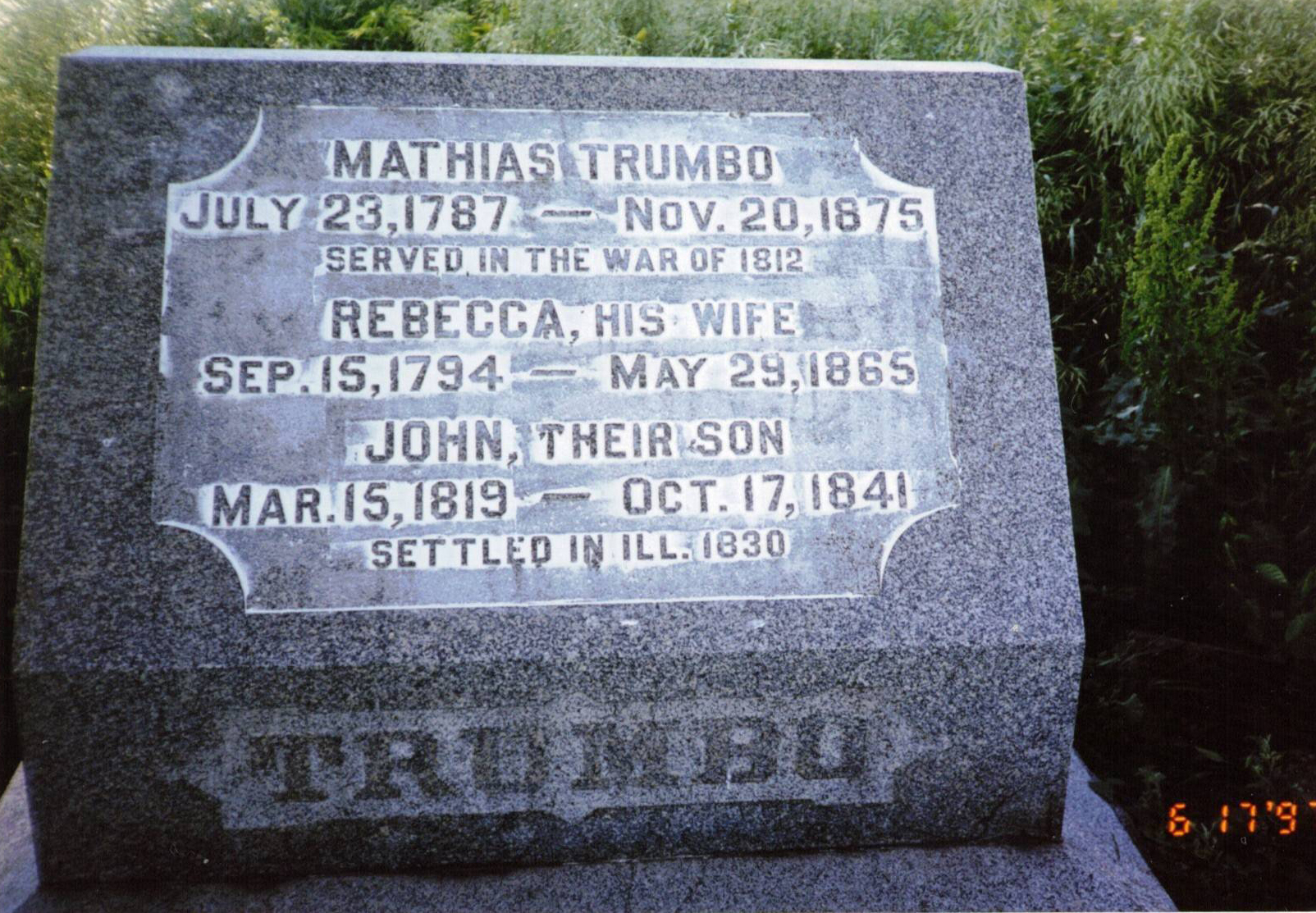
Death of Rebecca (Mrs. Matthias) Trumbo

DIED
At their residence in Rutland, on the 29th ult., Mrs. REBECCA TRUMBO, wife of Matthias Trumbo.

Thus, one more of the early settlers of this part of the state, has closed a long and useful life. Thirty-five years ago they settled on the place where they have since lived, and where she died, and is buried.

They had their share of the hardships and privations of a new country. But through them all she had been brought and she came down to her grave in a good old age. She was born in the Shenandoah Valley in the state of Virginia, in 1794, and removed with her parents to Ohio in 1811 So that she had passed through the early settlement of two of what was then known as Western States. Her last illness was a lingering one, attended with much bodily pain.

But for nearly fifty years her trust and confidence had been alone in the finished work of her Redeemer, and a religion whose virtues she had illustrated so eminently by a strong faith and a meek and quiet spirit afforded her abundant consolation and support in her last sickness and in the prospect of death.

On the last day of May a large concourse of people gathered at the old family residence to sympathize with the afflicted husband, the bereaved children, and a large circle of kindred, and to pay their last tribute of respect to one that many of them had long known and that all respected and loved. The Rev. Z. Colman improved the occasion in some remarks from the very appropriate passage in Job 5

“Thou shall come to thy grave in a full age, like as a shock of corn cometh in his season.”

We learn that it is probable a much fuller sketch of this excellent woman’s life, will appear in a different form with the sermon delivered at her funeral.1

If the fuller sketch ever did appear, it was not published in the Free Trader, so perhaps this additional information will be of interest.

Rebecca Grove was born September 15, 1794, in Shenandoah county, Virginia, the daughter of John and Barbara (Lionberger) Grove. She went to Licking county, Ohio with her parents and there married Matthias Trumbo on March 5, 1818. Seven children, John, Lavina, Isabella, the twins, Eliza & Elias, Barbara, and Elizabeth, were born to them in Ohio. They moved to Rutland township, La Salle county, Illinois, where their last child, Elma Ann, was born in 1838,

Rebecca was related to a great many of the Green/Grove families of early La Salle county. Her sister Barbara was the wife of John Green. Her daughter Isabella was the first wife of Jesse Green, son of John. Her daughters, Nancy (married David Shaver), and Emma (married Rezin Debolt) and her sons David and Joseph were all early residents of Rutland township.

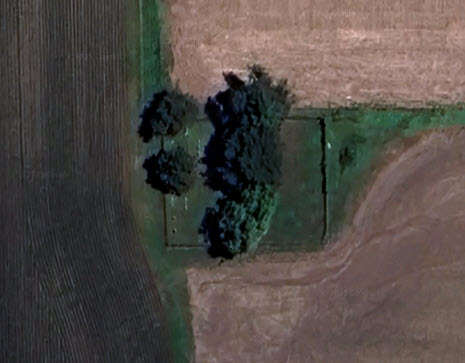
Rebecca died on May 29, 1865 and Matthias on November 20, 1875, . They are both buried in the Trumbo cemetery in Rutland township.


  1.  Ottawa (Illinois) Free Trader, June 10, 1865, p. 3, col. 4

Taffy Pulls and Trained Bears

DAYTON ITEMS

The paper mill is being put in shape for starting up the latter part of this week. The tile works will not start up before the middle of the month.

A large surprise party dropped in on mine host Timmons, of the Exchange House, last Tuesday evening, completely surprising him. James Angevine furnished the music and all had a good time.

Mr. H. Ladd, of Oswego, brother of our station agent, A. W. Ladd, spent last Sunday in Dayton.

We understand that Miss Jennie Crane, of Ottawa, will teach the summer term of the primary department of our school. Miss Etta Barnes will teach the McMichael school east of Wedron, and Miss Rigdon, of Ottawa, the Wedron School.

A number of our young people attended a very pleasant “taffy” pulling given by Miss Winnie Childs at her father’s large residence in North Ottawa.

Mr. Cliff G. Sweet and wife, of Aurora, spent last Friday in Dayton.

In our report of the leap year party at Mrs. Greenleaf’s, the printer made the names J. Hall  and C. Hall read J. Half and C. Half. We noticed the Journal copied our report almost word for word, and of course got those names wrong also as they were printed in the Republican.

The two trained bears passed through our town last Saturday and gave a performance at the depot in the morning.

OCCASIONAL1

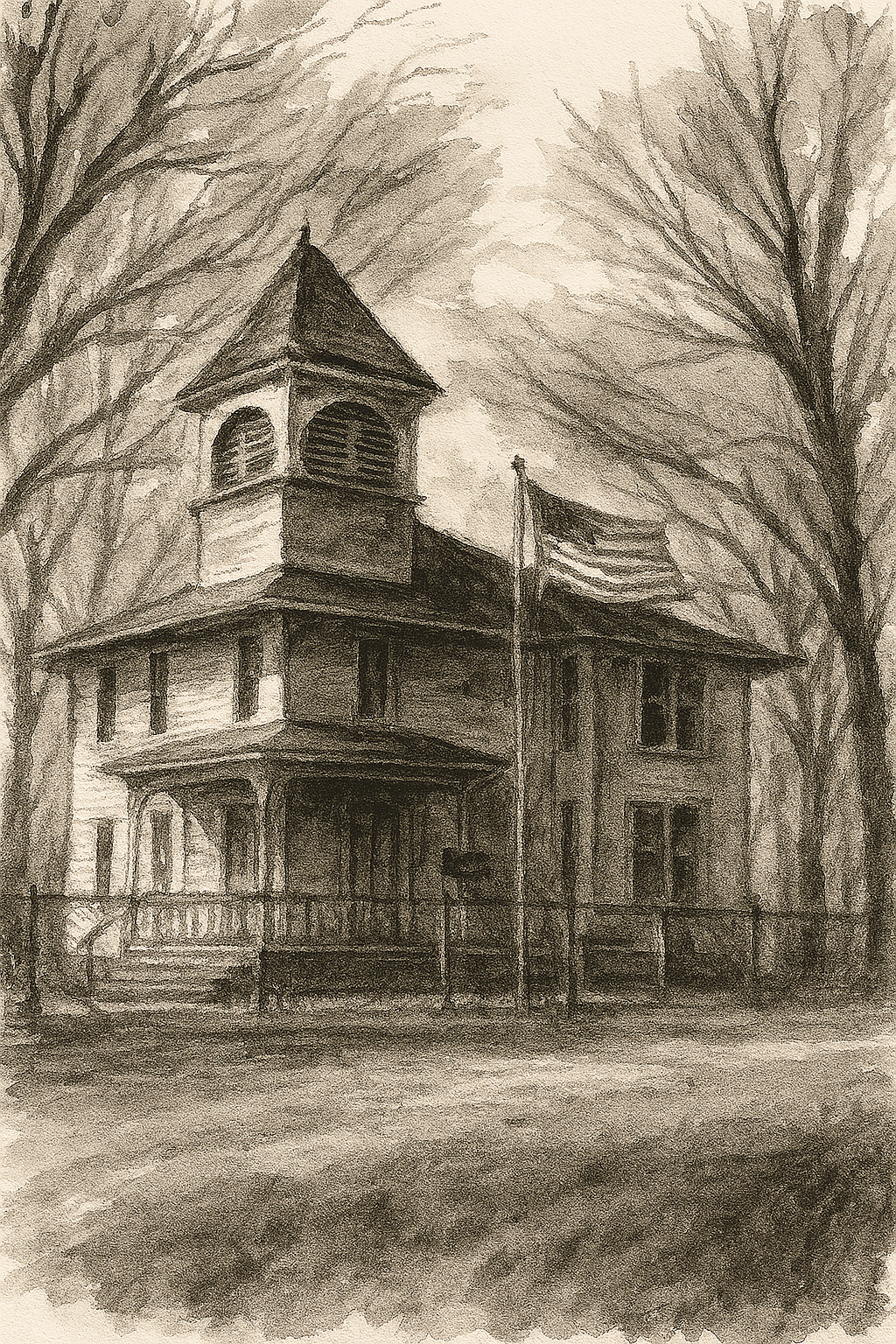
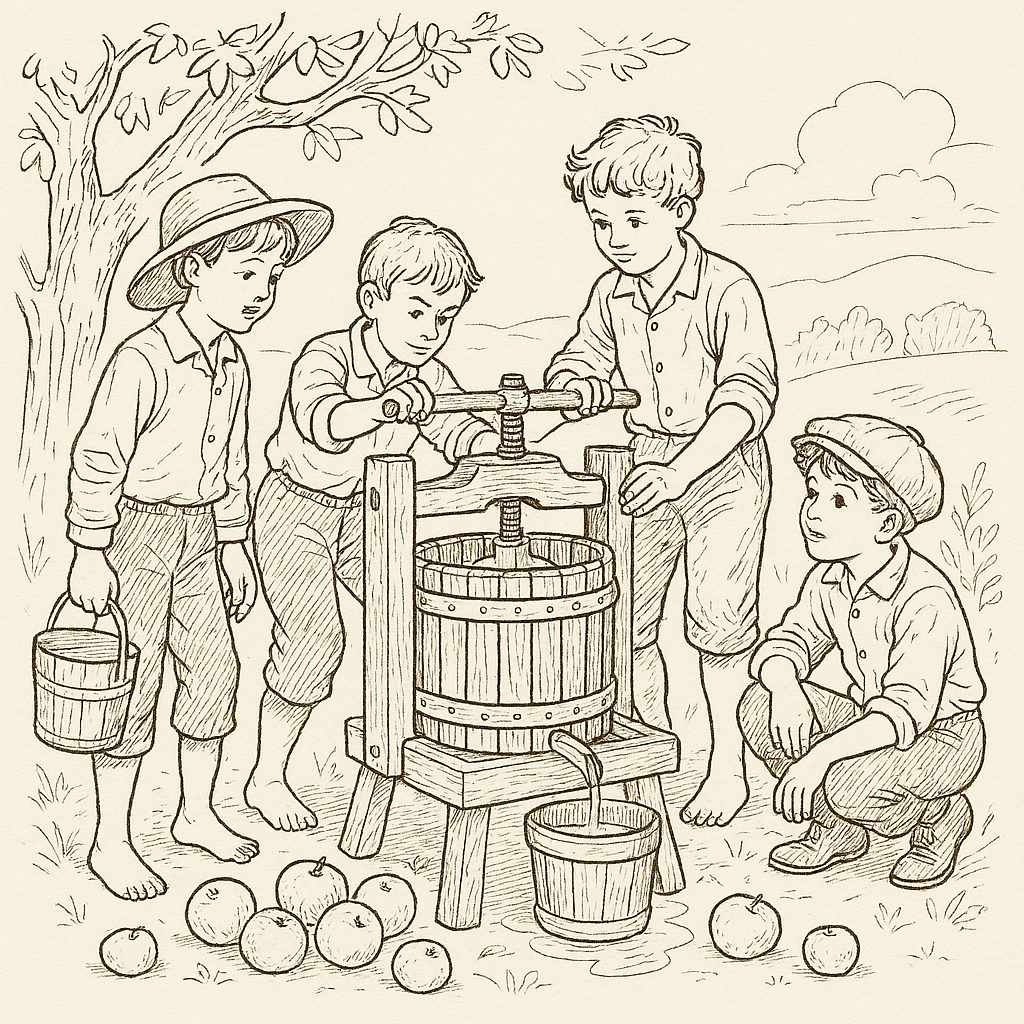
Just to let you know how up to date we are around here, the illustration for today’s entry is the result of this AI prompt: a line drawing of 2 tame bears performing with a depot and train tracks in the background. I suspect the actual 1884 situation looked a little different.


  1. Ottawa Republican, March 7, 1884, p. 5.

A Most Pleasant Party

One of the most pleasant parties of the season took place last Friday evening at the capacious residence of H. B. Williams, Esq., in East Ottawa. The evening was a delightful one for those who drove in from the country and every one seemed to be in a good dancing humor. All seemed to feel that it was to be an evening of enjoyment, and such without doubt it proved to be. The guests (about forty-five in number) were pleasantly received by Mr. and Mrs. Williams, who cannot be excelled for kind hospitality. As dancing was to be the prime amusement of the evening, a good programme had been arranged, the floors of two large parlors had ben nicely waxed, and soon, to the delicious strains of Prof. Sweet and wife’s fine music, the merry couples went whirling thro’ the mazy dance. Mr. C. B. Hess played the part of floor manager in a very happy manner. A few enjoyed themselves in a quiet way by a pleasant game of cards and others listened to the “Melican Man” by Chas. Green.

At a late hour the party dispersed with many pleasant adieus to the host and hostess. The music was praised by all present as the finest we have enjoyed during the season, and the hope was expressed by many that we might enjoy their fine music again in the near future. Prof. Cliff Sweet, formerly of Plano, but now of Aurora, has been engaged in the music business a number of years, teaching, party playing and piano tuning, and is a fine violinist. Besides his party playing he has dancing schools at Aurora and Mendota, and is building up a fine reputation as a musician and teacher. His wife accompanies him on the harp and is also quite a fine musician. His quadrilles are mostly new and his waltzes, polkas and schottisches are delicious.

The following were present: Mr. and Mrs. Thos. E. McKinlay, Prof. and Mrs. C. W. Tufts, Mr. and Mrs. C. B. Hess, Misses Clara Angevine, Josie Stout, Cora Dunavan, Bertha Angevine, Maggie Stout, Jennie Dunavan, Louise Watts, Belle Dunavan, Delia Craig, Cora Childs, Etta Barnes, Winnie Childs, Ethel Marriner, Misses Loy and others, Messrs. Chas. Angevine, W. Trumbo, John Hall, Ross Mitchell, James Butters, Geo. Dunaway, N. Flick, N. Clawson, of Oglesby, Chas. Green, Chas. Dunavan, Joseph Green, S. Dunavan, T. H. Green, Wm. Dunavan, James Green and others.1


  1. Ottawa Republican, March 7, 1884, p. 5.

Another Dayton Water Power Fight

Dayton dam with feeder in the foreground

In 1899, the Merrifield Electric Light company made a proposal to the Ottawa city council to grant them a franchise to supply electric light to Ottawa, with the power to be supplied from Dayton, on wires running down the feeder bank. The source of the power would be the mill property situated on the feeder in Dayton which Louis W. Merrifield purchased from Miles Masters in 1897. One Ottawa newspaper, The Republican Times, urged caution in accepting the proposal:

Some of our city contemporaries have come out for and against the proposed granting of an electric light franchise to Mr. L. B. Merrifield, of the Organ Company. If the city council is asked for such a franchise the aldermen should take whatever time is needed to examine into the probable results of such an enterprise, not only in the matter of lights, but in its effect upon the industries using the water power furnished by the Hydraulic Company. The Republican-Times holds that a careful and impartial investigation should precede action on any application for special privileges.1

The paper then provided some historical information on the Hydraulic Basin:

Although an old institution, the people of Ottawa have very little real knowledge of the Ottawa Hydraulic Company and of the advantages in an industrial way that it has been to this city. The canal from Dayton, called the Feeder, was constructed by the state to feed the Illinois-Michigan canal. The side-cut and the oblong basin it empties into, called the hydraulic basin, were constructed by the state for commercial purposes and to regulate the level of the main canal. At one time on the banks of these artificial bodies of water were located six or eight great elevators, with a capacity of 25,000 or 30,000 bushels of grain per day. Then Ottawa was the greatest grain market in the world where the grain was handled direct from the wagon.

A number of citizens of Ottawa in the year 1852 leased of the state of Illinois the surplus water of the hydraulic basin, side-cut and canal. Heretofore that water had run to waste in a race to the Illinois river at La Salle street. The company organized was called the Ottawa Hydraulic Company.

At present the following industries are operating on leases from the Ottawa Hydraulic Company:
The Pioneer Fire-Proof Construction Company
The Illinois Valley Milling and Shipping Company
The Ottawa Electric Light Company
The Ottawa City Electric Light Company
The T. J. Nortney Manufacturing Company
The H. C. King Box Factory
The Sanderson Refrigerator Factory
The Ottawa Harness Company
The McCully and Flick Mold Factory
The Yockey Carpet Renovating Factory2

The concern voiced by the paper was that in order to supply the electricity for the proposed lighting the Merrifields would use more than their share of the Dayton water power to generate electricity, thus depriving the industries in the hydraulic basin of the water they needed. Another article laid out the history of the Dayton water power.

DAYTON WATER POWER
The Facts and Figures About the Leases of Power, the Parties and Amounts
THE MERRIFIELD CONTRACT
Ottawa Factories Would Suffer Material Damage From Lack of Water

The publication in the Republican Times of the description of the hydraulic basin and its dependent manufacturing institutions and the danger threatening them through a drawing off of the water at Dayton has created much interest among our citizens. Many inquiries have been made as to the real relations of the parties at Dayton and their rights there.

Dayton, by the terms of contract between the Illinois & Michigan Canal and Green & Stadden, is entitled to ONE FOURTH OF THE SURPLUS WATER that comes into the feeder, after the canal is provided for. From several measurements made one-fourth of the surplus water amounts to from 125 to 250 horse power, according to the stage of water. Most of the year the total surplus water power that could be legally used at Dayton is 150 to 200 horse power.

The Merrifields bought out Masters, who owned three thirty-seconds of the power, less 34 horse power, which had been sold to Basil Green. This gives the Merrifields the right to use, at the highest stage, a run of 64 horse power; at a medium stage 32 horse power, and at a minimum stage the limited amount of only 13 horse  power. The Merrifields, on taking possession, took out the Masters’ wheel of about 90 horse power and put in two wheels which will produce 218 horse power.

The past season has been a very wet one, but, notwithstanding this, a considerable more than the one-fourth they are entitled to has been drawn out at Dayton, and had the Pioneer Construction Company been running in September and October they would have suffered material damage from lack of water. Now that the Pioneer Company has built their modern factory they are prepared to and expect to run all the time, and will suffer great loss if forced to shut down. The Merrifields, it is claimed by Ottawa parties, have wheels that will use not only the power they are entitled to, but more water than all Dayton is entitled to for over six months in the year. Notwithstanding the consequent and evident injury to all Ottawa’s industries that use water power, they are asking for a franchise to use all their power.3

The Merrifields responded by denying that they had ever taken more than their share of the water. They claimed that they had made improvements which generated more power from the same amount of water. 
The Ottawa Hydraulic Company sued the Merrifields for damages. Meanwhile, the city council could not vote on the question of the Merrifield franchise because the original ordinance had been lost and Merrifield had failed to make a copy, so the vote was postponed to the next meeting of the council. 

There is likely to be a lively scrap between Lew Merrifield on one side, the Canal Commissioners, Ottawa Hydraulic Water Power Company and other owners of the water power at Dayton on the other. Under a decision of the court that Merrifield was using more than he was entitled to, the Commissioners constructed a flume leading to the Merrifield electric plant which would give him no more water than he was entitled to. Yesterday morning Mr. Merrifield tore the flume out, claiming it prevented him from getting as much water as he was entitled to. Today a gang of canal workmen went up to rebuild the flume and it is likely that an injunction will issue to prevent a repetition of the tearing out of the flume.4

The trouble between the Illinois and Michigan Canal Commissioners and the Ottawa Hydraulic Company on one side and L. W. Merrifield on the other, in which the Commissioners and Hydraulic Company claim that Merrifield uses more than his share of the water at Dayton, will most likely be settled by a bill for injunction filed in the Circuit Court this afternoon by Brewer & Strawn for the Commissioners and Hydraulic Company. It will be remembered that about two weeks ago Merrifield tore out a water gauge which had been placed in his flume by the Canal Commissioners to prevent him using more than his share of the water. The Canal Commissioners replaced the gauge and a few days ago Merrifield tore it out for the second time.5

The canal commissioners, on behalf of their patrons, the Ottawa Hydraulic Company, caused their engineer to construct a weir at Dayton which limited the quantity of water to each owner down to the amount they were entitled to. Mr. Merrifield tore this out. The canal authorities replaced it and Mr. Merrifield again removed it. The third time the weir or flume was rebuilt the court was appealed to and granted an injunction which prevented Mr. Merrifield from interfering with it. After the court enjoined him, a motion was made to have the injunction dissolved, and that matter is now being heard. There are quite a number of affidavits from engineers on the quantity of the flow and amount each is entitled to and, that used by Mr. Merrifield, and the court will undoubtedly take the matter under advisement.6

In June 1901, the court refused to dissolve the injunction. In May 1902, the matter was still in the courts. Then in March,1904, the dam at Dayton was swept away in an ice jam. In spite of this, it took another  seven months to close the books on the  Great Dayton Water Power Fight.

The Canal Commissioners’ Case

Another of the cases decided was the suit brought by the Canal Commissioners and the Ottawa Hydraulic Company to restrain L. W. Merrifield from diverting more than a certain amount of water of Fox river from the feeder at Dayton to his factory at that place. It is needless to say that the proceedings were commenced before the dam at Dayton was wrecked by ice and floods. The contention on behalf of Mr. Merrifield was that he was entitled to use two sixteenths of the water of the river while the Commissioners contended that he was entitled to only one sixteenth. Some controversy also arose as to the weir put in by the Commissioners. The Supreme Court seems to have decided that Merrifield has a right to but one sixteenth of the water but the weir interfered with his rightful use of that. Hence the cause was reversed and remanded to the Circuit Court for a new trial.7

Since the dam had been torn out , the court case died a natural death a few weeks later.

Rehearings were also denied in the case of the Canal Commissioners vs. L. W. Merrifield, which had been reversed and remanded to the trial court. The question involved related to the amount of water which Merrifield was entitled to use from the Fox river at Dayton. Since the commencement of the suit, however, a permanent injunction has been placed on any water being diverted from the natural course of the stream, the dam having been carried away by floods and ice.8


  1. Republican Times, November 24, 1898, p. 4.
  2. Ibid, January 12, 1899, p. 1.
  3. Ibid, January 19, 1899, p. 2.
  4. Free Trader, March 8, 1901, p. 7.
  5. Republican Times, March 21, 1901, p. 4.
  6. Free Trader, May 24, 1901, p. 7.
  7. Republican Times, October 29, 1904,
  8. Daily Republican Times, December 10, 1904, p. 8.

Relay Riders’ Good Time

A Twelve and a Quarter Mile Spin Over Country Roads
An Important Message Delivered

A large crowd congregated at the Clifton Hotel Wednesday evening to see the start of the relay cycle run from that point to Dayton and return, by a circuitous route. The start here was made at 6:50 by Theo. Crane. He ran to the Dayton road, where Will Pitcher took up the run and rode to the Dayton bridge. There he was met by Charlie Flick, who in turn gave way to Frank Wing, at the Chicago road, who made the final spurt. The time of the run was 37 minutes and 10 seconds, and the distance covered was twelve miles and 550 yards. Before leaving Mr. Crane was handed the following message by Mayor Schoch, to be delivered to President Richardson, of the Kazoos:

OTTAWA, June 14, 1893.
J. F. RICHARDSON, ESQ., Ottawa, Ill.,
Dear Sir: Upon receipt of this message from the relay riders of the Kazoo Cycling Klub you will please present the letter to my esteemed friend, Alderman Alshuler, and I am satisfied the same will be good for a box of cigars, which you can smoke for the cause with the Klub.
Yours respectfully,
AL. F. SCHOCH.

The mayor’s conjecture was correct, the members say. It was decided last evening that another relay race will be arranged shortly.1


  1. Ottawa Republican Times, June 22, 1893, p. 2, col. 2.

Veterans of 1812


VETERANS OF 1812
(From the Ottawa Free Trader, Oct. 3d, 1874)

On the occasion of the La Salle County Soldiers’ re-union at Ottawa, Sept. 29th, when the picnic festivities, speeches, songs, music, greetings &c., had concluded six of the veterans of the war of 1812 were conveyed in carriages to the Clifton Hotel for supper prior to leaving for their respective homes. As usual, the “ubiquitous photographer, Bowman,” was on hand to secure the shadows of these time honored subjects, and accordingly in less time than we can write it, had the group arranged on the porch of the hotel, and secured an elegant stereoscopic view of the entire number as follows:–

Commencing on the left in standing position, is Perry Pedicord, of Marseilles, aged 81; sitting to his left is Mathias Trumbo, of Rutland, aged 97; to his left stands Judge A. W. Cavarly, of Ottawa, aged 81; to his left in front is seated Capt. James Reed, of Utica, aged 99; standing in the rear to the left is Jacob Stroop, of Ottawa, aged 81; and to the extreme right is seated William Meader, of Port Byron, aged 91. All are residents of this county except Mr. Meador. Their general health and prospects of living to a good old age is excellent, save the tottering steps and failing eyesight of Mr. Meador.

The likenesses are all good, and much better than could be expected, considering the lateness of the hour, to produce an almost instantaneous picture. Mr. B. informs us that he will furnish copies for the album or stereoscope at 25 cents each.

Published by W. E. BOWMAN, Portrait and Landscape Photographer, Ottawa, Ills.

This text appeared on the front page of the Free Trader, but the picture was only available from Mr. Bowman’s studio. Luckily, one of my ancestors came up with the 25 cents needed to acquire a copy so that I can show  it here. The connection to Dayton and the Green family is Mathias Trumbo, the father of Jesse Green’s first wife, Isabella. He was also the uncle of Mary Jane Trumbo, wife of Isaac Green, and Oliver Walcott Trumbo, husband of Rebecca Green; Isaac and Rebecca being children of John Green.

Bread and Strawberries – and FISH!

From Dayton

Dayton Ill., April 28, 1887. – The commissioners of Rutland are busy at work on the hill leading to the bridge, and will put the road in first class order.

Mr. T. H. Green is graveling the approach on the west end of the new bridge.

The tile works are having a good trade, and are shipping lots of tile.

A large number of game fish have been caught this week. A good rain to raise the river and start the fish northwest, would greatly improve the sport.

One of the proprietors of the “Short System” Roller Mills took samples of their flour to your city one day this week, and showed it alongside of all the long system mills flour in the marker, and the short system flour stood at the head of the list for whiteness. The landlady of the Dayton Hotel baked some of the short system patent flour last week, and says she never had a flour in the house that baked as light and white. Tally two for the short system!

Mr. Joseph Green now has an acre and a quarter of strawberry plants in his garden across the river.

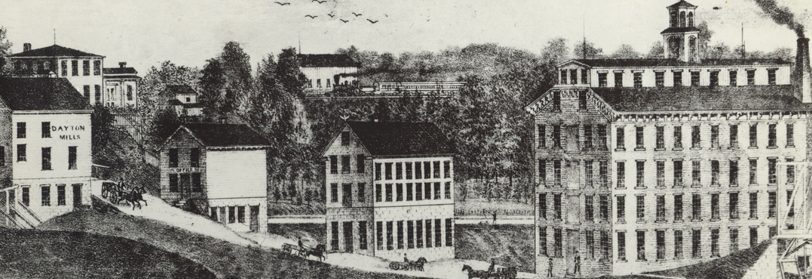
The old woolen factory property is lying idle this spring. It is to be hoped that something may be done with it before long.

Mr. Wm. Rhodes who was so unfortunate as to lose a limb while working on a railroad out west, has returned home, and will study telegraphing with Mr. Ballard [?] at Ottawa.

Our town is receiving considerable benefit from the new bridge in the way of trade.

There is a good opening here now for a good blacksmith.

Occasional1


  1. The Ottawa Free Trader, April 30, 1887, p. 8, col. 3.

Dayton Dam and Fox River Feeder

Looking up the river toward the dam, with the feeder in the foreground

from the Ottawa Daily Republican Times, April 9, 1904:

The recent floods have overthrown the work of years, wrought destruction to property which, in all probability will never be replaced. This is undoubtedly the fate of the Fox river feeder of the Illinois and Michigan canal and the dam across the Fox river at Dayton. The recent decision of the Supreme Court seems to emphasize the fact that the usefulness of the canal is well nigh spent. The scant water which has flowed through the feeder during the summer months of each year for several years past has been the means of calling attention to the diminishing value of the Fox river as a source of water power for both Dayton and Ottawa.

With the destruction of the dam there arises thoughts of the days which have long since gone. But few now live who can remember the building of the canal feeder and the Dayton dam. Many interesting facts center around those events and a few reminiscences may be interesting, if not instructive.

Going back to the first settlement of the county it is found that one of the pioneers was John Green, father of Jesse Green, now of Ottawa, who first came in September, 1829, and finally located where Dayton now stands in December of that same year. He owned over a thousand acres of land on the west bank of Fox river, extending up and down the stream for over a mile and a half. Before the state dam was built (which was commenced in 1837) a dam was built a part of the way across the Fox river at a point about a quarter of a mile below the state dam by Mr. Green. It extended from the west bank of the Fox to an island which has long since disappeared under the influence of the floods and ice. This first dam was constructed soon after Mr. Green took up his residence at that place about 1830 or 1831. First one mill, then a second and third were built by the Greens, the last one furnishing power for six runs of burrs, or seventy-two horsepower. This first dam was used until the state dam was completed in 1838.

In those days, according to the testimony of Jesse Green given in a recent law suit, the Fox river had about three times as much water as it has had in later years. When the state took up the question of building a feeder for the canal and a dam across the river at Dayton, Mr. Green entered into an agreement whereby he was to receive power to operate his mills from the state.

It may be a matter of surprise to know that for some time after the completion of the feeder, canal boats, on several occasions, went up to Dayton, taking cargoes of grain from that point to St. Louis. This boating did not last many years, as by 1864 the feeder had only about three feet of water.

The survey of the feeder was made by William Jerome, civil engineer in charge of the western division of the canal, in 1837, and the work of construction was commenced in December of the same year. Its length is about four and a half miles. The channel was four feet deep and sixty feet wide for 1,200 feet north of the main canal, and from that point to the Dayton dam it was forty feet wide. At the time of the construction of the feeder and the hydraulic basin at Ottawa it was estimated that the water power which would be created would be sufficient to drive at least “40 pairs of millstones of four and a half feet in diameter.” It was thought that a connection might be made with the Illinois river at this point by means of a short canal and a system of lockage.

The following table was given as an estimate of the cost of the feeder and dam, when construction was about to be commenced:
218,992 yards of earth excavation ………………..$50,340.32
23,000 yards of rock excavation …………………….17,250.00
131,215 yards of embankment ………………………26,253.00
1,470 slope wall ……………………………………………..2,205.00
Dam across Fox …………………………………………….14,000.00
Guard lock …………………………………………………….12,000.00
Road bridge …………………………………………………….2,800.00
Two culverts ……………………………………………………4,300.00
Contingencies, etc. ………………………………………….6,457.41
Total ………………………………………………………..$135,605.73

In the annual report of  W. F. Thornton and Jacob Fry, Canal Commissioners, to Hon. Thomas Carlin, Governor of Illinois, in December 1838 the following language was used in regard to the construction of the feeder. “The judicious improvements, ordered at the last session of the Legislature cannot fail to advance the prosperity of Ottawa to a high degree. Strengthened and cultivated as her natural advantages now are, it is admitted by all intelligent observers that she must soon become an important manufacturing city, creating a vast amount of business for the canal, diffusing incalculable benefits through an extensive scope of country, and remunerating the state, by increased value of property. more than three-fold the amount of the additional expenditures.” The expectations of these men were realized only in part. And now, after all the advantages which the state derived from an increase in values to its then marketable lands, the economists of the state have killed the fowl which laid the golden egg.

In another report, made in 1830, when the building of the canal was first considered, the Commissioners said, in speaking of the proposed survey for a canal: “The town of Ottawa, at the mouth of Fox river of the Illinois, is advantageously situated in the heart of the most beautiful, fertile and healthy region of the country, and, as connected with the canal, deserves the legislative care of the state.”

But all these things have gone. Neglected by the state the dam became weakened and gave way before the crush of ice. Sand was washed into the entrance of the guard lock of the feeder and effectually choked that source of water to the canal and hydraulic basin.

The history of the efforts made by the canal authorities to obtain the appropriation voted by the Legislature at its last session, the injunction suit instituted at the instance of Chicago parties, the decision of the Supreme Court making perpetual that injunction and the very late order denying the prayer of the Canal Commissioners for a rehearing, all are recent events. They are disheartening facts and may be taken as an indication that the dam and its feeder for the canal will never again be used for valuable commercial purposes. They will soon become only a memory, then a few lines or a page in history, and will then be forgotten. It is, in truth, to be thus?

A Well-Stocked Linen Closet – 1873 Style

The Elizabeth Trumbo house

Elizabeth Trumbo house

When Elizabeth Trumbo died in 1873 she had an extensive collection of household textiles, suggesting a well-furnished home with an emphasis on comfort and hospitality. The variety of bedding—feather beds, wool and corn husk mattresses, and multiple quilts and coverlids—indicates a concern for warmth and comfort, reflecting the seasonal needs of the time.

Bedding Items

4 Feather Beds – Large sacks filled with feathers, used as mattresses or mattress toppers. These were considered a luxury and provided warmth and softness.

1 Spring Mattress – A more modern mattress for the time, likely featuring a metal spring frame for added support.

1 Woolen Mattress – A mattress stuffed with wool, offering warmth and softness but firmer than a feather bed.

3 Corn Husk Mattresses – Mattresses filled with dried corn husks, which were inexpensive but not as comfortable as feather or woolen options. These were often used by servants or in guest quarters.

12 Small Pillows – Smaller pillows, possibly decorative or used for neck support.

6 Pairs of Woolen Sheets – Woolen sheets provided warmth in colder months, an alternative to cotton or linen.

18 Cotton Sheets – Lighter, breathable sheets for summer months, likely made of muslin or homespun fabric.

29 Pillow Slips – Pillowcases to cover and protect pillows from dirt and oils.

Bed Coverings

5 Coverlids – Woven or quilted bed coverings, often decorative and used as a top layer on a bed.

5 Comforters – Thick, stuffed blankets used for warmth, usually filled with wool or cotton batting.

3 Quilts – Layered bed coverings stitched together, providing warmth and decoration. Quilts often had intricate patterns and could be handmade.

2 Counterpanes – A decorative bedspread, usually lighter than a quilt, used for covering the bed during the daytime.

Household Linens

6 Table Spreads – Decorative cloths used to cover tables, protecting them from spills and adding an ornamental touch.

15 Towels – Likely made of linen or cotton, used for drying hands and face, as well as general household cleaning.

1 Chair Tidy – A small decorative cloth placed over the back or arms of a chair to protect it from hair oils and dirt.

This concludes our look at Elizabeth Trumbo’s home at her death. We have previously considered her stable, kitchen, and furniture, finishing here with her linen closet. It was a comfortable family home and probably held many family gatherings of relatives and neighbors.

A Resurrection at Dayton

A General Revival of Business in Our Northern Suburb
C. B. Hess Practices What He Preaches
The Dayton Tile Factory Will Resume Operations Next Week

The little town of Dayton has again struck its gait. The grist mill is running at full blast, the collar factory has its hands full, the paper mills are behind in orders, and now comes C. B. Hess, one of Ottawa’s most enterprising citizens and to-day leases the brick and tile works for a year commencing Feb. 1st, with an option for further time and will open up on Monday next full blast with forty hands, the works to run night and day. The firm name will be Hess, Williams & Hess, and Ed J. Hess, junior partner, will have full charge.

These works will put out paving brick, fire brick and drain tile, and will be run in a measure in connection with the Ottawa factory. The capacity will be 50,000 brick or 10 car loads, and 200 tons of clay will be used every day. The works have six kilns, with every facility for increasing the capacity if found practicable. The water-power used is of 200 hundred [sic] horse power. The firm will build a tramway across Fox river to its beds of fire clay, which are 7 foot veins, while the common clay will be taken from a 30 foot band just across the feeder from the works. Probably an inclined railway will be put in from the works to the “Q.” tracks to increase the shipping facilities.

Hitherto the difficulty at these works has been in getting the clay properly united, but Mr. Hess has been experimenting with it for the past six weeks and is satisfied that he has at last found the right thing.

These works will make their drain tile for the local trade, but the paving tile and fire brick will, most of it, find its way to Chicago and Peoria.

Mr. Hess says he intends to make this a “go,” and we have no doubt but he will.1


  1. The Ottawa Republican Times, January 29, 1891, p. 8.

On This Day in 1887


iron bridge at Dayton 1886

From Dayton

Dayton, Ill, April 1st, 1887. – Our bridge is finished at last and open for public travel. It is a very fine three span iron bridge, the neatest one on the river, and is a fine addition to our village. Of course every one will use it now that it is constructed, and it was noticed that about one of the first to use it was one who had fought the hardest.

Our schools opened again Monday after a week’s vacation, with the same teacher at the helm.

The tile works are doing a rushing business, having shipped five car loads last week.

The Horse Collar works are also doing a fine business, shipping lots of collars every day. They are working day and night, and are about seventy dozen behind orders.

Mr. James Timmons, our genial landlord, is putting in a fine new maple floor in his office, also a new floor in the kitchen.

Our Sugar camp under the management of Misses Joseph and Win Green, has been turning out a lot of excellent maple syrup.

Mr. Basil Green, our worthy supervisor, has announced himself as a candidate for re-election.

The Roller Mill is about fitted up and will be running next week. It has the latest improved machinery for running on the short system and the product will no doubt be as fine as any on the market.

Farmers should take their wheat where they can get it ground into the very best flour and receive a large yield.

The Sunday school will hold an Easter Concert on Sunday evening, April 10th. A fine programme is being arranged and everyone should attend.

Occasional1


  1. The [Ottawa, IL] Free Trader, April 2, 1887, p. 4, col. 6

Jennie Cullen’s Family

Cullen, Jennie - death certificate

Two-year-old Jennie Cullen died in Dayton February 21, 1881 and is buried in the Dayton Cemetery. She is not related to anyone in the cemetery. The Cullen family lived in the area for only a few years, but luckily Jennie appeared in the 1880 census in Ottawa. From that entry we discover that her parents were Thomas and Emma Cullen and she had two older sisters, Josie and Hattie. Following these facts led to this account of the Cullen family.

Thomas Cullen was the son of Patrick Cullen and Bridget Finnell, immigrants from Ireland. He was born in New York in October 1852 and married Emma Schuyler in New York in 1874.  In late 1879 or early 1880 they moved from New York to Ottawa, Illinois.

In 1880 Thomas gave his occupation as “working in  glass factory”. This was probably the Ottawa Glass Company, a plate glass company, which opened on April 1, 1868.  In January 1880, the Ottawa Free Trader reported that “The Ottawa Glass Co has 140 hands, 20 are blowers.” At this time there was also a bottle factory in Streator, another place Patrick may have worked, as his son Frank was born in Streator.

A number of family members worked in the glass industry. By 1900 the family has moved to Covington, PA, where Thomas is now a glass gatherer. His 18 year old son Frank is working as a glass cutter, and daughter Josephine is married to a glass blower.

In 1910 the family is living in Roulette, PA, where Thomas and son William are both glass workers, probably at the Fairchance Glass Works.  Son Frank is working as a glass cutter in Putnam, PA.

In 1920, Thomas was retired and managing a pool hall, but the family still has glass associations. Daughter Hattie’s husband, Ezra S. Cochran, is a glass blower for a window glass factory in Putnam, PA.

Thomas and Emma had nine children:
Josephine (1875-1918) married Edward Cauffeld
Harriet (1876-1928) married Ezra S. Cochran
Jennie (1879-1881)
Frank (1882-1946) married Grace Sullivan
Carrie (1886-1956) married 1st William Sheldon; 2nd Oren Verne Tippen
William Roy (1887-1940) married Edith May Hutchinson
Margaret Agnes (1889-1967) married Hollis A. Clark
James Andrew (1891-1962) married Ruth Getman
Mary (1895-1942) married Gordon Legacy

Emma Schuyler Cullen died in Roulette, PA, on June 1, 1911. Thomas Cullen died April 22, 1925 in Putnam, PA, where he was living with his daughter, Harriet Cochran. Thomas and Emma are buried in Saint Mary’s Roman Catholic Cemetery in Sartwell, PA.

Elections, Music, and Fish

DAYTON ITEMS

During the past few weeks the river has been quite high, and, as a consequence, a goodly number of game fish have no doubt ascended the river. They were caught in large numbers on Saturday and (we are sorry to say) on Sunday last. One fisherman reports having caught a fine string of twenty-two bass and pickerel.

At the school election a week ago last Saturday the votes were somewhat mixed, some, according to law, stating for long and short term, and others merely containing two names. The judges decided that the party receiving the greatest number of votes, whether for long or short term, or no term, was elected, but the township treasurer decides that the persons who received the greatest number of designated votes were legally chosen. According to this decision the board of directors for the following year will consist of the following members: Joseph Barends, H. B. Williams and John Green. The vote on issuing bonds to the amount of $2,500 for building a school house was carried almost unanimously, there being only two opposite votes.

Co. Supt. Williams visited our schools last Friday.

Mr. C. B. Hess and family will commence moving to the city this week. We are sorry to lose such good citizens, but our loss is Ottawa’s gain. “May they live long and prosper.”

Little Willie Hull, son of Mr. Geo. V. Hull, of Ottawa, spent Sunday recreating with Chas. Green and other friends in Dayton.

Mr. and Mrs. Theo. Gibson, of Ottawa, spent the Sabbath at his brother’s, Mr. Geo. W. Gibson.

The Musical Union are procuring some new books and expect to hold some interesting meetings during the season. On account of the unavoidable absence of the leader, Mr. Chas. Green, no meetings have been held for two weeks. A dramatic entertainment for the benefit of the Union is being prepared, and will take place in due time.

Mr. John F. Wright will depart this week for a month’s visit at his old home in Braidwood.

Ex Uno1


  1. The Ottawa Republican, May 4, 1882, p. 4.