Trumbo Reunion – 128 Years Ago Today

Trumbo reunion

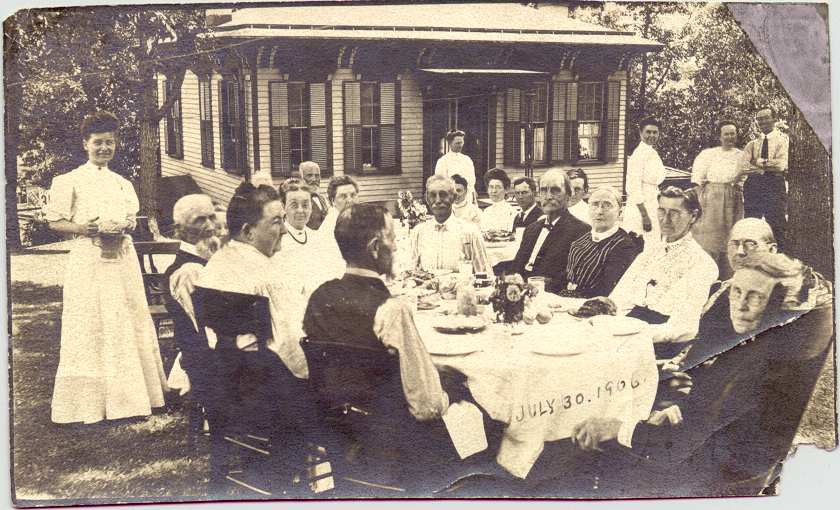
A smaller reunion of the Trumbo family eleven years later

TRUMBO FAMILY REUNION
Over One Hundred Members Present at the Picnic of Thursday

The members of the Trumbo family have been prominent in La Salle county for the past half century, and more especially in Rutland and Dayton townships, by reason of their industry, good citizenship and last but not least, their numbers. Thursday, at the pleasant home of Frank Trumbo, in Dayton township, they gathered to the number of over one hundred; and, with their relatives of the families of Green, Shaver, Grove and Gibson and their guests, over two hundred. Photographer W. E. Bowman was on the ground and took several pictures of the assembly at noon. At one o’clock the dinner was served and all did full justice to the viands before them. The baseball enthusiasts organized two nines and played a game, the score being about 28 to 19.

Mrs. Grace Parr gave a recitation and W. F. Heath and others rendered solos.

President Elias Trumbo called the family to order for the sixth annual meeting and told the younger members of some of the difficulties and privations which ensued when their ancestors turned the prairie into a garden. Secretary McKinlay then gave a resume of what had been done in further tracing of family history and the collection of data since the last meeting, stating that the descendants of the Trumbos in America now numbered at least 2,500, all descendants of the three brothers who came to Virginia about the middle of the last century, and a facsimile of the oldest document of the family was shown. The original, dated June 23, 1752, is owned by O. W. Trumbo of Dayton, and the land acquired by it is still in the Trumbo family, at Brock’s Gap, Va. The services of the family in the revolution, war of 1812, the Black Hawk war and the civil was were alluded to.

The election of officers was then held and resulted as follows:

President                     Elias Trumbo
Treasurer                     M. P. Trumbo
Secretary                     W. E. MacKinlay
Executive Committee Mesdames Lavina Mattock, Clara T. Hess, Barbara Jackson, Eliza Gibson, Anna Robison and Elizabeth Strawn and Mr. Elias Trumbo.

After a hearty supper the gathering dispersed, after the most largely attended and successful reunion ever held by the “Trumbo Family Association.” Those present were:
C. B. Hess and family, J. N. Strawn and family, Joe Gay and family, Mrs. Susan G. Trenary, Fred and Ralph Trenary, H. B. Robison and wife, Al. F. Schoch and family, W. C. Riale and family, W. E. W. MacKinlay, Wm. Pafiot, Misses Marie Briggs, Roberta Hammond, Katie Gleim; Grant Conard, Jesse, James and Joe Green, L. N. Hess and family, H. B. Williams and family, O. N. Butterfield and wife, H. G. Cotton and daughter, W. D. Strawn and family, C. W. Irion and family, Art. Scott, Jackson Shaver and family, Mrs. Wm. Bradford, Katie Bradford, Maude Sanderson, D. L. Dunavan, S. E. Parr and wife, Mrs. W. H. Hull, jr., Prene Shaver, Ottawa; Mrs. Lavinia Matlock, John Matlock and family, Joseph Harris and family, Mrs. John Crum, Jessie Crum, Eugene Matlock and family, John Harris and family, Yorkville; Joseph Jackson and wife, E. W. Jackson and wife, F. Mizener, Millington; H. D. Barber and family, Sheridan; H. K. Parr and wife, Serena; W. M. Brown and family, M. P. Trumbo and family, Mrs. H. Ruger, Bernice Ruger, Samuel Dunavan and family, O. W. Trumbo and wife, J. Green and family, H. Hall, Mr. Angevine, James Angevine, Dayton; Lee Robison and Matthew Robison and family, Elias Trumbo and family, Donald MacKinley, Maud Shaver, Charles Shaver and family, G. D. Shaver and family, Rou Shaver, V. Canfield and wife, S. Milliken and wife, Mrs. John Parr and family, Mrs. Emma Parrott, Miss Sadie Parrott, George W. Gibson and wife, Rutland; Mrs. Dorothy Hess, Cleveland, Kas.; Mrs. Ed. Bradford, Chicago; Mrs. A. B/ Henderson, Siler, N. C.; Mrs. Harry Green, Chicago; and many others.1


  1. The Ottawa Free Trader, June 28, 1895, p. 3, col. 4
The Importance of Good Roads

DAYTON ROAD INTEREST
Business Men Are Awakening to the Importance of the Inlet

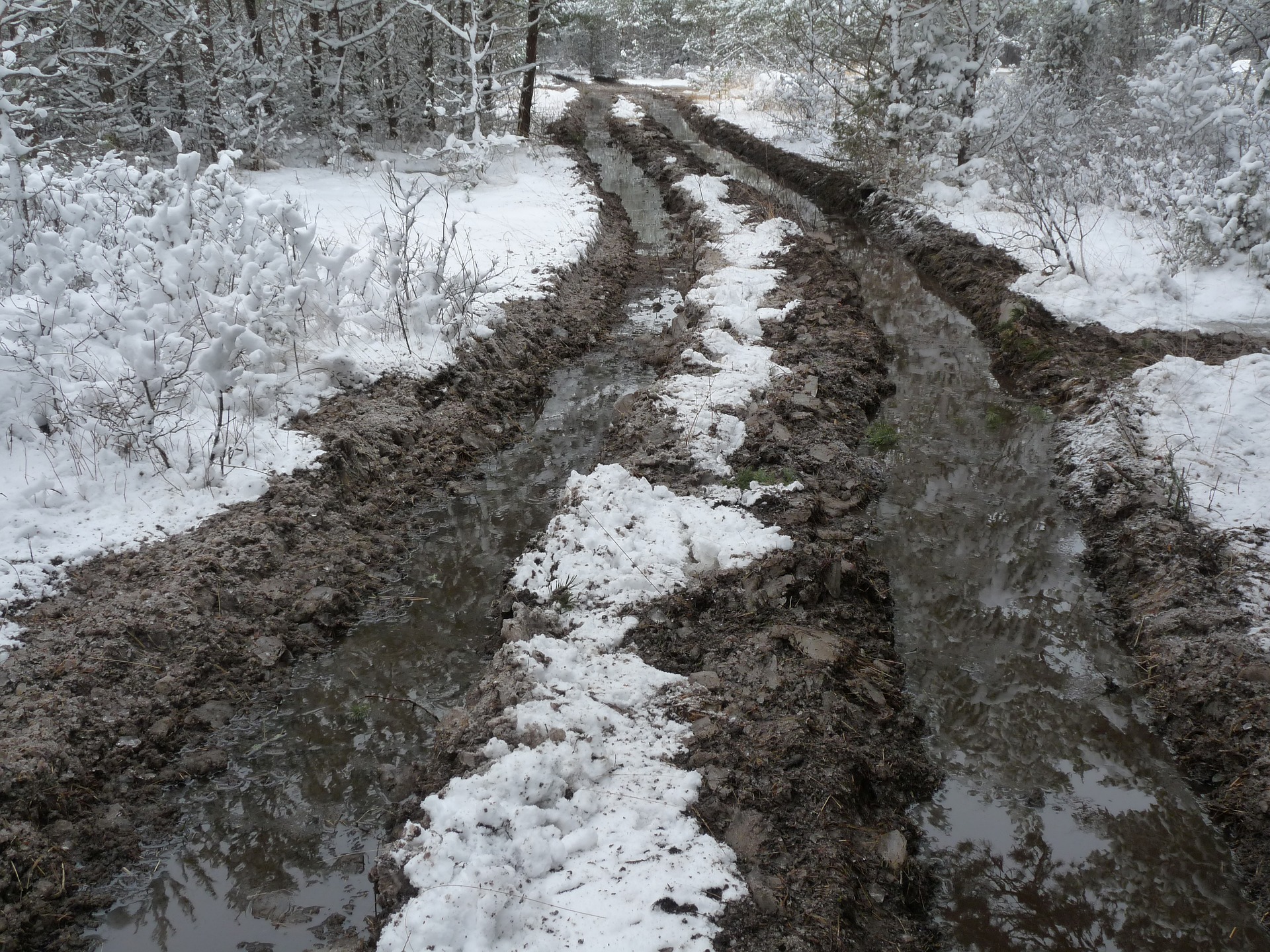
The importance of good roads leading into Ottawa was never so urgent as in the fall of 1895. A considerable portion of the city’s usual population having been deprived of employment and departed to other centers of activity, it has become necessary that every effort be put forth by the business men and citizens in general to attract a larger trade from the country.

Some weeks ago Supervisor Perkins and the road commissioners of the township of Dayton began to agitate the subject of an inlet to the city from the north. A good gravel road now leads to the northern villages and hamlets, but the country north of the Ottawa line, taking in the townships lying directly north of the city, as far as Earlville, cannot be reached save in very dry weather. As a consequence all of the trade north of Dayton goes to Earlville over the new gravel road in Freedom township.

Dayton is too poor to pay the cost of the six miles gravel needed to connect Ottawa with these northern townships, but her people are willing and have already contributed $1,500 in work and money. The exact cost of the road cannot at this time be closely estimated, but it is probably that it can be built for less than $5,000.

Supervisor Perkins and a committee are now soliciting subscriptions among local business men. They should meet with every encouragement, as Ottawa is the natural market for the farmers and can have their trade if she makes it possible for them to reach her at all times.1


  1. The Ottawa Free Trader, October 11, 1895, p. 10, col. 3

Dayton’s Industries in 1879


DAYTON
One of La Salle County’s Flourishing Manufacturing Centers

Dayton, as some of your readers may not know, is located four miles from Ottawa, on the Fox River branch of the C., B. & Q. R. R. Its most solid attraction is one of the best water powers to be found in the West. The dam that supplies the power is owned and kept in repair by the state, so that lessees of power feel assured that if the dams or locks should ever be impaired by the ravages of time or floods, the damages will be speedily repaired, without tax or expense to them.

The paper mill of Williams & Co., situated at the lower end of the manufacturing portion of the town, is one of the best in the state. Their products are so favorably known that running night and day the year round they are unable to supply the demand.

The Tile and Brick Works of D. Green & Sons are yet in their infancy, yet the perseverance of its proprietors, and the excellence of the material close at hand, is sufficient evidence that the surrounding country can soon be supplied with the very best tile and brick to be found anywhere.

The grist and merchant mill of D. Green & Sons is presided over by Mr. Stover, widely known for many years as one of the best millers in the state,

The Fox River Horse Collar Manufacturing Co. is an incorporated company, composed of a body of modest and unassuming men, their modesty being only equaled by the superior quality of their goods, which are widely known from Pennsylvania, Ohio and Virginia on the east, to Kansas, Nebraska and Missouri on the west, to be the best in the world. They use about forty tons of rye straw yearly for filling horse-collars, and the hides of about 2,000 head of cattle are required yearly to supply them with leather.

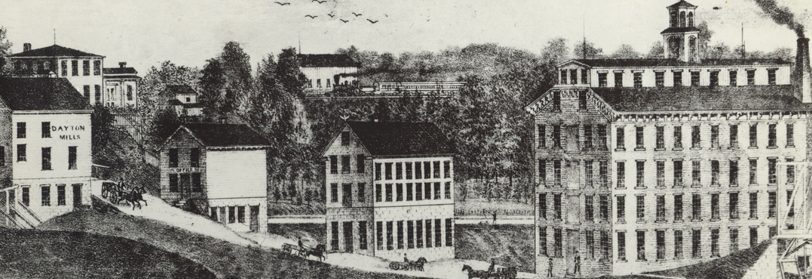
The elegant massive building known as the Dayton Woolen Mill is now owned and run by J. Green & Sons. They are so well known for the excellence of their goods and their honorable dealing that the simple announcement that they are again in business is sufficient to flood them with orders.

Adjoining the town is the splendid grain and stock farm of Isaac Green. Mr. Green makes a specialty of raising Norman and Clydesdale horses and thoroughbred cattle, and can show some of the finest in either class to be found in the state. Among the minor attractions are many fine driving teams, single and double. I would like to give you the names of the owners, but their objections to seeing their names in print forbid it.

And last, though not least, we have the nicest girls, the most dashing beaux and the most enchanting Groves to be found anywhere. Go a fishing and come and see us.

Full Stop1


  1. The Ottawa [IL] Free Trader, July 12, 1879, p. 8, col. 1

Memories of Early Dayton

Memories of early Dayton by Maud V. Green (1866-1952)

There used to be “basket meetings” at the Sulphur Spring on Sundays in the summer.  Preaching in the morning & afternoon with a picnic dinner and visiting between.  Also we met our friends at the Old Settlers’ picnic, and at the County Fair when we always took our dinners & ate on the ground.  Reunions at home were not so pleasant for the children, who had to wait for the “Second Table.”  Times have changed for the better, for the children!

In the summer (before we had screens), the fly-broom was a useful thing.  Paper was sewed around a long stick and slit into strips and inch or so wide & this was waved over the table to chase the flies.  Also we had wire covers for some of the dishes (like a round strainer) and a glass cover for the butter dish, jelly, etc.

We had wood-stoves until in the nineties we got a hard-coal heater for the two front rooms.  Always a big wood-pile and plenty of chips for starting fires.

We had a Singer sewing machine as long ago as I can remember & Mother got a bolt each of bleached & unbleached muslin & sewed and sewed all through January.  Then in February it was carpet-rag time and we all sewed & wound carpet-rags & sent them to the weaver.  The new carpet went in the “sitting room” and the others were moved back until at last they reached the kitchen & were worn out there.

I can just remember Grandma [Barbara Green] making candles for us to carry upstairs.  They were afraid to have us carry a lamp, but we had lamps as long ago as I remember.

Grandma spent her time knitting socks and long stockings for all of us, out of factory yarn, and we had woolen underwear, skirts and dresses made of factory flannel.

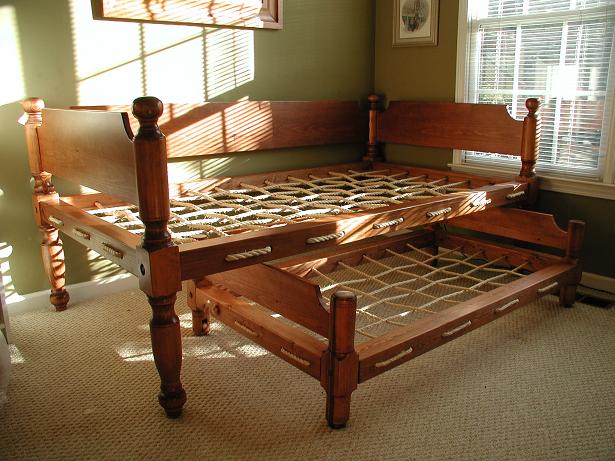
Uncle David’s house had the only Franklin stove I ever saw and the only trundle bed. A trundle bed was a low bed that rolled under the mother’s bed in daytime & was drawn out at night for two or three little folks who had outgrown the cradle. The “Franklin stove” was a little stove in the living room & had two doors that when opened made it like an open fire.

(see here for more information on Maud)